

Saudi aid agency signs 16 deals to combat blindness worldwide

1 / 2
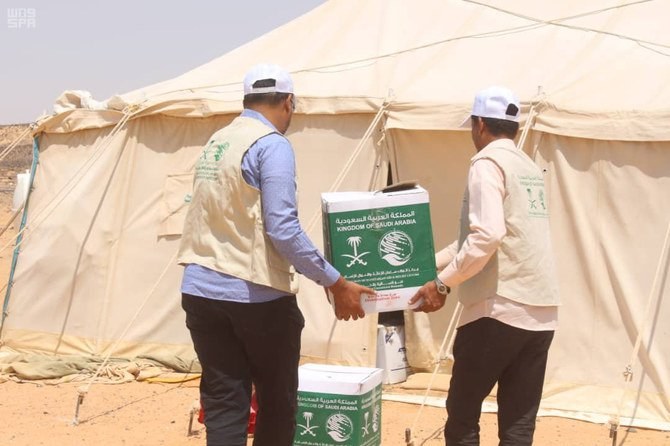
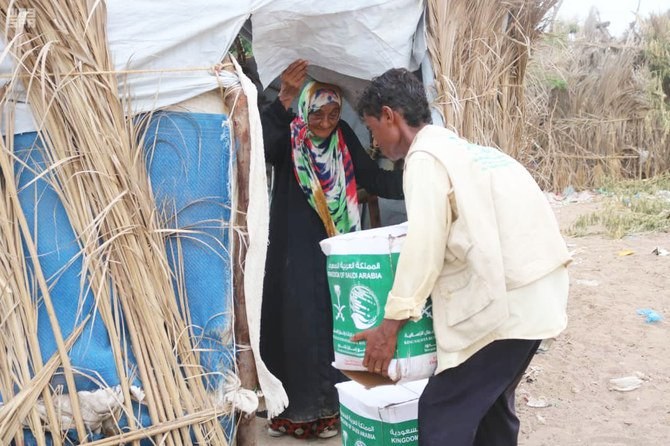
In Aside from providing food, clothing and other basic goods to refugees, KSRelief also sends specialists to perform medical surgeries for various illnesses in communities that usually have no access to doctors. (SPA)
2 / 2
Aside from providing food, clothing and other basic goods to refugees, KSRelief also sends specialists to perform medical surgeries for various illnesses in communities that usually have no access to doctors. (SPA)
Updated 19 September 2019
Follow

Saudi aid agency signs 16 deals to combat blindness worldwide

DAMMAM: Saudi Arabia has signed a raft of deals with an international health charity aimed at combating blindness in seven countries around the world, the Saudi Press Agency reported.

The King Salman Humanitarian Aid and Relief Center (KSRelief) inked 16 agreements with Al-Basar International Foundation to implement medical programs in Bangladesh, Yemen, Cameroon, Nigeria, Morocco, Eritrea and Pakistan.

Dr. Aqeel bin Jamaan Al-Ghamdi, KSRelief’s assistant general supervisor of planning and development affairs, signed the accord with the foundation’s secretary-general, Dr. Adel bin Abdul Aziz Al-Rashoud.

Al-Ghamdi said the campaigns to prevent blindness and diseases would involve medical checks on 100,000 cases, 10,000 vision-related operations, and the distribution of 20,000 medical glasses by the end of this year.

Saudi Arabia has spent $87 billion (SR326 billion) on humanitarian aid to 81 countries over two decades. According to a KSRelief report, more than 1,011 humanitarian aid programs worth $3.5 billion have benefitted 44 countries, primarily Yemen, Palestine, Syria, Somalia, Pakistan, Indonesia and Iraq, since 2014.

Recently, UN aid chief Mark Lowcock announced that Saudi Arabia would be contributing $500 million to the world body next week to help fund its humanitarian response in Yemen. Lowcock said the Kingdom planned to pay on Sept. 25 and that the UAE had also recently made a payment of $200 million.

HIGHLIGHT

The campaigns to prevent blindness and diseases would involve medical checks on 100,000 cases, 10,000 vision-related operations, and the distribution of 20,000 medical glasses by the end of this year.

Meanwhile, the center is carrying out several humanitarian projects in Syria and Yemen, which includes provision of food, health care, vocational training and education.

KSRelief allocated 132 cartons containing food baskets to the needy in Socotra, the Yemen archipelago, benefiting 116 families, in addition to 80 food baskets for 400 people in Saada governorate’s Al-Atif.

A total of 1,432 food baskets were also handed out in the Al-Wafa, Al-Baidar, Al-Rajab, Al-Zaalanah, Al-Taliya, Al-Fardan, Sabiroun, and Benin camps in Syria and many other informal settlements in Saraqib, Sarmin, Maarat Misrin and Salqin, benefiting 8,730 people.

In addition, the center distributed 367 cartons of food baskets in Marib governorate, Yemen, in coordination with the Benevolence Coalition for Humanitarian Relief, helping 900 displaced people.

This comes within the framework of the food projects provided by the Kingdom and represented by the centers for the Yemeni and Syrian peoples during the current humanitarian crisis.


After mosque bombing, Islamabad intensifies patrols, surveillance during Ramadan prayers, iftar

Updated 7 sec ago
Follow

After mosque bombing, Islamabad intensifies patrols, surveillance during Ramadan prayers, iftar

  • Police chief orders enhanced screening at capital city’s entry and exit points after Feb. 6 blast
  • Safe City cameras to monitor Islamabad round the clock as special pre-iftar traffic plan enforced

ISLAMABAD: Police in the federal capital have been instructed to step up patrols, surveillance and checkpoint inspections during Ramadan prayers and iftar hours, an official statement said on Wednesday, as the city’s police chief chaired a security meeting following a deadly mosque bombing earlier this month.

Inspector General of Police Syed Ali Nasir Rizvi directed senior officers to ensure “foolproof security” across the city, with special focus on mosques during peak congregational times.

The meeting comes after a suicide bombing at a mosque on the outskirts of Islamabad on Feb. 6 that killed at least 32 people. The blast targeted the Qasr-e-Khadijatul Kubra mosque and imambargah during Friday prayers and was claimed by Daesh that said one of its militants detonated an explosive vest inside the congregation.

“All officers must ensure their presence in the field and properly brief personnel about their duties,” Rizvi said, according to a statement issued by the police.

“Strict security arrangements should be ensured at mosques, imambargahs and Ramadan bazaars,” he continued. “Special patrols should be conducted during Fajr, iftar and Taraweeh hours.”

The police chief said Safe City cameras would be used for round-the-clock effective monitoring across the capital.

In addition to security measures, he reviewed traffic arrangements and directed strict implementation of a special traffic plan during pre-iftar rush hours, calling for additional deployment on major roads and at commercial centers.

Islamabad, which has generally seen fewer large-scale militant attacks than some other parts of Pakistan, has faced sporadic security incidents in the past, prompting authorities to tighten monitoring during religious gatherings and other high-risk events.