NEW DELHI: India announced on Wednesday a ban on the sale of electronic cigarettes, as a backlash gathers pace worldwide about a technology promoted as less harmful than smoking tobacco.
The announcement by India came a day after New York became the second US state to ban flavoured e-cigarettes following a string of vaping-linked deaths.
“The decision was made keeping in mind the impact that e-cigarettes have on the youth of today,” Finance Minister Nirmala Sitharaman told reporters in New Delhi.
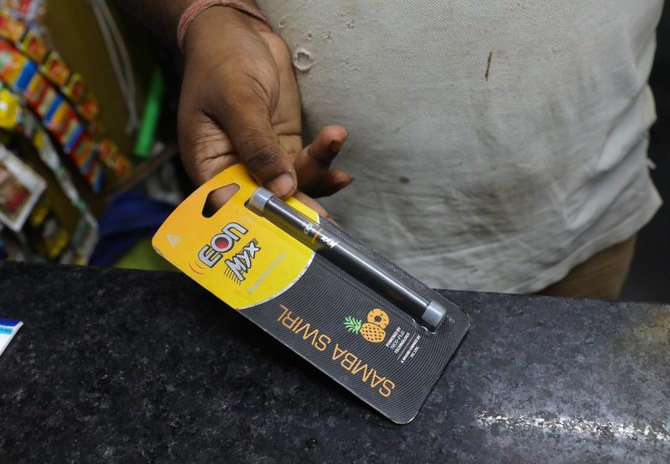
E-cigarettes heat up a liquid — tasting of anything from bourbon to bubble gum or just tobacco, and which usually contains nicotine — into vapor which is inhaled.
The vapor is missing the estimated 7,000 chemicals in tobacco smoke but does contain a number of substances that could potentially be harmful.
They have been pushed by producers, and also by some governments including in Europe as a safer alternative — and as a way to kick the habit.
However critics say that apart from being potentially harmful in themselves, the flavours of some liquids have turned millions of children into vapers — and potential future smokers.
The emergency legislation in New York, the second US state to ban flavoured e-cigarettes, followed a mysterious outbreak of severe pulmonary disease that has killed seven people and sickened hundreds.
President Donald Trump’s administration announced last week that it would soon ban flavoured e-cigarette products to stem a rising tide of youth users.
Legislation is also being tightened elsewhere, and in Singapore e-cigarettes are already outlawed. In Japan, vaping and alternatives like “heat not burn” tobacco vaporizers are allowed but e-juices with nicotine are not.
China, home to almost a third of the world’s smokers, indicated in July that it wants the “supervision of electronic cigarettes” to be “severely strengthened.”
The Indian ban covers the production, manufacture, import, export, transport, sale, distribution, storage of e-cigarettes, as well as advertisements.
The government said it would “advance tobacco control efforts” and “contribute to a reduction in tobacco usage.” Punishments include up to a year in prison.
Although few Indians vape at present, the Indian ban also cuts off a vast potential market of 1.3 billion consumers for makers of e-cigarettes.
“Big Tobacco” has been investing heavily in the technology to compensate for falling demand for cigarettes due to high taxes and smoking bans, particularly in the West.
In 2018 Altria, the US maker of Marlboro and Chesterfield, splashed out almost $13 billion on a stake in one of the biggest e-cigarette makers, Juul.
According to the World Health Organization, India is the world’s second-largest consumer of traditional tobacco products, which are not covered by the new ban, killing nearly 900,000 people every year.
Some 35 percent of adults are users, although chewing tobacco — which can also have flavours like chocolate and which also causes cancer — is more prevalent than smoking.
India is also the world’s third-largest producer of tobacco, the WHO says, and tobacco farmers are an important vote bank for political parties.
According to the Associated Chambers of Commerce and Industry, an estimated 45.7 million people depend on the tobacco sector in India for their livelihood.
India also exports around a billion dollars worth of tobacco annually, and the government holds stakes in tobacco firms including ITC, one of India’s biggest companies.
“I feel it’s absolutely absurd,” Aronjoy, 22, a student and occasional vaper, told AFP in a shop selling e-cigarettes.
“The government believes from my perspective that it’s alight to smoke cigarettes... which is much more injurious for our health that vaping would be.”
The Association of Vapers India said the government’s move “indicates it is more concerned about protecting the cigarette industry than improving public health.”


![]()

India bans e-cigarettes as vaping backlash grows
India bans e-cigarettes as vaping backlash grows
- The Indian ban covers the production, manufacture, import, export, transport, sale, distribution, storage of e-cigarettes, as well as advertisements

Latest updates


© 2026 SAUDI RESEARCH & PUBLISHING COMPANY, All Rights Reserved And subject to Terms of Use Agreement.