‘I imagine the colors:’ Blind Pakistani doctor creates a world of art

1 / 12
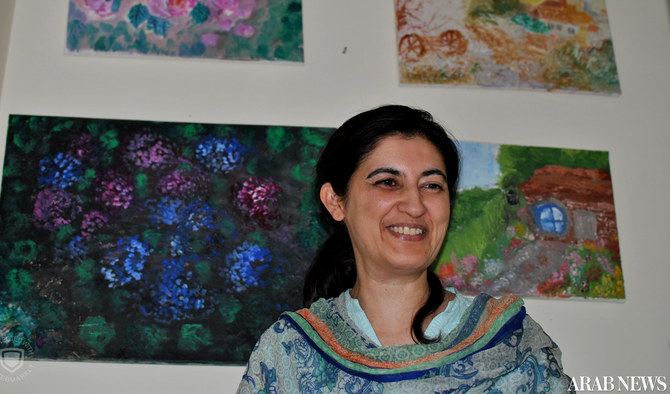
Hassan smiles for the camera in front of some of her prized artwork at her home in Islamabad, on Sept. 14, 2019. (AN photo by Saba Rehman)
2 / 12
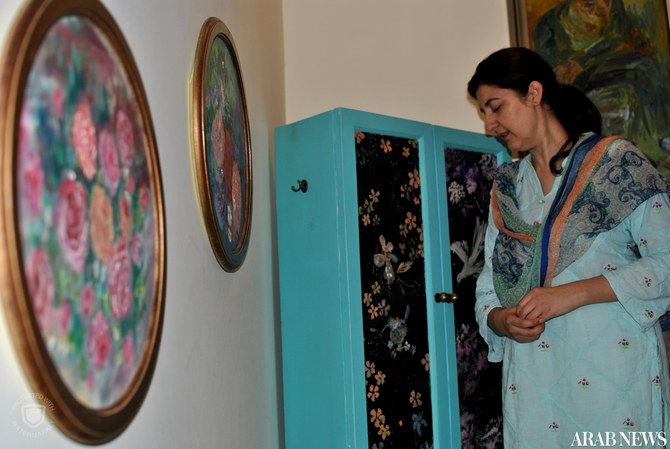
Hassan stands next to a wooden cupboard in her home that she has designed and painted. (AN photo by Saba Rehman)
3 / 12
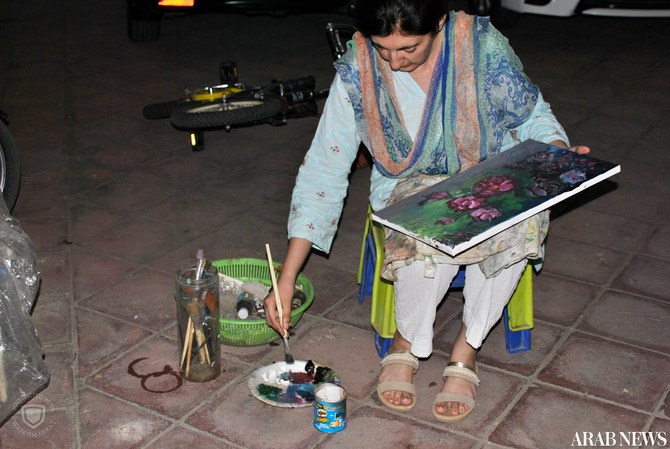
Hassan with her painting material in the car porch of her home in Islamabad. (AN photo by Saba Rehman)
4 / 12
Hassan on her iPhone, which she calls a “game-changer.” (AN photo by Saba Rehman)
5 / 12
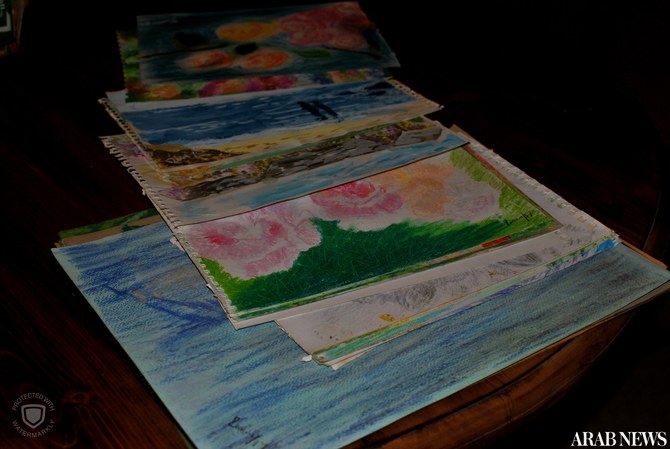
Some of Hassan’s paintings in her home in Islamabad, yet to be framed. (AN photo by Saba Rehman)
6 / 12
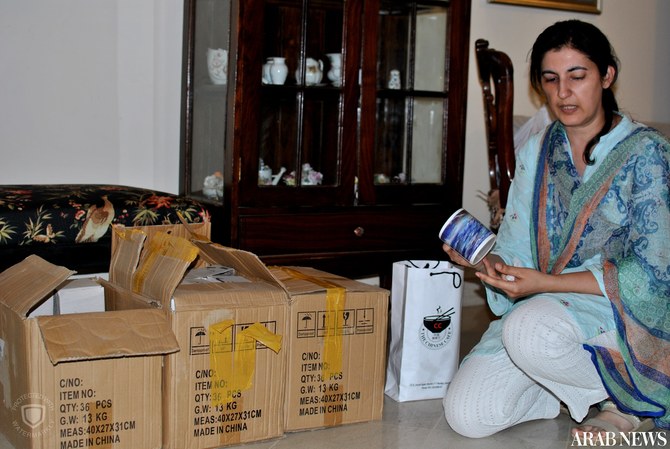
Hassan holding a mug, among the many, that she has painted for sale, and with all proceeds going to charity. (AN photo by Saba Rehman)
7 / 12
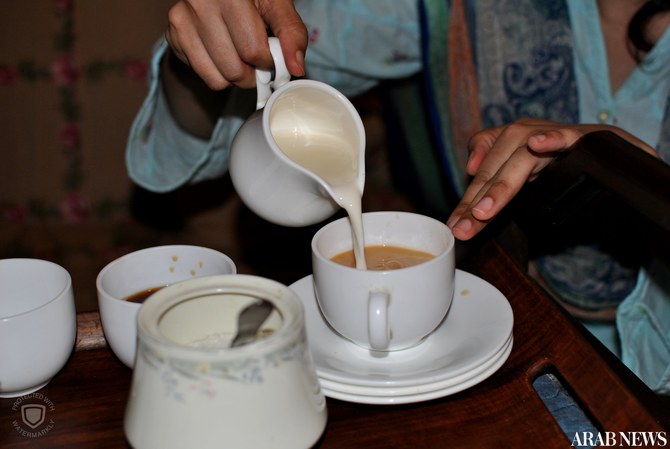
Hassan makes tea expertly, in her home in Islamabad. (AN photo by Saba Rehman)
8 / 12
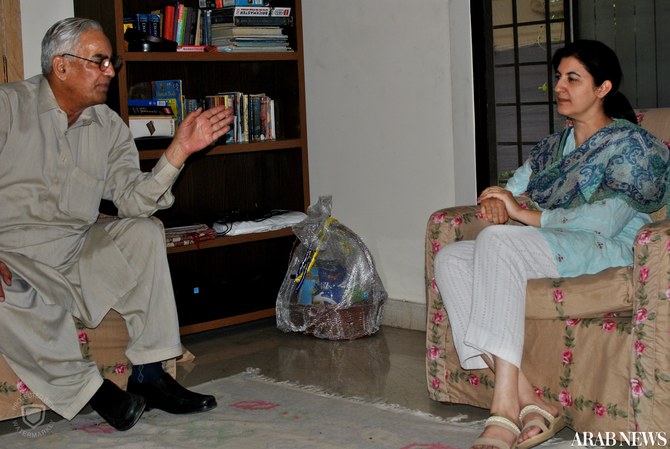
Hassan hosts another member of the blind community at her home in Islamabad. (AN photo by Saba Rehman)
9 / 12
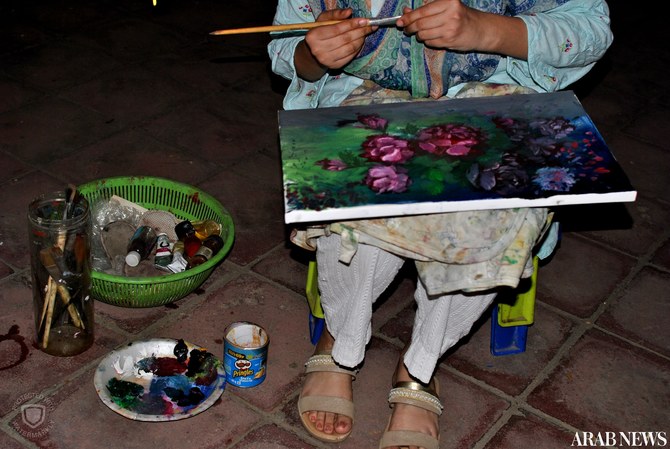
Hassan choosing the right brush to begin painting in the terra cotta tiled car porch of her home in Islamabad. (AN photo by Saba Rehman)
10 / 12
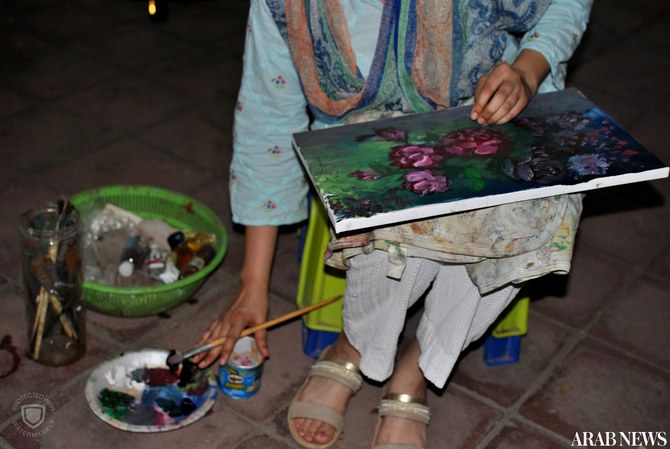
Hassan arranging her painting equipment in order at her home in Islamabad. (AN photo by Saba Rehman)
11 / 12
Hassan is busy at work on a painting in the car-porch of her home in Islamabad. (AN photo by Saba Rehman)
12 / 12
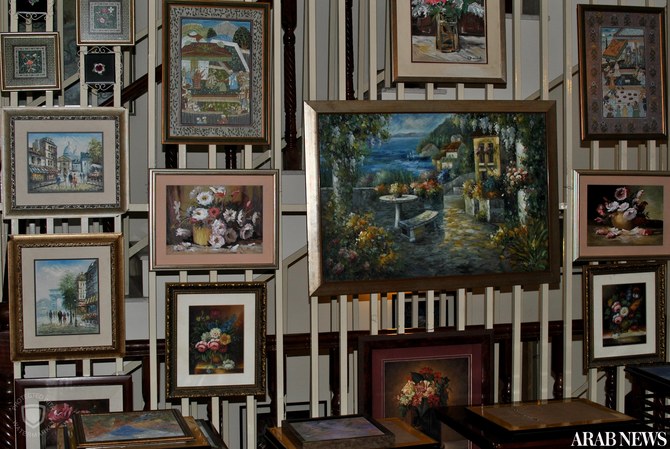
Dozens of Hassan’s paintings are framed and lovingly displayed at her home in Islamabad. (AN photo by Saba Rehman)
Updated 17 September 2019
Follow

‘I imagine the colors:’ Blind Pakistani doctor creates a world of art

  • Zarina Hasan, a doctor and graduate of Imperial College London, spends her free time with a canvas and a paintbrush
  • She lost her eyesight completely to glaucoma in 2015

ISLAMABAD: Zarina Hassan sits in her terra cotta tiled porch in Islamabad with a canvas on her lap. On the floor next to her, in a neat sequence, lies red, blue and yellow paint. She says she always keeps them in that order, because it’s the only way she can tell which color to paint her roses. 
A doctor from one of northwestern Pakistan’s most prestigious medical colleges in Peshawar, and with a master’s degree in molecular biology and pathology of viruses from Imperial College, London, Hassan lost her eyesight completely in 2015. Ten years earlier, in 2005, she was diagnosed with glaucoma, an eye condition that usually affects much older people.
Now, as the mother of three boys, Hassan said she continues to live her life as normally as possible, and painting canvases, even furniture, is a big part of that. 
“It was challenging to start life (again) with no eyesight, but I started looking for things to help me live my life normally as I had to take care of my children as well,” Hassan told Arab News.
“I completely understand life will never be the same again for me, but I wanted to make a difference and turning to painting was my resolve to make myself active,” she said.
Inside, the walls of her home are filled with the intricate oil paintings of landscapes and flowers, all framed and lovingly displayed, some bursting with color that she has created but will never see.
Hassan said she usually works with primary colors, after arranging them in order.
“I mix them with white if I’m painting something of a lighter tone. Usually, I know which color to mix with the other,” she said, and then added with a smile. “I imagine the colors, and then I paint them.”


Pakistan, UK sign £35 million Green Compact to strengthen climate resilience

Updated 21 December 2025
Follow

Pakistan, UK sign £35 million Green Compact to strengthen climate resilience

  • Pakistan ranks among nations most vulnerable to climate change and has seen erratic changes in its weather patterns
  • UK will help Pakistan mobilize climate finance, strengthen regulatory frameworks and develop bankable climate projects

ISLAMABAD: Pakistan and the United Kingdom (UK) have formalized a comprehensive climate partnership with the launch of a Green Compact that aims to enhance climate resilience, accelerate clean energy transition and scale up nature-based solutions, including mangrove conservation, Pakistani state media reported on Sunday.

The agreement, signed in Islamabad by Federal Minister for Climate Change and Environmental Coordination Dr. Musadik Malik and UK Minister for International Development Jennifer Chapman, unlocks £35 million in targeted support for green development and long-term climate action, according to Radio Pakistan broadcaster.

Pakistan ranks among nations most vulnerable to climate change and has seen erratic changes in its weather patterns that have led to frequent heatwaves, untimely rains, storms, cyclones, floods and droughts in recent years. In 2022, monsoon floods killed over 1,700 people, displaced another 33 million and caused over $30 billion losses, while another 1,037 people were killed in floods this year.

Mohammad Saleem Shaikh, a spokesperson for Pakistan’s Ministry of Climate Change, described the compact as a “decisive move toward action-oriented climate cooperation,” noting that its implementation over the next decade will be critical for Pakistan which regularly faces floods, heatwaves and water stress.

“The Compact is structured around five core pillars: climate finance and investment, clean energy transition, nature-based solutions, innovation and youth empowerment, and adaptation and resilience,” the report read.

“Under the agreement, the UK will work with Pakistan to mobilize public and private climate finance, strengthen regulatory frameworks for green investment, and develop bankable climate projects.”

Clean energy forms a central component of Pakistan’s transition, with Islamabad planning to expand solar and wind generation to reduce fossil fuel dependence, improve energy security and stabilize power costs, according to Shaikh.

“Renewable energy is now economically competitive, making the transition both environmentally and financially viable,” he was quoted as saying.

“Nature-based solutions, particularly large-scale mangrove restoration, will protect coastal communities from storm surges and erosion while enhancing biodiversity and carbon sequestration.”

Under the Compact, technical support, mentoring and access to investors will be provided to climate-smart startups and young innovators, reflecting Pakistan’s recognition of youth-led initiatives as central to future climate solutions.

On the occasion, Chapman, on her first official visit to Pakistan, underscored the urgency of climate action, highlighting the UK’s support for renewable energy, mangrove and ecosystem restoration, early-warning systems, climate budgeting and international investment flows into Pakistan.

Shaikh described the Green Compact as “a strategic turning point” in Pakistan–UK relations on climate change, saying its effective implementation is essential for Pakistan to meet its national climate targets.