

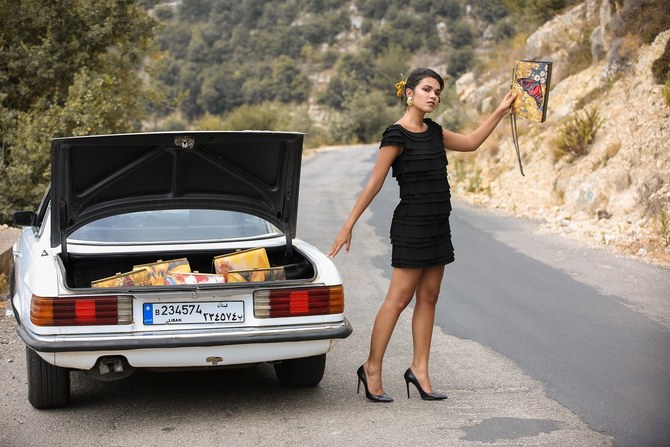

BEIRUT: When Beirut-based architecture student Youssef El-Hadi was 20, he decided to launch a passion project that affectionately honors his late grandmother, the little-known Lebanese painter Celia El-Hadi, who died in 2009.
Founded in 2018, Celia Creations is a small but meaningful, all-Lebanese brand — from concept to production — that ingeniously incorporates a selection of Celia’s vivid paintings onto small clutches and handbags, meticulously crafted by Youssef, assisted by local manufacturers and artisans.
“People in Lebanon are obsessed with Chanel, Louis Vuitton and all these brands,” Youssef told Arab News. “So, they forget the jewels that we have in our country.”

Youssef El-Hadi decided to launch Celia Creations when he was 20. (Supplied)
During his adolescence, the designer was influenced by Celia’s nurturing presence. She accompanied him to exhibitions, taught him how to draw and paint, and enlightened him through conversations on art and culture. “My grandmother was the first one in my family to have this drive for art,” he said. “I thought a woman like Celia — someone so giving and thoughtful — should have the recognition that she didn’t get when she was alive. That’s why I started the brand.”
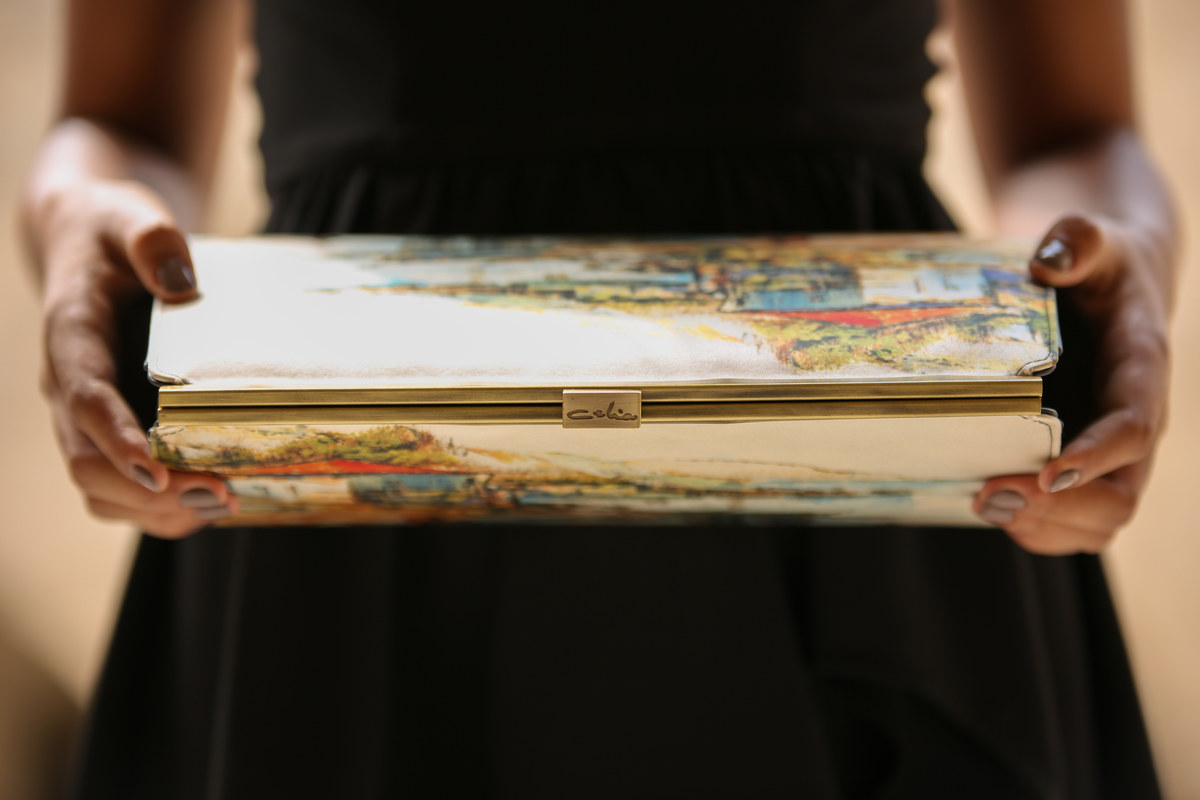
Youssef El-Hadi ingeniously incorporates a selection of Celia’s vivid paintings onto small clutches and handbags. (Supplied)
A bold beauty with bouffant hair and arching eyebrows, Celia led a fascinating, cosmopolitan life: born in Mexico (where her family established soap factories), she was educated in Egypt, and travelled to Europe — all of which were quite unheard of for a woman whose family came from the Lebanese village of Bzebdine. As an artist, Celia was mentored by respected Lebanese artists Aref El-Rayess and Rafic Sharaf, and became a dedicated art instructor herself, teaching at Beirut’s Russian Cultural Center and the Soeurs des Saints Coeurs schools in Hadath and Ghazir.
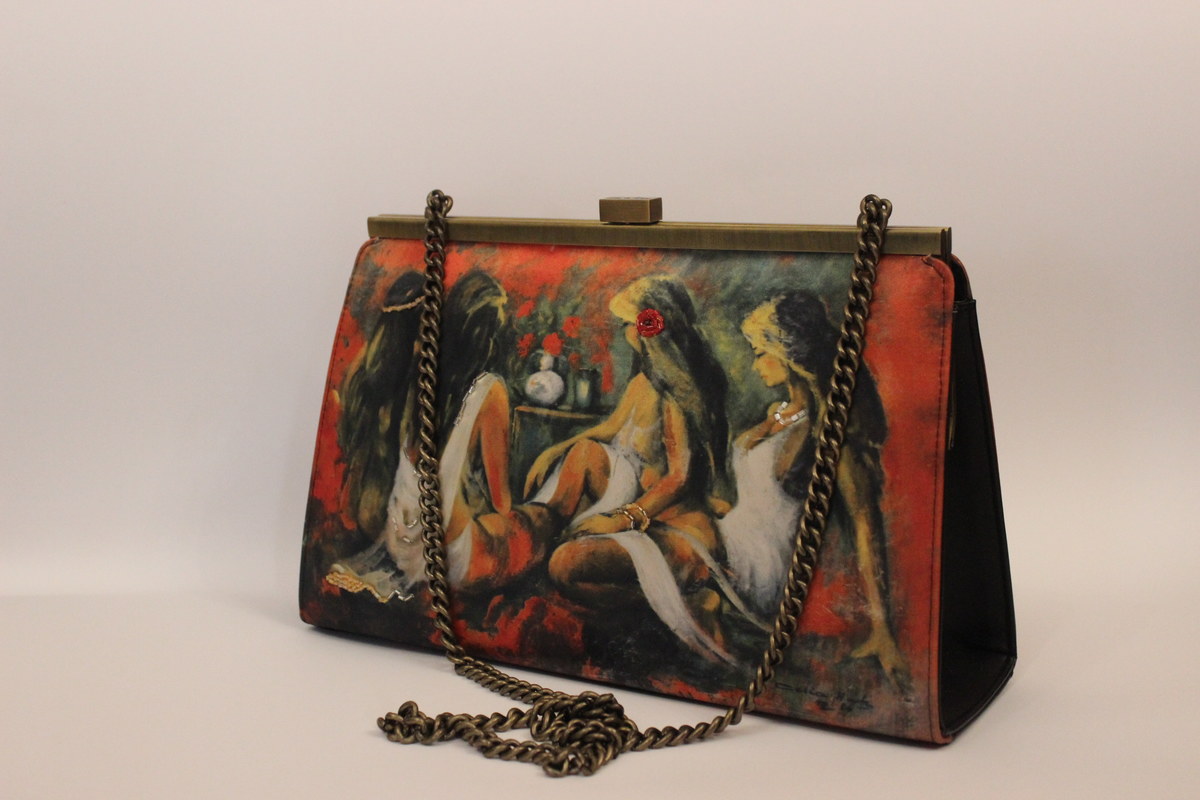
Celia Creations is an all-Lebanese brand — from concept to production. (Supplied)
Highly productive during the 1970s and 1980s, Celia created around 4,000 works of art. She tried her hand with the classical themes of portraiture, still-life and landscape painting, often portraying people and places that meant the most to her. She once said that she preferred to paint in oil, “because it obeys me more and makes me feel more comfortable.”
Aside from producing charming imagery, Celia also pushed boundaries in terms of style, according to her grandson. “She was one of the first artists in her era to draw nudes and to paint with live models, which was very shocking — a taboo,” said Youssef.
Today, her paintings are found in the family’s residences, a few museums and government buildings in Lebanon, and private collections across the world. After her passing, Celia’s home in Bzebdine was turned into a museum, inviting visitors into Celia’s private world.
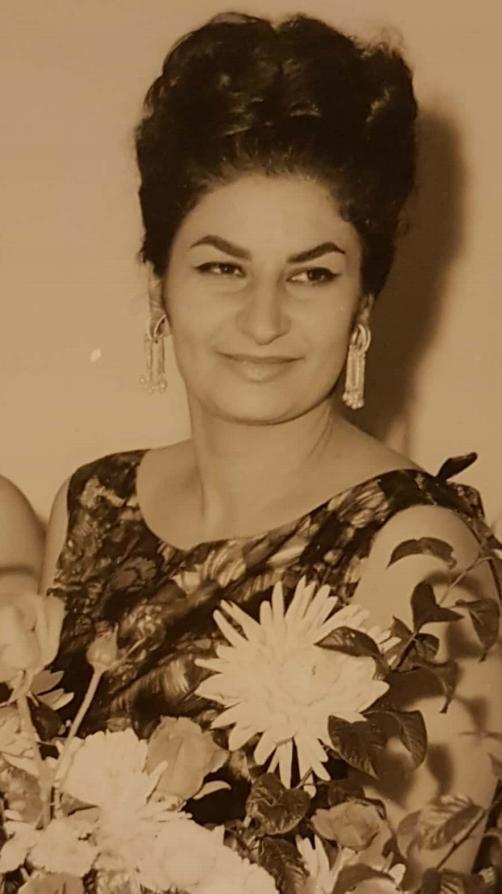
Celia El-Hadi died in 2009. (Supplied)
What makes Celia Creations unique is the thoughtfulness of the overall design of each and every crafted handbag. Elements of Celia’s life and spirit permeate through the smallest of details. For instance, a vintage handbag that Celia formerly owned inspired the shape of the current handbag design. In addition, some of the brand’s bags are embellished with beading stitched by an artisan in Bzebdine who was Celia’s friend.
Most significantly, the clutch’s copper clasp is beautifully engraved with Celia’s own signature, adding a personal touch: “A lot of people told me to do another logo. But I told them that there’s nothing that can top her own signature — it’s as if she actually touched each bag,” Youssef said. Ethics lie at the heart of the brand — all of the handbags are vegan, meaning leather, fur, and animal skin are not used — something Youssef feels is crucial.
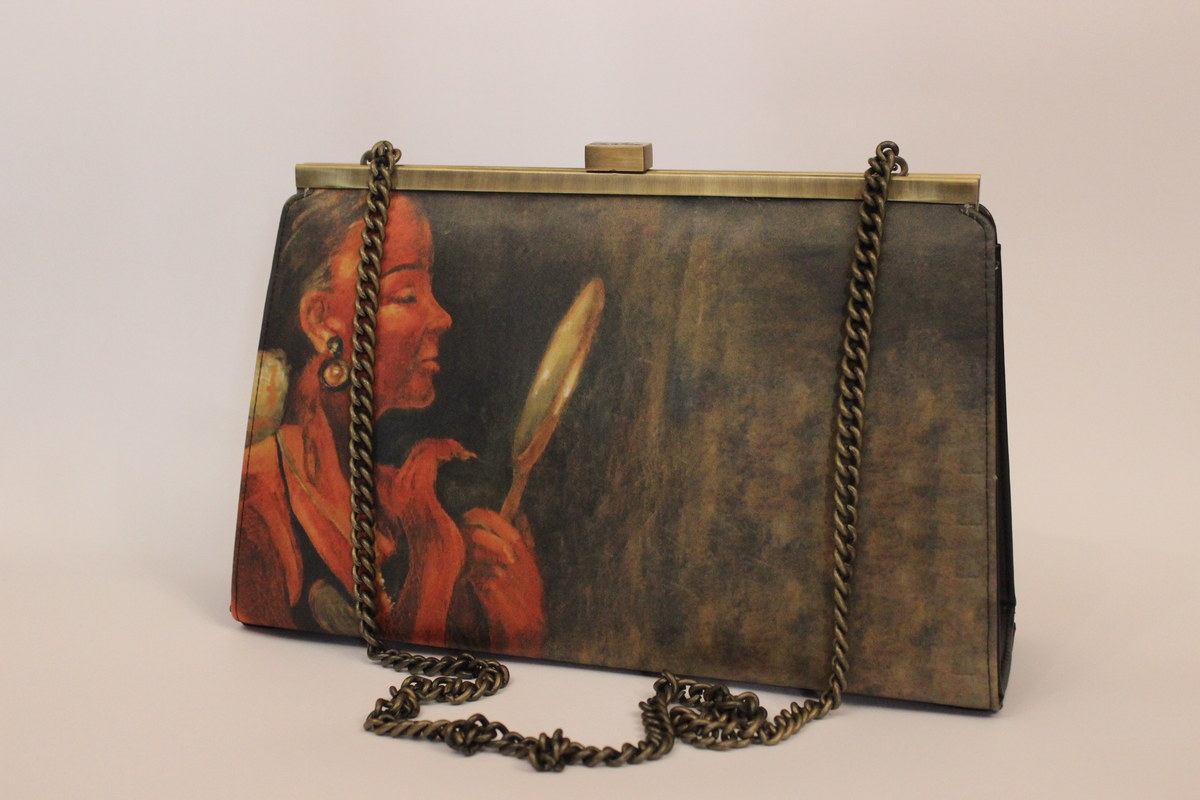
Celia created around 4,000 works of art. (Supplied)
Although Celia Creations is in its infancy, there is significant potential for growth. Youssef plans to expand the brand, but said he is wary of it becoming too commercial. “Anyone who wants to buy our bag needs to know the value of the painting,” he explained. “You’re not buying a handbag, you’re buying a piece of art and you’re buying the spirit and ideology of Celia, a woman who was fearless and always took risks.”


