At Karachi’s air force museum, memorabilia include war trophies from India and Israel

1 / 10
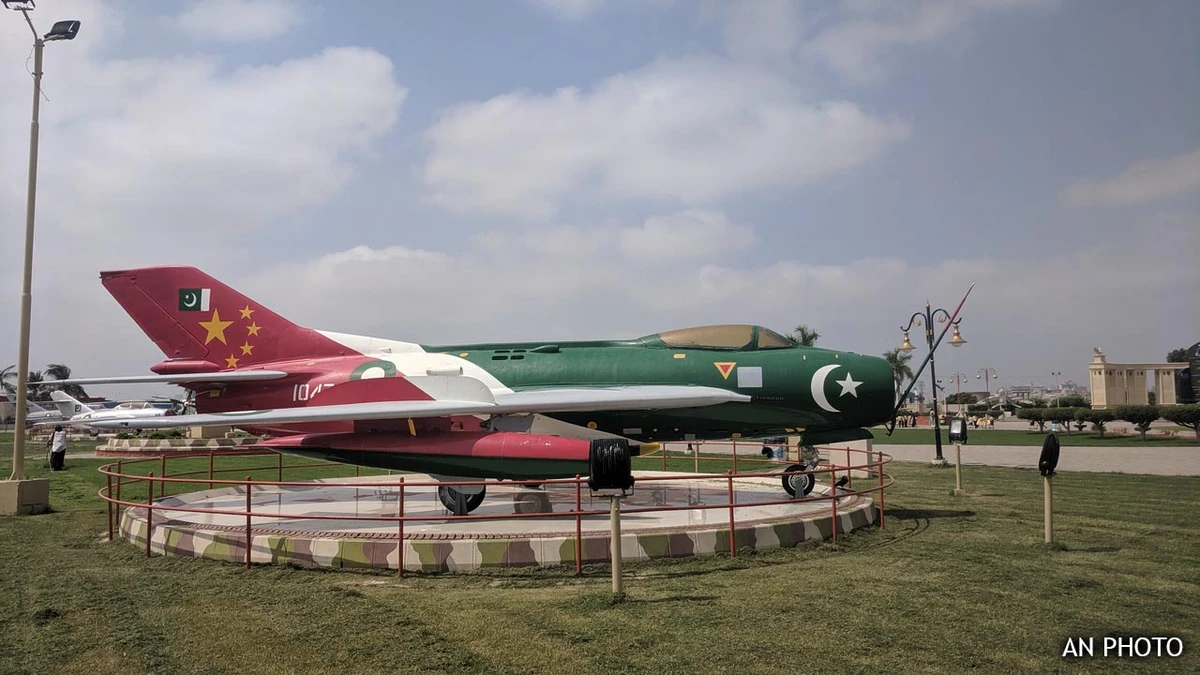
An F-6 (MIG-19) aircraft manufactured by China in 1961 and inducted by Pakistan Air Force in 1966, a year after the 1965 India Pakistan war, is displayed at the Pakistan Airforce Museum in Karachi, Pakistan, on September 4, 2019 (AN Photo)
2 / 10
Gnat, a single seater fighter manufactured by a British company in 1955, was grounded by flight lieutenant Hakeemullah and flying office Abbas Mirza on September 3, 1965. Photograph taken at the Pakistan Airforce Museum in Karachi, Pakistan, on September 4, 2019 (AN Photo)
3 / 10
An FPS-20 Combat Radar displayed at the Pakistan Airforce Museum in Karachi, Pakistan, on September 4, 2019. (AN Photo)
4 / 10
A photograph of Brij Pal Singh, an Indian pilot of the Gnat aircraft that was grounded by PAF’s flight lieutenant Hakeemullah and flying office Abbas Mirza in 1965, is seen placed on the grounded Gnat aircraft at the Pakistan Airforce Museum in Karachi, Pakistan, on September 4, 2019. (AN Photo)
5 / 10
A section dedicated to Flying Officer Marium Mukhtiar, Pakistan’s first female combat pilot who died in a crash on duty, is seen at the Pakistan Airforce Museum in Karachi, Pakistan, on September 4, 2019 (AN Photo)
6 / 10
A section reserved for Flying Officer Marium Mukhtiar, Pakistan’s first female combat pilot who died in a crash on duty: Photograph taken on Sept 4, 2019 (AN Photo)
7 / 10
A monument for martyrs of the Pakistan Air Force can be seen at the Pakistan Airforce Museum in Karachi, Pakistan, on September 4, 2019 (AN Photo)
8 / 10
A section dedicated to Flying Officer Marium Mukhtiar, Pakistan’s first female combat pilot who died in a crash on duty, is seen at the Pakistan Airforce Museum in Karachi, Pakistan, on September 4, 2019 (AN Photo)
9 / 10
Students visit the Pakistan Airforce Museum in Karachi, Pakistan, on September 4, 2019 (AN Photo)
10 / 10
This picture shows a section dedicated to Air Commodore Abdul Sattar Alvi and his “war trophy,” a flying coverall belonging to Captain M Lutz, an Israeli Air force Pilot of Mirage IIICJ aircraft which Alvi shot down over the Golan Heights in Syria on April 26, 1974. Photograph taken at the Pakistan Airforce Museum in Karachi, Pakistan, on September 4, 2019. (AN Photo)
Updated 07 September 2019
Follow

At Karachi’s air force museum, memorabilia include war trophies from India and Israel

  • Built in 1994, the facility attracts thousands of visitors every day
  • Features all major fighter aircraft, weapons and radars used by the Pakistan Air Force

KARACHI: The children furiously took notes as their teacher Tasneem Ahmed read an information board next to a FPS-6, one of several combat radars displayed at the Pakistan Air Force Museum in Karachi.
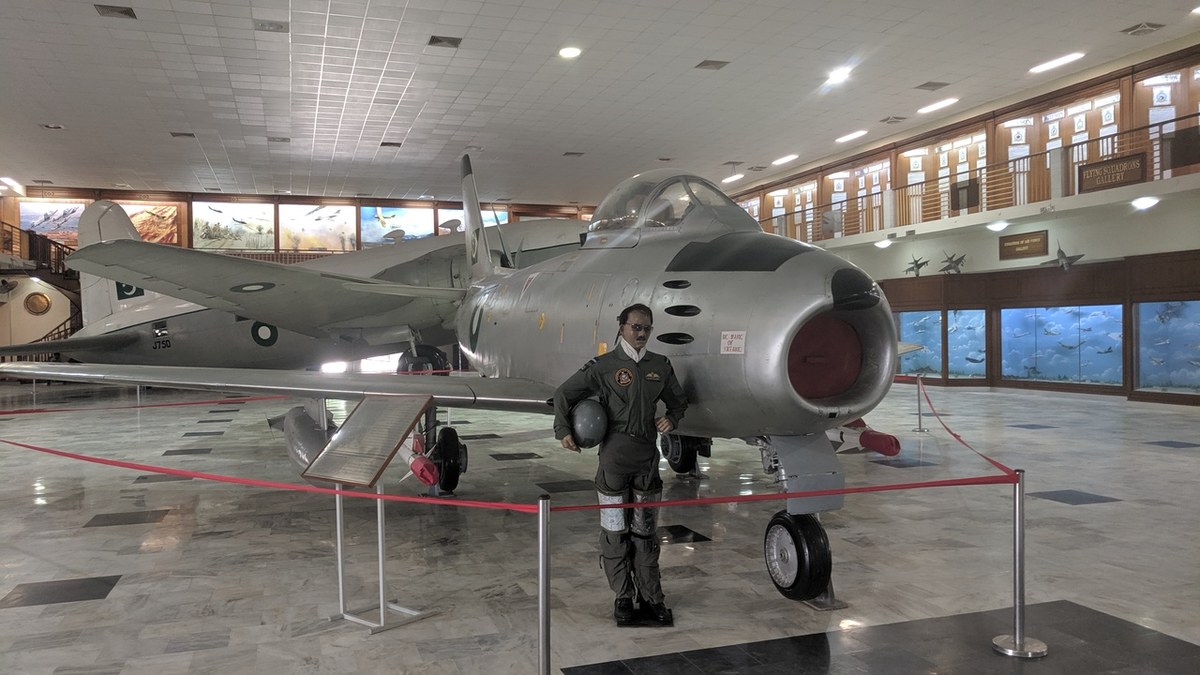


A statue of Air Commodore Muhammad Mahmood Alam, a Pakistani fighter pilot who downed nine Indian Air Force aircrafts during the India Pakistani War of 1965, stands with a F-86 aircraft at the Pakistan Airforce Museum in Karachi, Pakistan, on September 4, 2019 (AN Photo)

The children are here on a study tour and listen carefully as their teacher walks them through aircrafts, radars and mementoes of war heroes on the school study tour at the air force museum and park situated near the Karsaz Flyover on Karachi’s Shahrah-e-Faisal thoroughfare.
A majority of the aircraft, weapons and radar are displayed outside in the park but the main museum features all major fighter aircraft that have been used by the Pakistan Air Force.
“The aim of this study tour is to inform our students about their forces and the sacrifices of our heroes who lived their lives to protect this country,” Ahmed told Arab News. 
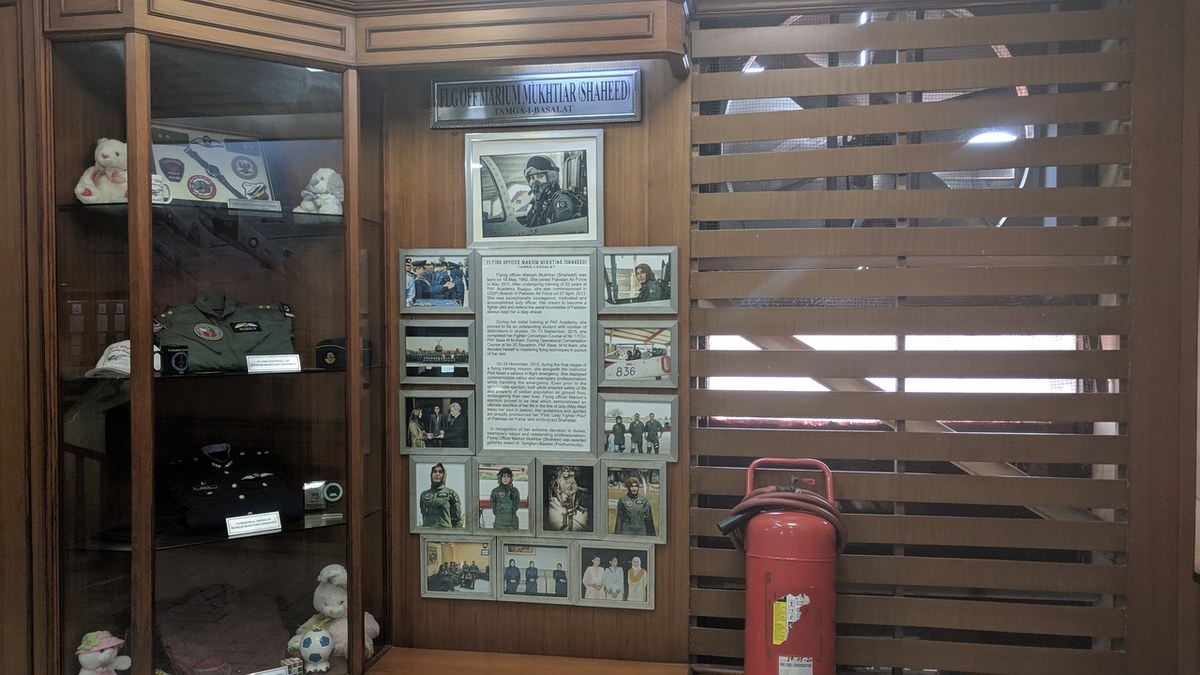


A section reserved for Flying Officer Marium Mukhtiar, Pakistan’s first female combat pilot who died in a crash on duty: Photograph taken on Sept 4, 2019 (AN Photo)

Afshan Ayaz, another teacher on the tour added: “We want to instill in them a sense of attachment with their country and their forces.”
Such tours at the museum are common from November through February each year when thousands of visitors thronging to the site. Even during the off-peak season, museum officials say, the daily count of visitors is around 4,000 people on weekdays and 15,000 on the weekends.
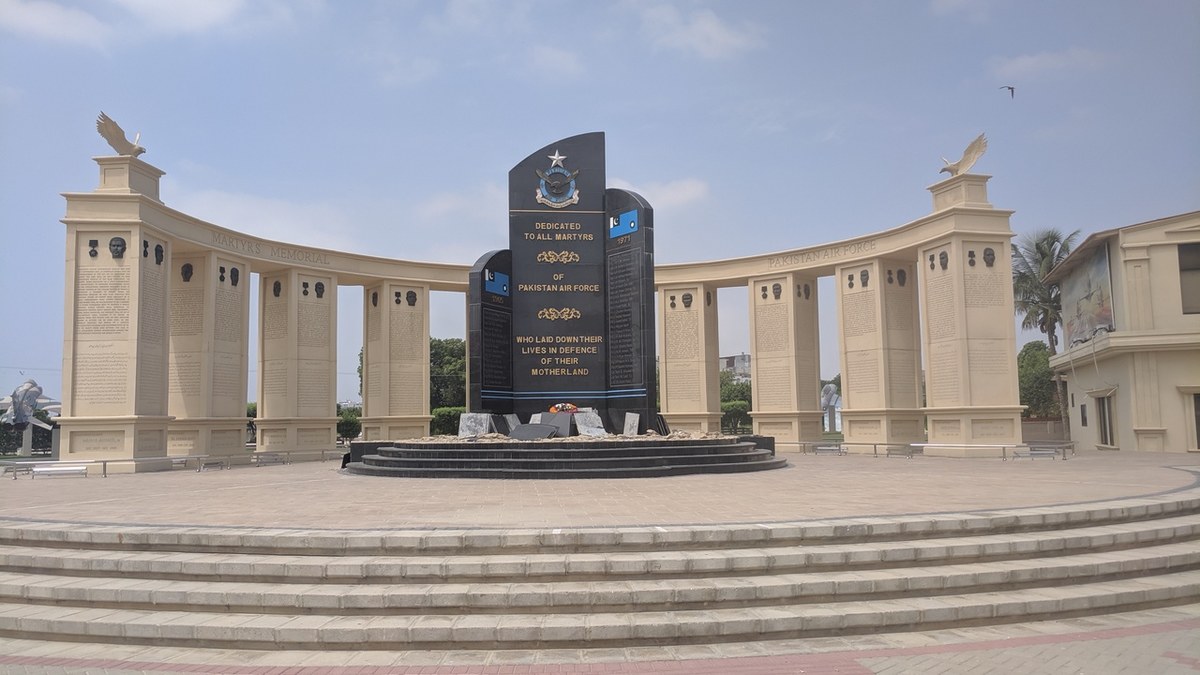


A monument for the martyrs of the Pakistan Air Force can be seen at Karachi’s PAF museum: Photograph taken on Sept 4, 2019 (AN Photo)

The PAF museum houses a huge archival exhibition gallery in the main hangar. The centerpiece of the aircraft collection is the Viking used by Pakistan’s founding father, Muhammad Ali Jinnah, as his official plane. There is also a “war trophy” displayed in the gallery: An Indian Air Force Gnat which was captured during a conventional conflict between the two South Asian archrivals in 1965.
The museum also boasts a flying coverall that was presented to flight lieutenant Abdul Sattar Alvi by the commander-in-chief of Syrian forces after Alvi shot down an Israeli Mirage on April 26, 1974.
The gallery is divided into multiple thematic sub galleries, featuring memorabilia from different eras of PAF’s air combats.
“It was a very informative visit. We saw aircrafts and much else and our teachers explained their significance to us,” Eman Kamran, a fifth grader, told Arab News as she posed with her friends for a picture next to Jinnah’s personal aircraft.
Pakistan offers Turkmenistan its Arabian Sea ports for wider access to ‘South Asia and beyond’

Updated 4 sec ago
Follow

Pakistan offers Turkmenistan its Arabian Sea ports for wider access to ‘South Asia and beyond’

  • PM Sharif meets Turkmen president in Ashgabat, calls for deeper trade and energy cooperation
  • Islamabad cites Karachi and Gwadar as key to boosting regional connectivity, including TAPI links

ISLAMABAD: Pakistan on Thursday urged Turkmenistan to expand trade and connectivity through Karachi and Gwadar, saying its Arabian Sea ports offer Turkmen businesses and exporters a direct route to South Asian and global markets, Prime Minister Shehbaz Sharif’s office said after high-level talks in Ashgabat.

Pakistan and Turkmenistan have long discussed regional transport corridors and energy cooperation, including the Turkmenistan–Afghanistan–Pakistan–India (TAPI) gas pipeline, a proposed multibillion-dollar project that would carry Turkmen natural gas south through Afghanistan into Pakistan and India. Islamabad has also pushed to link the landlocked Central Asian states to the sea by offering transit access through its deep-water ports, which sit at the crossroads of the Middle East, Central Asia and South Asia.

On Thursday, Pakistan's Sharif met Serdar Berdimuhamedov, the president of Turkmenistan, in Ashgabat as both countries look to revive momentum in bilateral engagement after years of regional instability. Pakistan has supported Turkmen neutrality policies at the United Nations, while Ashgabat has backed Pakistan during crises, including helping evacuate Pakistani nationals caught in Iran during the Iran–Israel conflict earlier this year.

“The Prime Minister reaffirmed Pakistan’s desire to enhance connectivity with Turkmenistan through land and sea routes and said that Karachi and Gwadar ports were ideally located to be utilized by the Turkmen side to enhance their outreach to South Asia and beyond,” Sharif’s office said in a statement.

Sharif reiterated his intention to deepen trade and economic ties with Turkmenistan, saying enhanced transport links and energy cooperation could anchor long-term regional integration. He invited President Berdimuhamedow and Turkmenistan’s national leader, Gurbanguly Berdimuhamedow, on official visits to Pakistan next year.

Sharif is on a two-day visit to Turkmenistan for the International Forum on Peace and Trust, accompanied by Deputy Prime Minister and Foreign Minister Ishaq Dar, Energy Minister Awais Leghari, Information Minister Attaullah Tarar and senior officials.

Turkmenistan’s president thanked Sharif for attending the UN-backed peace forum and said Ashgabat was keen to expand cooperation across multiple sectors, according to the statement.