


ABU DHABI: A floating bamboo school-cum-hostel for single women, a wasteland transformed into a wetland and a culture museum built in the heart of one of the world’s longest-running conflicts are among the winners of a triennial award for architecture serving Muslims.
The Aga Khan Award for Architecture was established in 1977 by Aga Khan, the Muslim spiritual leader, to celebrate projects that “successfully address the needs and aspirations of communities in which Muslims have a significant presence.”
The six frontrunners of the 2019 edition were announced this week with projects from two Gulf Cooperation Council countries — the UAE and Bahrain — in addition to Bangladesh, Palestine, Senegal and Russia being handpicked as winners. They were selected from a shortlist of 20 buildings from 16 countries.
It is the first time that the UAE and Bahrain have won recognition. Russia has also been recognized for the first time for a project which, to date, has improved 328 public spaces in the Republic of Tatarstan.
The 2019 jury said it “sought to select projects that question the conventional practice of the profession and set in place inspirational pathways through which architects can take on societal problems.”

Bahrain
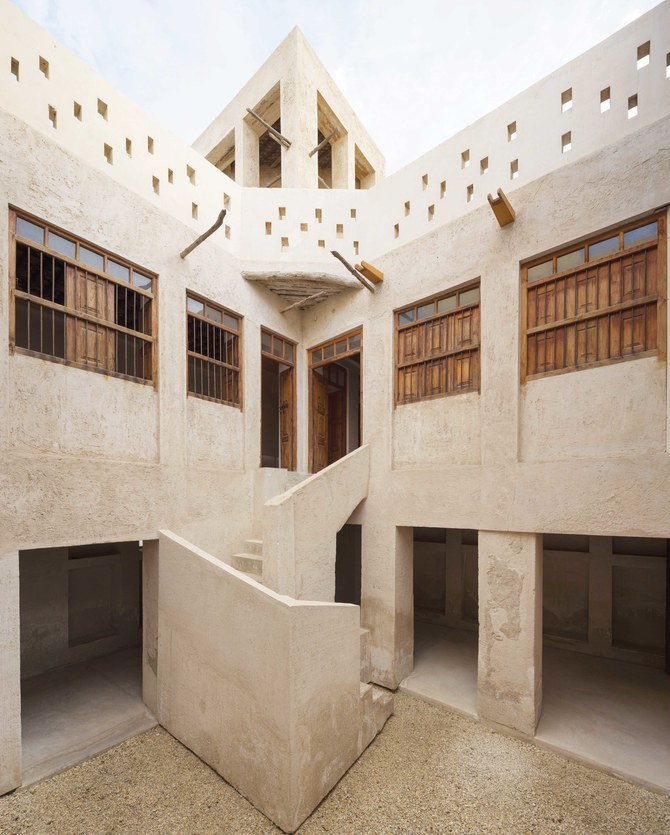
Revitalization of Muharraq
The project, which highlights the World Heritage Site’s pearling history, was first initiated as a series of restoration projects. The project evolved into a comprehensive programme that aimed to rebalance the city’s demographic makeup by creating public spaces, providing community and cultural venues and improving the environment. The judges said the restoration of existing buildings and the introduction of contemporary sites provided a vessel for curated cultural activities, with the “Pearl Route” — which guides visitors through the area’s heritage — noted as a particular highlight.
The judges noted that the Revitalisation of Muharraq “responds creatively to the challenges of neglected urban cultural heritage and social life. Drawing on Bahrain’s heritage of a pearl economy, it has reawakened a local sense of pride while infusing new cultural life in a deteriorated urban area.”
Bangladesh
Arcadia Education Project
Located in South Kanarchor, the Arcadia Education Project — a modular structure incorporating space for a preschool, a hostel, a nursery and a vocational training centre — takes a novel approach to a riverine site that is flooded for up to 5 months every year. Rather than disrupting the ecosystem to create a mound for building, the architect devised the solution of an amphibious structure that could sit on the ground or float on the water, depending on seasonal conditions.
“At a time of rising sea levels, this modest bamboo school illustrates how to build an affordable and viable solution with locally available materials,” the judges noted. “The approach to building the three-classroom preschool was to design a structure that rises with the river’s water level and adapts to the surroundings — without altering the natural condition of the site and allowing for uninterrupted, year-long use of the building.
“The paradigm of the architect using his professional knowledge — yet thinking outside the box by adapting traditional methods — is remarkable, especially as the construction is modest and direct, without fetishizing craft.”
Palestine
Palestinian Museum
The zigzagging Palestinian Museum in Birzeit — inspired by the surrounding agricultural terraces — is one of the four new structures to have won a prize this year. The project crowns a terraced hill overlooking the Mediterranean Sea and is the recipient of the LEED Gold certification because of its sustainable construction.
The judges said the museum stands as “the powerful embodiment of a cultural identity under duress at the intersection of land and architecture, nature and people. The building’s very existence — built despite a condition of occupation and siege — can be understood as nothing less than an act of hope for current and future generations.”
Russian Federation
Public Spaces Development Programme
The Public Spaces Development Programme in Kazan is the revival of over 300 public spaces in Tatarstan and seeks to counter the trend toward private ownership by refocusing priorities on quality public spaces.
The judges said the programme was “impressive in its ambition to improve the quality of public space throughout Tatarstan. It is important to understand the role of the public in such projects. They reinforce the sense of community, the identity of the villages, towns and cities and the role it plays in the development of civil society.”
They added: “It is evident that the long-term success and sustainability of the project lies not only in its larger vision and political leadership, but also in the realization process, which has emphasised engagement and dialogue, the involvement and encouragement of young architects and designers and the participation of the community.”
Senegal
Alioune Diop University Teaching and Research Unit
IDOM’s prize-winning Alioune Diop University Teaching and Research Unit is a lecture building in Bambey, Senegal, where a scarcity of resources led to the use of bioclimatic strategies, includes a large double-roof canopy and latticework that avoids solar radiation but allows air to flow through it. By employing familiar construction techniques and following sustainability principles, it succeeded in keeping costs and maintenance demands to a minimum, while still making a bold architectural statement.
“As buildings have a direct impact on climate change and the environment, theunit represents a commendable example of how fundamental principles of sustainability and energy efficiency are translated into a well-integrated and elegant design that also has a low impact on its surroundings,” the judges said.
UAE
Wasit Wetland Centre
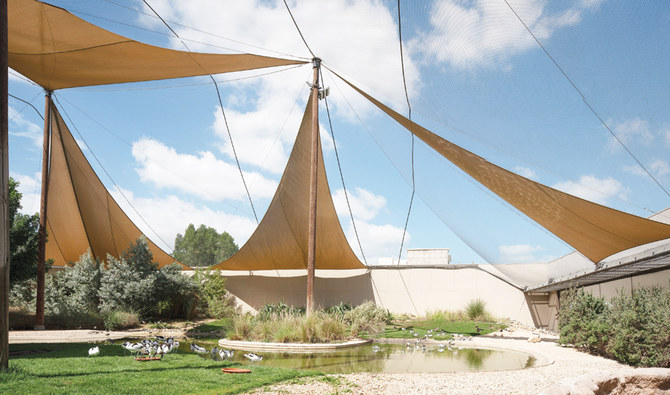
The Wasit Wetland Centre — part of a larger project to rehabilitate an ancient chain of wetlands along the UAE’s coast — is a design that saw the transformation of an almost 20-acre rubbish dump in the emirate of Sharjah into a wetland that is now a nature reserve for 350 bird species.
The judges said the centre “stands out as a remarkable, indeed unique, collaborative project combining architectural excellence with a deep commitment to ecological imperatives,” while also achieving “highly commendable educational and recreational purposes. The project sets a powerful precedent that encourages low-impact and environmentally conscious development in a region known for its propensity to go in the opposite direction.”