

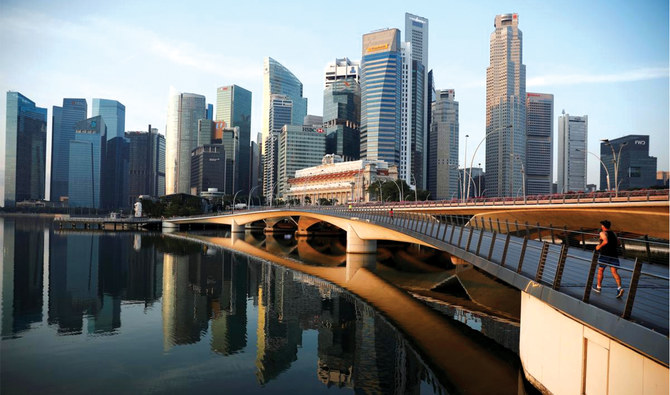
Do not disturb: Singapore hotels profit from Hong Kong turmoil

Singapore hotels are benefiting from growing protests in Hong Kong as travelers and business groups look for alternatives. (Reuters)
Updated 04 September 2019
Follow

Do not disturb: Singapore hotels profit from Hong Kong turmoil

  • Occupancy rates soar with highest revenue per room in almost four years as conferences switch from rival business hub

SINGAPORE: Singapore’s hotel occupancy rates have climbed to their highest levels in over a decade as travelers and business events switch from Hong Kong, where pro-democracy protests have hit tourist numbers and wider business sentiment.

Data released on Monday by Singapore’s tourism board showed average occupancy rates in the city-state's hotels hit 93.8 percent in July, the highest in records going back to 2005, and up from 92.5 percent a year ago.

The data also showed the highest revenue per room in almost four years, a trend analysts and hoteliers said was helped by conferences switching from rival business hub Hong Kong as protests that started in mid-June turned increasingly violent.

“Singapore may benefit twice as much from the Hong Kong fallout as both these destinations share similar traits,” said Derek Tan, an analyst at Singapore’s biggest bank DBS.

The Global Wellness Summit, a gathering of 600 health and beauty industry delegates scheduled for mid-October, recently said that it was moving to Singapore from Hong Kong. The event’s spokeswoman said this was “to ensure travel is as seamless as possible.”

Marcus Hanna, general manager of Singapore hotels, Fairmont Singapore and Swissotel The Stamford, said he had a 60-strong business group last month switch from Hong Kong for a five-night stay.

Hanna said his hotels, which offer conference and meeting facilities, have received a number of inquiries from companies looking to move events out of Hong Kong amid the growing unrest.

Jefferies analyst Krishna Guha said events in Hong Kong would have been a factor in lifting Singapore’s hospitality sector. Revenue per available room, a key performance metric for the hotel industry, rose to S$203.7 ($146) in July, its highest since October 2015, and up from S$200.2 in July 2018.

He said the unrest would have weighed on tourists’ summer travel plans, while other factors included tightening hotel supply in Singapore and a weaker Singapore dollar.

In Hong Kong, the city’s airport has suffered repeated disruptions due to protests, and hotel operators have reported lower occupancy rates and booking cancellations. 

Many countries such as Singapore have advised their citizens to defer non-essential travel to the former British colony.

“The outlook remains bleak for September and the rest of the year for destination Hong Kong,” said Alicia Seah, of travel agency Dynasty Travel, adding that inquiries and bookings have come to a “standstill” since last month’s airport shutdown.

“There are now spillover effects, with leisure and business travellers opting to travel to Singapore instead of Hong Kong.”


Saudi stock market opens its doors to foreign investors

Updated 06 January 2026
Follow

Saudi stock market opens its doors to foreign investors

RIYADH: Foreigners will be able to invest directly in Saudi Arabia’s stock market from Feb. 1, the Kingdom’s Capital Market Authority has announced.

The CMA’s board has approved a regulatory change which will mean the capital market, across all its segments, will be accessible to investors from around the world for direct participation.

According to a statement, the approved amendments aim to expand and diversify the base of those permitted to invest in the Main Market, thereby supporting investment inflows and enhancing market liquidity.

International investors' ownership in the capital market exceeded SR590 billion ($157.32 billion) by the end of the third quarter of 2025, while international investments in the main market reached approximately SR519 billion during the same period — an annual rise of 4 percent.

“The approved amendments eliminated the concept of the Qualified Foreign Investor in the Main Market, thereby allowing all categories of foreign investors to access the market without the need to meet qualification requirements,” said the CMA, adding: “It also eliminated the regulatory framework governing swap agreements, which were used as an option to enable non-resident foreign investors to obtain economic benefits only from listed securities, and the allowance of direct investment in shares listed on the Main Market.”

In July, the CMA approved measures to simplify the procedures for opening and operating investment accounts for certain categories of investors. These included natural foreign investors residing in one of the Gulf Cooperation Council countries, as well as those who had previously resided in the Kingdom or in any GCC country. 

This step represented an interim phase leading up to the decision announced today, with the aim of increasing confidence among participants in the Main Market and supporting the local economy.

Saudi Arabia, which ‌is more than halfway ‍through an economic plan ‍to reduce its dependence on oil, ‍has been trying to attract foreign investors, including by establishing exchange-traded funds with Asian partners in Japan and Hong Kong.