KABUL: Taliban guerrillas staged attacks on another city in northern Afghanistan on Sunday, increasing pressure on the central government ahead of crucial presidential polls slated for later this month and hours after the group concluded a round of talks with US diplomats.
The attack on Pul-i-Khumri, the provincial capital of Baghlan came a day after the Taliban broke government defense lines and entered parts of adjacent Kunduz city where the group continues to have some presence, locals told Arab News.
The defense ministry in a statement said that local uprising forces had foiled the Taliban assaults in atleast two directions of Pul-i-Khumri, which lies along the strategic highway that links much of southern Afghanistan with the north and with Central Asia.
However, Mohammad Azim Mohseni, a lawmaker from Baghlan said that the Taliban had presence in atleast four areas of the city where intense fighting had raged since the militants began their strikes early before dawn.
“The Taliban have entered in the city, this is the first time that they have managed to do so. The city is shut,” Mohseni told Arab News by phone.
He said the Taliban had also blocked the highway that runs through the city.
The interior ministry said Taliban fighters who had fled the Kunduz clearance operations by the government, were involved in the attack on Pul-I-Khumri.
Mohseni could not say how many Taliban fighters had participated in the assault on the city, but added that the fighters belonged to various parts of the country, including Baghlan.
The Taliban attacks on Kunduz and Baghlan, following their gains in some other northern areas in recent days, show according to analysts an intelligence failure in the government and may put it under further pressure ahead of Sept. 28th presidential elections.
Afghan analyst Fazl Rahman Orya, beelives that by spreading and stepping such attacks, the Taliban wants to show further weakness of the government which has been left out of nine rounds of talks between the militants and US diplomats in Qatar.
“These attacks come as US and Taliban emissaries are wrapping up their 9th round of talks. The Taliban want to show that the government is weak and from other side want to show its military might so that they have the upper hand in future intra-Afghan dialogue,” he told Arab News.
US envoy, Zalmay Khalilzad who has led the talks with the Taliban is heading to Kabul on Sunday for talks with government leaders about the conclusion of the last round of discussions.
Both Khalilzad and the Taliban said they nearing a final deal.
“We are at the threshold of an agreement that will reduce violence and open the door for Afghans to sit together to negotiate an honorable & sustainable peace and a unified, sovereign Afghanistan that does not threaten the United States, its allies, or any other country,” Khalilzad said in a tweet on Sunday.
Suhail Shaheen, Taliban spokesman based in Qatar in a tweet said the agreement will mean end of “occupation and peaceful settlement of Afghanistan’s crisis,”.


![]()

Taliban seize territory in northern Afghan city in second major attack
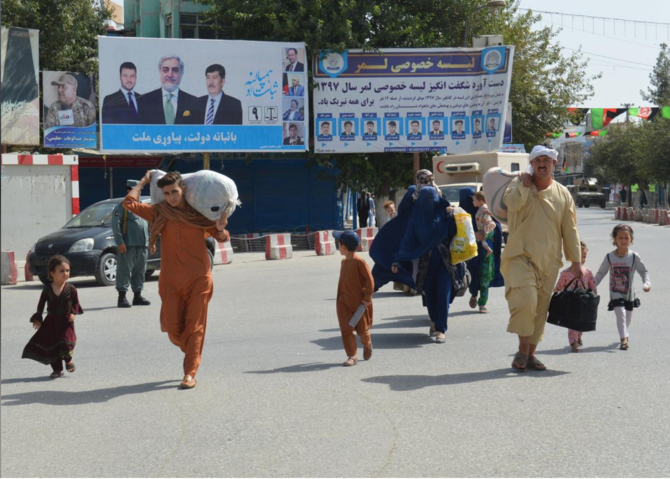
Taliban seize territory in northern Afghan city in second major attack
- Could derail crucial elections and peace talks that have been months in the making
- Officials said fighters hail from various parts of the country, including Baghlan
Latest updates




© 2026 SAUDI RESEARCH & PUBLISHING COMPANY, All Rights Reserved And subject to Terms of Use Agreement.