



CAIRO: What does it take to become a successful entrepreneur? Some would say grit and resilience are among the qualities required.
However, there is one point many overlook: A proper climate. Unfortunately, that is something refugees and migrants usually lack.
According to estimates by the UN Refugee Agency (UNHCR), more than 25 million people are refugees worldwide. How can they hope to become successful entrepreneurs in environments foreign to them?
Valentina Primo founded Startups Without Borders (SWB) in pursuit of the answer to that question.
The 34-year-old Argentinian journalist moved to Egypt six years ago, covering various success stories while trying to understand the Middle East without the bias that exists in much media coverage.
“I found hundreds of entrepreneurs who were creating new realities, and were taking it upon themselves to create a new future for their countries,” she said.
“If we talk about a startup ecosystem, why not one for people who don’t have a home?”
Primo delved deeper into entrepreneurship in the region. “I realized that media does play a fundamental role in building a startup ecosystem, not only because it helped entrepreneurs showcase what they were doing, but also because it was providing a role model for Arab youth to realize there’s a way,” she said.
Primo began approaching refugee entrepreneurs to tell their stories, and it proved to be a turning point in her career.
“Their stories were incredibly inspiring, so I thought, ‘Why not create a media platform that highlights those stories?’” she said.
Initially meant as a media platform, it developed into a global community. “By growing a database of organizations that were supporting refugee entrepreneurs, I realized that they really needed to meet,” Primo said.
“If we always talk about a startup ecosystem for every country in the world, why not have one for people who don’t have a home?”
Primo worked on bringing those people together, but more needed to happen as they identified the main problem for refugee and migrant entrepreneurs: Lack of networks, connections and awareness of the startup ecosystem.
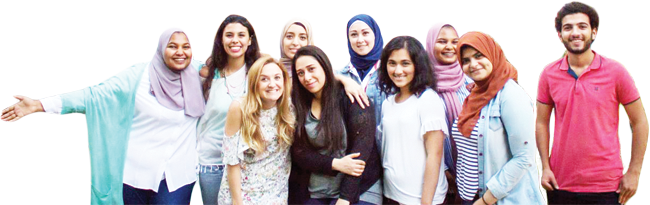
The organization has now established events in Cairo and Italy to connect migrants and refugees in a startup ecosystem, offerring support and fostering ideas. (Supplied)
“We started creating a series of events in Cairo, and now Italy, for them to get in touch and integrate with the startup ecosystem,” she said.
To join the network, an entrepreneur simply needs to register on the website, upon which SWB includes them in its database.
“We pair them up with mentors,” Primo said. “We offer workshops, we do pitching competitions, and we always partner with local incubators and accelerators because we’re not looking to create a separate cluster of startups, but to bring those two worlds together.”
While SWB does provide some training, its goal was never to teach the essentials of becoming an entrepreneur.
“We have a database of over 200 organizations that offer boot camps, training, incubation, or acceleration focused directly on migrants and refugees,” she said.
SWB is launching a chatbot that anyone can use to find those resources. “Our vision is to build a real-world movement where newcomers — migrants or refugees — are seen as an opportunity and a source of enriching culture. We want to have chapters around the world,” Primo said.
SWB had to deal with the typical challenges facing a social startup, the hardest being assembling a team that shared the same vision.
“We’re so lucky to have 35 amazing volunteers in different countries that help out in different ways,” Primo said.
“The first people who wrote to me to give feedback about the launch of the website and offer help were refugee entrepreneurs.”
As the pieces fall into place and the vision of an “ecosystem builder” takes shape, SWB has numerous plans for the future.
“We’re planning a summit in Cairo for the end of this year. We’re also working on a platform with access to the directory of startups.”
The organization has just launched a podcast that will feature a series of interviews with industry leaders and influential people in the scene, all of them migrants and refugees.
“Each interview is focused on a lesson learned, a particular skill, or tips,” Primo said. “It’s educational content, but it’s also very interesting and heart-warming stories.”
• This report is being published by Arab News as a partner of the Middle East Exchange, which was launched by the Mohammed bin Rashid Al Maktoum Global Initiatives and the Bill and Melinda Gates Foundation to reflect the vision of the UAE prime minister and ruler of Dubai to explore the possibility of changing the status of the Arab region.


