

KSRelief completes 22 food projects worth $16.83mln in 14 years of Pakistan operations

A KSRelief official distributes food packets in Islamabad on April 30, 2019. (Photo Courtesy: KSRelief)
Updated 30 August 2019
Follow

KSRelief completes 22 food projects worth $16.83mln in 14 years of Pakistan operations

  • Approximately 600,000 Pakistanis benefited from KSRelief food items in 2019
  • Agency distributed 230 tons of dates this year to 396,000 people in vulnerable areas

ISLAMABAD: The King Salman Humanitarian Aid and Relief Center (KSRelief) has completed 22 food security projects worth $16.83 million in Pakistan since 2005, a senior official at the international aid agency said as it completes 14 years of operations in the South Asian nation.
KSRelief has one of the largest humanitarian aid budgets in the world and operates in 44 countries where it has spent upwards of $3.25 billion on 1,011 projects. The agency has worked as a partner with UNHCR, the UN Refugee Agency, on several projects, including providing basic relief materials for internally displaced people in Yemen and emergency support for Rohingya refugees in Bangladesh.
“We are working here since 2005 when a massive earthquake hit Pakistan,” Dr. Khalid Mohammed Alothmani, Director KSRelief Pakistan, told Arab News in an interview this week, referring to a disaster in which about 75,000 people were killed in the country’s north. “We have carried out relief activities for quake and flood victims and focused our attention on several other areas.”
“We have joined hands together with our Pakistani brothers by working with them in times of need and will keep on doing so in the future as well,” Alothmani said.
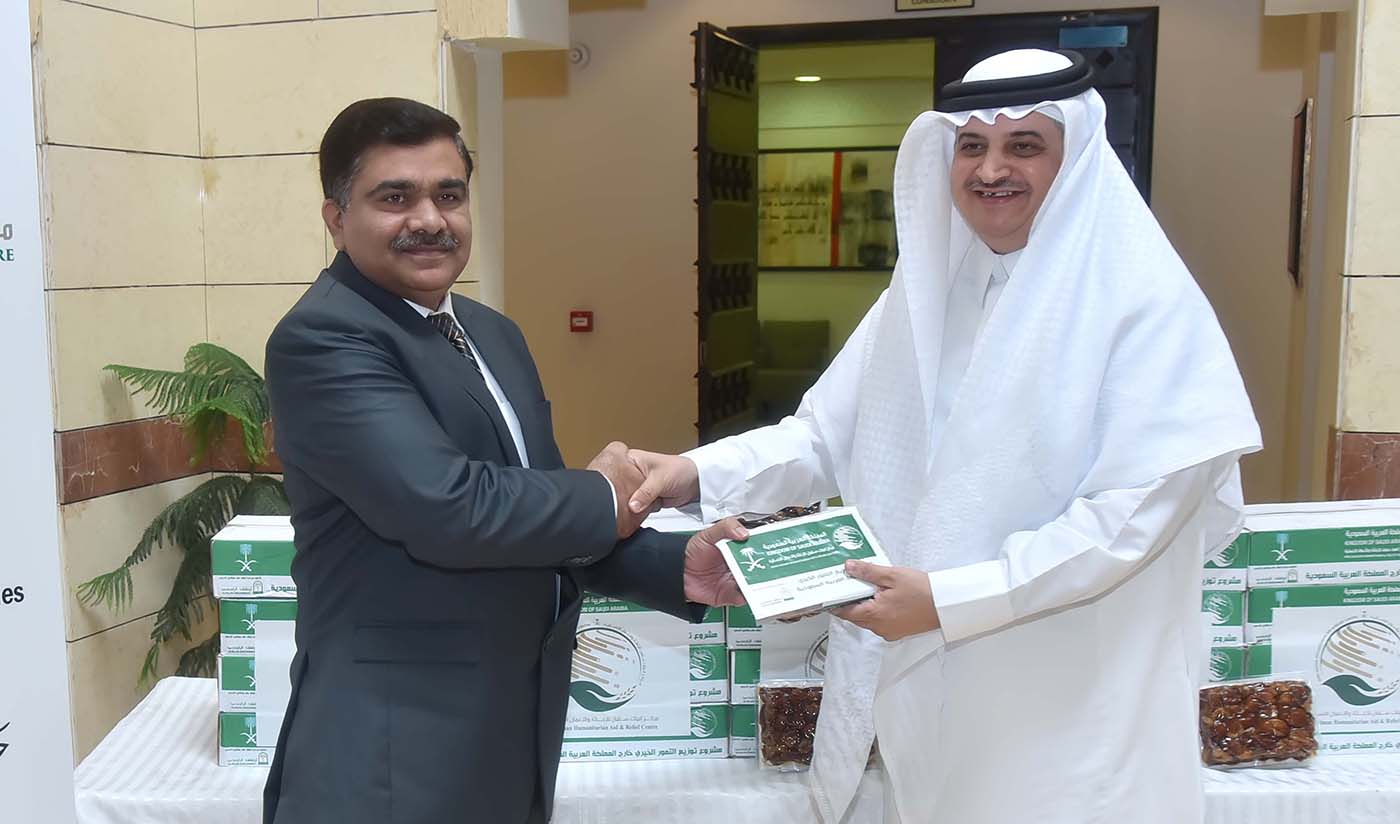


Saudi Ambassador to Pakistan Nawaf Bin Said Al-Maliki hands over 150 tons of dates from Saudi Arabia to the government of Pakistan in a ceremony held in Islamabad on May 23, 2019. (Photo Courtesy: KSRelief)

According to Pakistan’s National Nutrition Survey 2018, 36.9 percent of households are “food insecure” while 18.3 percent face “severe” food insecurity. The survey also shows that 15 percent of children under five suffer from acute malnutrition, the second highest rate in the region. About 44 percent of children in the same age bracket suffer from stunted growth, 32 percent are underweight and a majority of children under two years of age consume less than half of their daily energy requirements, with low levels of vitamins and minerals.
To combat malnutrition, this year, KSRelief said it had distributed 18,250 food packages containing essential items that benefited 91,250 poor Pakistanis in different parts of the country. About 15,679 meat packs were also distributed among 109,753 people.
According to a KSRelief report, approximately 600,000 Pakistanis have benefited from its food related programs in 2019.
The agency distributed 230 tons of dates this year, the report said. Out of these, 80 tons were distributed through the World Food Program and 150 tons through the government of Pakistan. The report said at least 396,000 people benefited from the dates in the most vulnerable areas across the country.
“Dates donated by Saudi Arabia each year reach vulnerable segments of our society,” said Imtiaz Ali at Pakistan’s Ministry of National Food Security. “They serve a dual purpose since they can be stored for a longer time and provide high nutrition as well.”


Pakistan announces compensation for Islamabad mosque blast that killed over 30

Updated 11 February 2026
Follow

Pakistan announces compensation for Islamabad mosque blast that killed over 30

  • Prime Minister Shehbaz Sharif visits Islamabad mosque, meets family members of victims who were killed in blast
  • Sharif announces compensation of $18,000 for relatives of those killed in attack, $10,800 for those seriously injured

ISLAMABAD: Prime Minister Shehbaz Sharif on Wednesday announced compensation for the victims of a suicide attack earlier this month that targeted a mosque in Islamabad, vowing that sacrifices of those who gave their lives would not go in vain. 

At least 32 people were killed and over 150 others sustained injuries in a suicide blast last Friday that targeted Imam Bargah Qasr-e-Khadijatul Kubra mosque in the Tarlai Kallan area located on Islamabad’s outskirts.

The blast occurred during Friday prayers at the packed mosque, with Daesh saying one of its militants had targeted the congregation by detonating an explosive vest.

Sharif visited the mosque with Interior Minister Mohsin Naqvi and other officials on Wednesday. He met relatives of the blast and offered prayers for them. 

“Rs5 million [$18,000] will be given to the families of each martyr, Rs3 million [$10,800] to those seriously injured, and Rs1 million [$3,600] to others who suffered minor injuries,” a statement from Sharif’s office said. 

Sharif also announced Rs10 million [$36,800] for the family of Aun Abbas, who had resisted the suicide bomber. He later visited Abbas’ residence and offered prayers for his soul and met his family. 

“The entire nation, including myself, is deeply grieved over the heinous, despicable, and extremely deplorable act of terrorism on Feb. 6,” the Pakistani prime minister said. 

During his visit to the mosque, the prime minister was briefed about the attack by police and district administration authorities who accompanied him. 

Friday’s mosque blast was the deadliest in Islamabad since a 2008 suicide bombing at the Marriott Hotel that killed 63 people and wounded more than 250. In November last year, a suicide bomber struck outside a court in the capital, killing 12 people.

Tallal Chaudry, Pakistan’s state minister for interior, blamed the Islamabad mosque attack on militants that he said were “sponsored by India and supported by Afghanistan.”

Both countries have always denied Islamabad’s accusations of supporting militant groups who carry out attacks in Pakistan.