

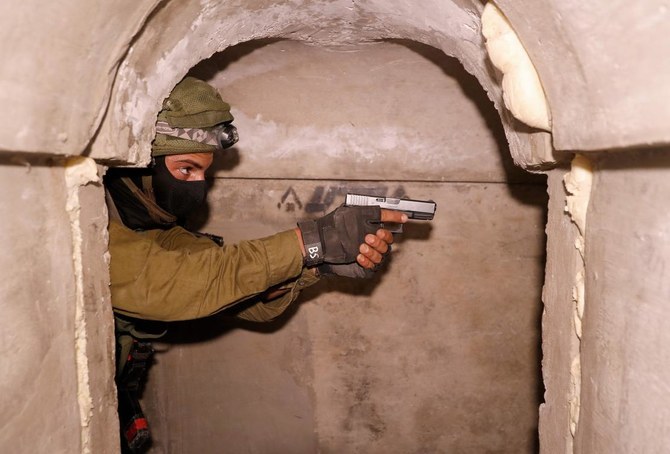

ISRAEL: An Israeli soldier carefully eyes the narrow, damp tunnel carved from surrounding rock through a tightly strapped black headset.
He is not in one of the attack tunnels built by Lebanon’s Hezbollah under the border with Israel, but one of a new generation of soldiers using virtual and augmented reality to train.
In a small computer-lined room, T., a 20-year-old member of Yahalom, or Diamond — the special operations unit of the army’s combat engineering corps — simulates an advance along the narrow passage.
His head sweeps from side-to-side and up and down, while his hands probe walls invisible to the onlooker.
“We see everything, even falling drops of water,” says the soldier, who cannot be named for security reasons.
“I really feel like I’m there,” he told AFP. “I feel the humidity, the sense of being stifled.”
The headset displays every detail of the virtual tunnel — a reconstruction of one of several subterranean infiltrations uncovered by the army — allowing instructors to guide T. in real time.
In December, the Israeli army launched an anti-tunnel operation on the Lebanese border dubbed “Northern Shield.”
Israel said it had found six tunnels, while UN officials confirmed three reached into the Jewish state’s territory.
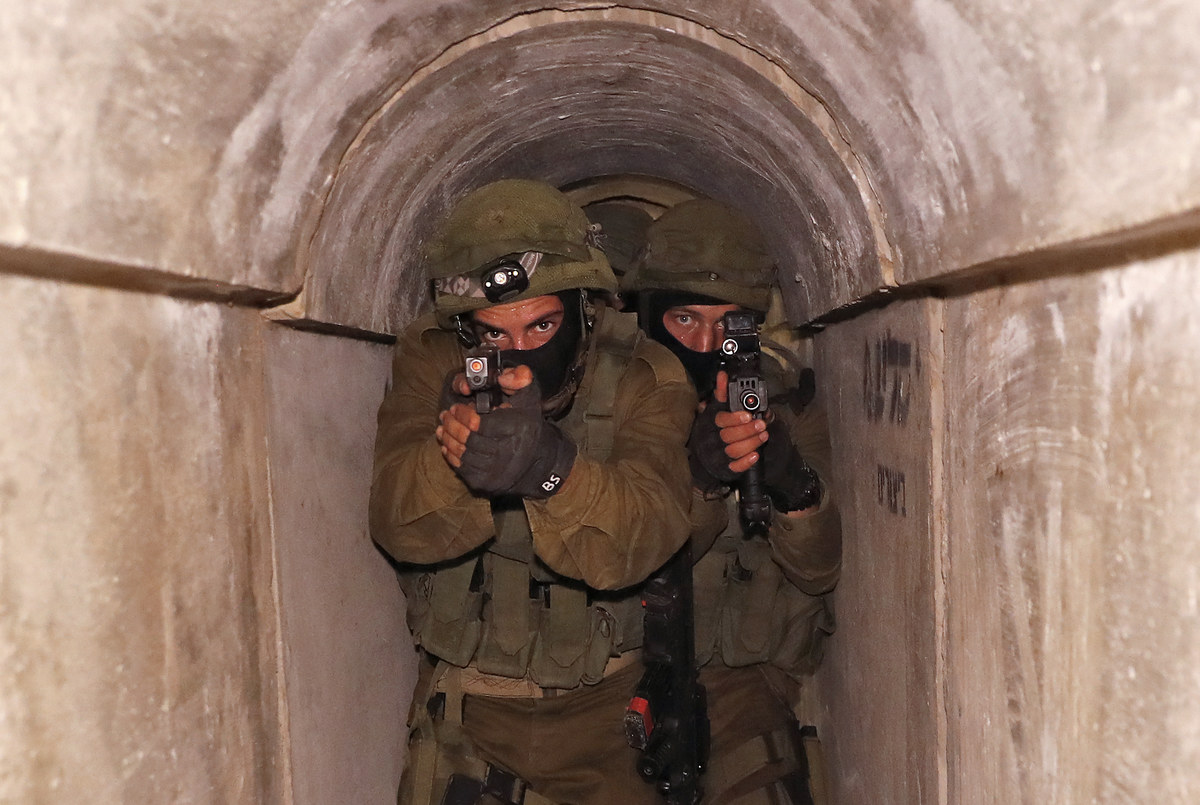
Israeli soldiers engage in combat exercise inside a physical mockup enemy tunnel at an Israeli Army base in Petah Tikva, northeast of Tel Aviv, on Aug. 20, 2019. (Jack Guez /AFP)
Hezbollah planned to use them to abduct or kill Israeli soldiers or civilians, and to seize territory in the event of hostilities, according to the military.
They ran for dozens of meters and some reached a depth of 55 meters (180 feet).
In recent days, fresh tensions have erupted between Hezbollah and Israel; the Iran-aligned Shiite movement blamed the Jewish state for a drone attack on its Beirut stronghold. Israel has not commented.
Hezbollah chief Hasan Nasrallah called it the first such “hostile action” since a 2006 war between his movement and the Jewish state. He threatened retaliation.
The Israeli army is also on the lookout for tunnels dug into the Hamas-ruled Gaza Strip.
They are used by militants and, on the Egyptian border, smugglers trying to circumvent a blockade on the Palestinian enclave.
The Israeli army says it has destroyed several tunnels that ran into its territory and were designed as attack launchpads.
The Egyptian army has vigorously hunted for and blocked smuggling tunnels from its side of the frontier.
Until recently the domain of video game creators, the virtual world has in recent years made inroads into medical, aerospace and military research, where it is increasingly used for training.
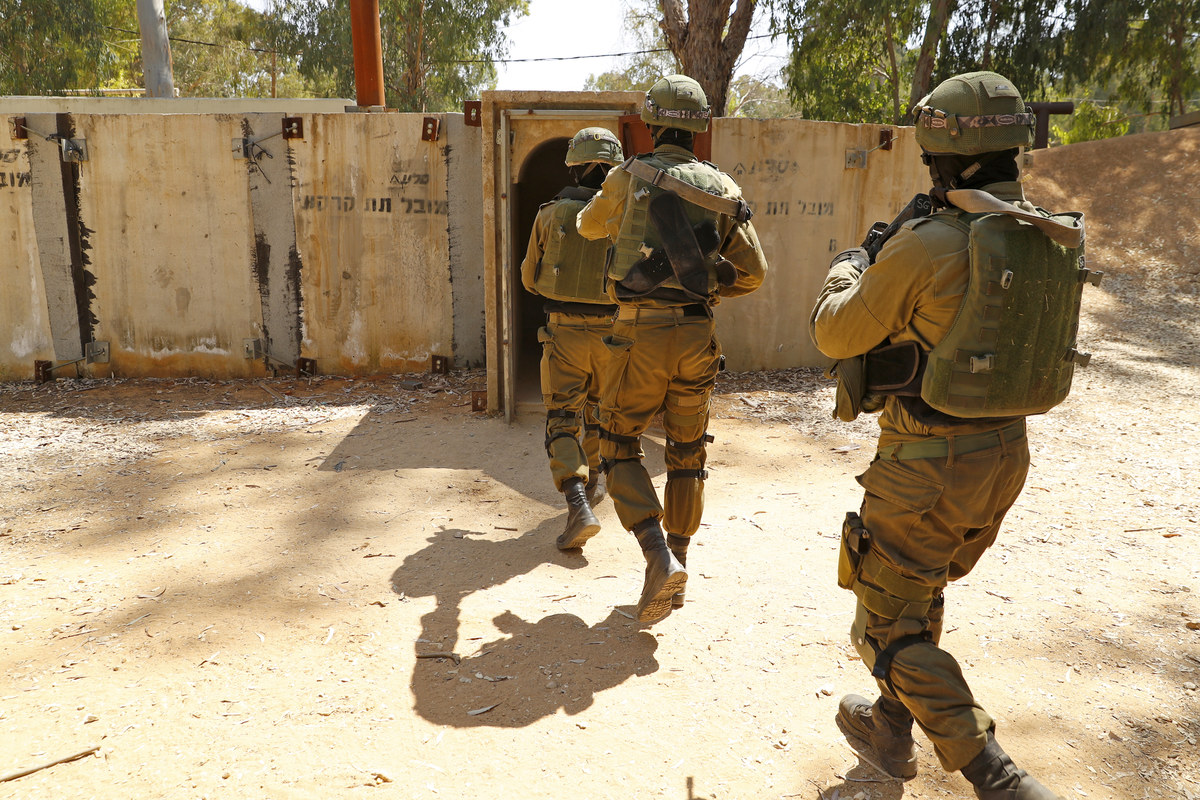
In December 2018, the Israeli army launched an anti-tunnel operation on the Lebanese border nicknamed “Northern Shield.” Six tunnels were located, of which three reached into northern Israel. (AFP/Jack Guez)
“Technology is an essential part of the fight,” which justifies heavy investment, says H., commanding officer of Yahalom’s training center at a military base in central Israel.
The Hezbollah tunnels exposed by Israel have been digitally scanned and appear on a soldier’s headset as they are in reality.
“The soldier sees what a tunnel looks like,” says H.
Since it is not always possible to train in the field, the virtual world allows personnel to familiarise themselves with a hostile underground environment without leaving their base, he added.
There are a dozen soldiers on the current course; 100 have been through it since it began three years ago.
While virtual reality (VR) aims to place the person in a simulated world, augmented reality (AR) allows elements to be added in a real-world environment. Both aim to provide a multisensory experience.
Soldiers can experience scenarios where there are obstacles such as holes, cables, or explosive devices and simulate the hand movements they will need to defuse a real bomb.
“There are elements one can face in a tunnel which are difficult to reproduce,” such as humidity, says the commander, but it serves as a good introduction to the subject.
“It’s not very nice to be dozens of meters underground, cut off from the world,” says T. “Anything that can help you prepare is important.
He says that the electronic training has made him “more ready to enter a tunnel” in real life.
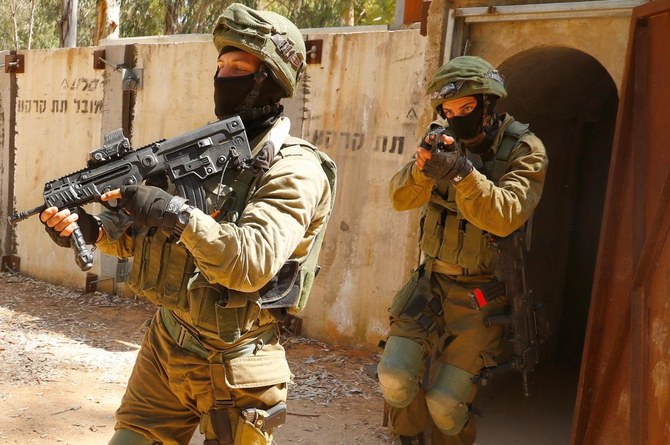
Not far from the “VR room” is a physical mockup of a Hamas tunnel where soldiers can engage in combat exercises, polishing what they have learnt through VR.
Three soldiers make their way inside, their faces covered with balaclavas, machine guns in their hands as they move through the rock passageway, narrow and dark.


