

Misk promotes Asiri art the modern way at Al-Soudah Season

1 / 5
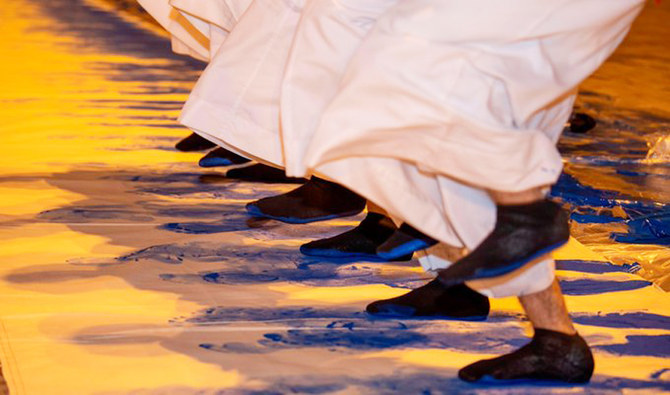
The art is performed collectively through dances accompanied by drums, and raising daggers and sticks in the air. (Supplied)
2 / 5
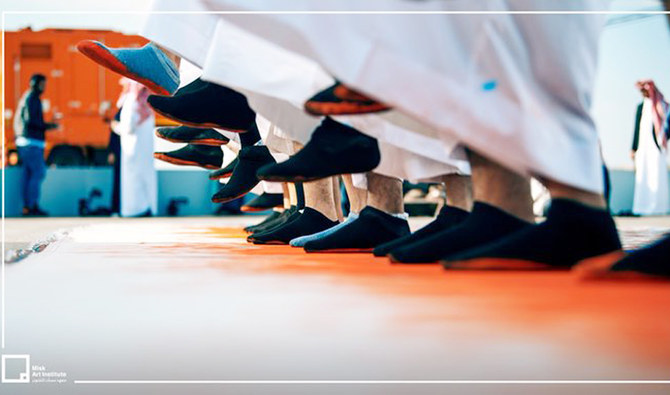
The art is performed collectively through dances accompanied by drums, and raising daggers and sticks in the air. (Supplied)
3 / 5
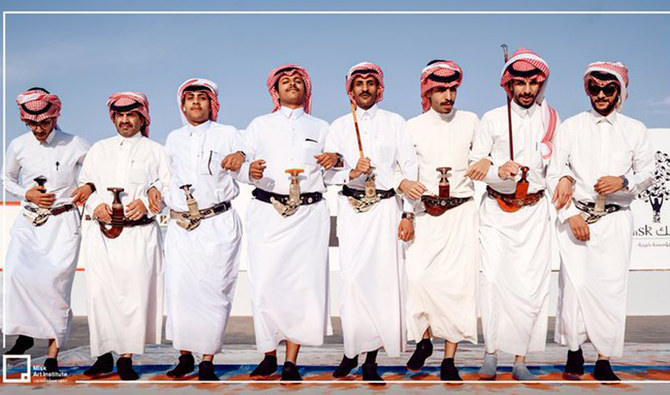
The art is performed collectively through dances accompanied by drums, and raising daggers and sticks in the air. (Supplied)
4 / 5
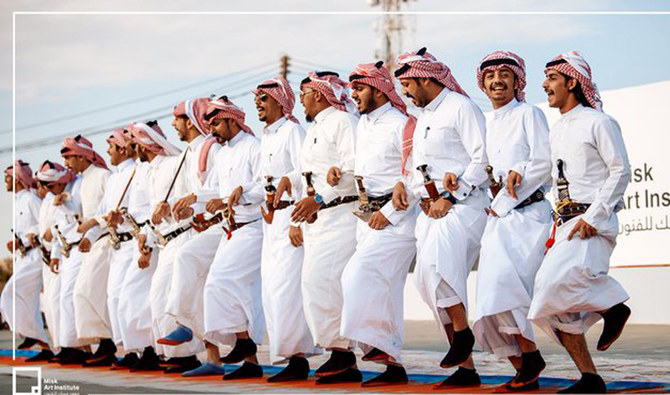
The art is performed collectively through dances accompanied by drums, and raising daggers and sticks in the air. (Supplied)
5 / 5
The art is performed collectively through dances accompanied by drums, and raising daggers and sticks in the air. (Supplied)
Updated 27 August 2019
Follow

Misk promotes Asiri art the modern way at Al-Soudah Season

  • Al-Khatwa is a traditional way to express happiness using performance in the Asir region

RIYADH: The Misk Art Institute of the Prince Mohammed bin Salman bin Abdul Aziz Foundation is shedding light on Asiri arts in a contemporary way, explaining details of Al-Khatwa art for visitors, via interactive scenes documenting Al-Khatwa through drawing.
The institute’s Al-Khatwa exhibition coincides with Al-Soudah Season to promote national arts.
Al-Khatwa is a traditional way to express happiness using performance in the Asir region. The art is performed collectively through dances accompanied by drums, and raising daggers and sticks in the air. Each tribe in the Asir region has its own traditional versions. ​
While Misk organized a number of artistic programs and activities in Abha for August, visitors of Mount Al-Soudah went to see the Al-Khatwa exhibition and learned about what it involved.
It included interactive photos, visual segments reflecting the popular culture of Al-Khatwa dance, the expression of the authenticity of the southern people through movement and its relation to the area’s mountainous nature and costumes that reflect the individuality of Asir.
The music wall in the Al-Khatwa exhibition presented instruments such as al-zeer, al-barmeel, al-zalfa, al-mifraz and al-tanka, and their roles in composing harmonious and divergent tunes that distinguish Al-Khatwa from other forms of artistic expression.
Asiri costumes — especially women’s attire — attracted a big audience, and the exhibition included jewelry worn by brides on wedding nights, as well as other traditional Asiri ornaments.


The exhibition also included a section named “Panoramic Khatwa,” giving visitors a live image of Al-Khatwa performances through meticulously introducing and presenting it via a live show, as well as giving the chance for visitors to participate in it.
Misk Art Institute’s other activities and programs for Al-Soudah Season consist of 40-minute daily workshops for a number of mediums, and short sessions for artists which require pre-registration, in addition to a bazaar for artists at the end of every week in Al-Muftaha.
Al-Muftaha village programs include the “Ard Al-Toud” exhibition dedicated to various artistic oeuvres reflecting Asir’s environment. The exhibition presents the culture of the region through art, focuses on the concept of time and space in shaping the area’s identity and history, and showcases its cultural and artistic repertoire.
As for Al-Soudah, it includes Al-Khatwa exhibition and 40-minute daily workshops for amateurs and children to learn different styles of the dance to motivate young talent and spread visual arts culture.

Decoder

Al-Khatwa

It is a traditional Asiri dance-based performance medium. The art is performed collectively by a group across the Asir region, accompanied by drums, ceremonial daggers and sticks. 


Saudi hospitality boom sparks innovation beyond the plate

Chefs at Julien prepare meals to pair with Diageo drinks. (AN photo by Basmah Albasrawi)
Updated 4 sec ago
Follow

Saudi hospitality boom sparks innovation beyond the plate

RIYADH: As restaurants and hotels in Saudi Arabia refine their culinary identities, beverages are increasingly being treated as crafted experiences in their own right, shaped by technique and intention.

At the Four Seasons Riyadh, Diageo hosted a private tasting at Tonic Bar followed by a 10-course dinner at Julien, offering a snapshot of how this evolution is beginning to take shape, as international players and local venues test new approaches to pairing and presentation. 

Speaking to Arab News, Nick Rees, marketing director of Diageo MENA, pointed to the rapid growth of the nonalcoholic segment globally and in the region: “There’s a far faster growing percentage of it (the industry) is non-alcohol … There (are) trends globally … A lot of it will be pointed to wellness, mindful drinking.”

Rees said that Saudi Arabia’s fast-developing culinary and hospitality scene calls for beverages that match the level of excellence seen in kitchens across the Kingdom.

“It’s kind of the lack of choices and that’s where we want to be able to provide people the option, and people here absolutely have the same kind of talent and desire as their counterparts behind the kitchen,” he said.

“That’s where our role is to give people the kind of core ingredients for them to be able to work with … we have many more brands that we would love to introduce to the Kingdom.”

The dinner at Julien paired dishes with drinks made using Tanqueray 0.0, Captain Morgan 0.0, and Guinness 0.0, offering a glimpse into the range of styles Diageo is bringing to the market.

Flavor profiles ranged from light and refreshing combinations with cucumber and capers brine to richer, malt-forward blends, each designed to complement the accompanying dishes, from ravioli to black cod. 

Rees emphasized that pairing food with thoughtfully crafted beverages is becoming an essential part of the hospitality experience. 

“In the Kingdom, we’re looking at giving people the experience that currently is not available to them because I know for sure that the kind of quality and expertise and craftsmanship that can go into creating some of these drinks is absolutely as exciting as the work that the chefs would do with their food,” he said.

Anthony Abou Haider, head of Gulf at Diageo, said the company sees long-term potential in Saudi Arabia’s hospitality sector. 

“It’s such an opportunity to be a part of this transformation journey,” he told Arab News. “We’re not looking for a short-term gain, we’re looking at a very long-term gain here because whatever we do now is building for the future.”