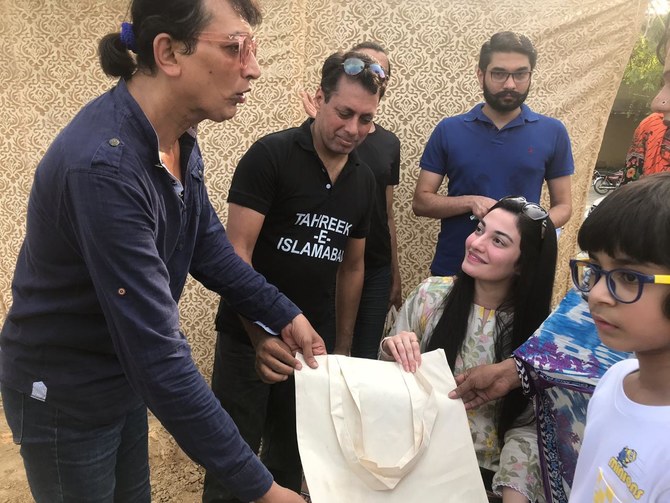
ISLAMABAD/KARACHI: Lauding the government’s move to provide an alternate means of livelihood for the transgender community, several welcomed an initiative to sell eco-friendly bags in Islamabad starting from Sunday.
The Islamabad local government banned the manufacture, sale, and distribution of plastic carrier bags this month, on the country’s independence day, as part of Prime Minister Imran Khan’s “Clean, Green Pakistan” campaign.
The new ban follows a three-month-long campaign to raise awareness about the environmental hazards of plastic bags, which can kill wildlife, block drainage systems, collect in waterways and cause other environmental and health problems.
Members of the trans community said the government had previously ignored them in the “Clean, Green Pakistan” and other drives and it was on the community’s own insistence that the administration had now invited them to be a part of the campaign to ban plastics.
“We approached the authorities to give us the opportunity of getting a respectable livelihood through this drive,” said Nadeem Kashish, a transgender activist who runs the non-government trans rights organization SAFAAR.
Kashish said around 1,200 trans people lived in the capital city and had few job opportunities and were constantly faced with arrests, jail terms, harassment and huge fines for begging on the streets, one of their main sources of income.
Kashish said the community hoped the government would provide some kind of initial investment in the trans community’s attempt to buy eco-friendly bags. However, she added that the group was already making its independent preparations to become part of the anti-plastics drive.
“Through contributions we have collected around Rs 10,000 and bought some 400 bags,” Kashis said. “Since we go in the streets and all types of neighborhood, we have set just Rs5 profit margin for each bag, which will cost us Rs25.”
“(From Sunday), we will be in the streets of Islamabad, selling bags and creating awareness,” Kashish said.
Islamabad deputy commissioner Muhammad Hamza Shafqat said authorities had given transgender people the incentive of setting up free stalls to sell paper and fabric bags in the expensive Islamabad capital to help them earn a respectable earning and participate in the the country’s efforts to combat pollution. He said authorities had already taken on board prominent members of the trans community.
Shafqat said though his administration would not provide free bags or capital to transgender people to start their work, makeshift stalls would be provided to them free of cost and they would not have to pay the daily rent of between Rs15,000 and Rs20,000.
“We will neither charge them rental or license fee nor impose a fine on them,” the official said. “They can also set up makeshift stalls after informing us at a location of their choice.”
Shafqat said the initiative might not “bring a revolution” but “our efforts will certainly bear fruits. Involving transgender [people] will boast our drive.”
Shafqat said authorities were attempting to involve transgender people in the anti-plastics campaign because they had few real job opportunities and had to resort to begging.
“We haven’t equated beggars and trans people but since both are involved in begging, we want them to adopt a respectable way of earning, which will not only help us overcome the menace [of begging] but also help them,” Shafqat said.


![]()

Eco-friendly bags go on sale to replace plastic in Islamabad
Short Url
https://arab.news/63rbf
Eco-friendly bags go on sale to replace plastic in Islamabad
- Local government bans manufacturing and distribution of the item from this month
- Initiative promoted by transgender community in the capital
Latest updates


© 2026 SAUDI RESEARCH & PUBLISHING COMPANY, All Rights Reserved And subject to Terms of Use Agreement.