ISLAMABAD: Pakistan’s National Disaster Management Authority (NDMA) said on Wednesday over 2,800 people had been evacuated to safer places from 18 villages submerged after India unexpectedly released excess water into River Sutlej.
Relations between neighboring Pakistan and India, already hostile, have been further strained over India’s decision this month to revoke the special status of its portion of the Kashmir region that both countries claim. Pakistan reacted with fury, cutting transport and trade links and expelling India’s ambassador in retaliation.
Islamabad says the unexpected release of water into the River Sutlej that flows from India to Pakistan is part of an attempt by New Delhi to flout a longstanding treaty between the countries.
“1220 people were evacuated from three highly affected villages,” the NDMA said in a statement. “From other locations 1613 other were also moved to safer places.”
In a separate statement, NDMA said 81 relief camps had been set up in flood-prone areas and concerned authorities directed to ensure the timely evacuation of people. Necessary precautionary measures were also in place in Bahawalpur, Bahawalnagar, Lodhran, Vehari, Pakpatan, Okara and Kasur districts, the statement said.
“Water level in the river Sutlej is increasing while all the other major rivers will remain in low to medium flood level,” the NDMA said.
According to NDMA spokesman Brig. Mukhtar Ahmed, India had released more than 204,000 cusecs of water into the Sutlej river without prior warning. Ahmed said the water level in Ganda Singh Wala village, located in Kasur district, was around 19.30 feet, with 60,340 cusecs of water inundating the area on Wednesday.
Official data provided by the NDMA shows 221 people have been killed and 165 injured in rain-related incidents in Pakistan since July this year as Pakistan continues to deal with flash floods and landslides during the monsoon season which usually runs from July to September.
India and Pakistan have long argued over water resources. A World Bank-mediated arrangement known as the Indus Water Treaty splits the Indus River and its tributaries — which 80 percent of Pakistan’s irrigated agriculture depends on — between the countries.
India, which lies upstream, threatened in February to stop sharing excess water with Pakistan after a suicide bomb attack in Kashmir killed 40 Indian paramilitary police. A Pakistan-based group accepted responsibility for the attack. Islamabad denies state complicity.


![]()

Pakistan says 18 villages submerged as India releases water into river Sutlej
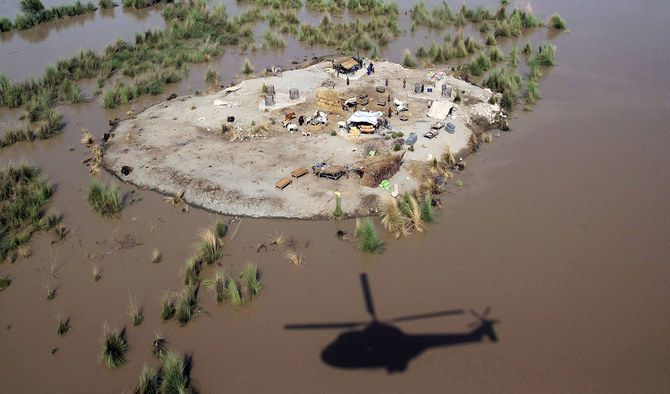
Pakistan says 18 villages submerged as India releases water into river Sutlej
- Over 2800 people evacuated to safer locations, says National Disaster Management Authority
- 81 relief camps set up as 204,000 cusecs of water released into Sutlej without warning
Latest updates


© 2026 SAUDI RESEARCH & PUBLISHING COMPANY, All Rights Reserved And subject to Terms of Use Agreement.