TUNIS: Tunisia’s moderate Islamists are hoping the genial Beethoven fan they have nominated to run in next month’s presidential elections will break the mold in the Arab world by turning success at the ballot box into uncontested rule.
Abdelfattah Mourou is a lawyer who has distanced himself from the more socially conservative positions of his Ennahda party in the past, has friendly relations with opponents and is known for a jokey manner.
His aim, he says, is to unite Tunisians via the election to be held on Sept 15 in which he will face 25 other candidates, including prominent secularists such as Prime Minister Youssef Chahed, his Defense Minister Abdelkarim Zbidi and a TV tycoon.
“If I am elected I will be president of all Tunisians, not president for Ennahda supporters,” Mourou, 71, told reporters when he submitted his application earlier this month.
Ennahda won the first free parliamentary elections after the Arab Spring pro-democracy uprisings of 2011, but did not stand in the presidential poll after protests by secularists like those against Egypt’s freely elected Muslim Brotherhood, which was subsequently banned.
Mourou, kept under police surveillance during the 24-year rule of Zine El Abidine Ben Ali, has a good chance of surviving the first round of the election because the secularist vote is split, analysts say.
If he wins the second round he would become a standout, elected Sunni Islamist president in North Africa and the Middle East, where many longtime rulers style themselves as bulwarks against radical Islamism. Whether that would happen is less clear in a country with no reliable opinion polls.
Some Tunisians are wary, recalling a 2013 reception Mourou gave to visiting Islamist preacher Wagdy Ghoneim, who was excluded from the United Kingdom in 2009 for “seeking to foment, justify or glory terrorist violence.” Mourou later apologized, saying he did not realize the full extent of his views.
“Mourou is like a chameleon; his positions change every day like the rest of the Islamists,” said Mouna ben Salem, a student in Tunis, capital of the former French colony, where the key tourism sector is recovering from 2015 militant attacks.
Ennadha officials say the party has shown its true colors in its readiness to seek political consensus and is entitled to compete in polls for the president, who deals only with foreign and defense policy in Tunisia’s nascent democracy.
Mourou was not immediately available for comment, but he regularly displays moderate credentials, attending annual gatherings of Jews at the ancient Ghriba synagogue, for instance, where he speaks about religious coexistence.


![]()

Ennahda make new power quest in Tunisia
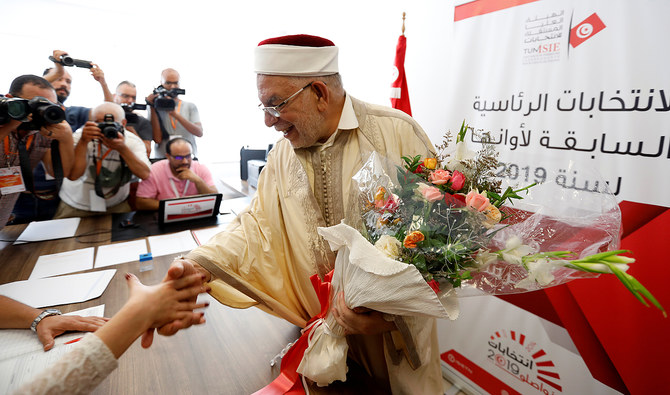
Ennahda make new power quest in Tunisia
- Abdelfattah Mourou is a lawyer who has distanced himself from the more socially conservative positions of his Ennahda party in the past


Latest updates


Recommended


© 2026 SAUDI RESEARCH & PUBLISHING COMPANY, All Rights Reserved And subject to Terms of Use Agreement.