SIMALKA CROSSING: The Kurdish authorities in northeast Syria on Monday handed over four children linked with the Daesh group to Germany, their first such repatriation to the European country, an official said.
“The autonomous region handed over four children from Daesh families to a delegation from Germany,” said Fanar Kaeet, a foreign affairs official with the Kurdish authorities.
They included a boy and two sisters who had lost both parents, and a fatherless girl infant who was repatriated for health reasons, Kurdish authorities said.
All are under 10 years old, they said.
A spokeswoman for the German foreign ministry confirmed the handover to staff from its consulate in neighboring Iraqi Kurdistan at the Simalka border crossing.
“I can confirm that four children who were in custody in northern Syria were able to leave Syria,” she said.
“The children were received on the Iraqi-Syrian border by staff of the consulate in Irbil and will be given to family members,” the spokeswoman said.
“From there, the children and their family members will, we believe, travel to Germany.”
Syria’s Kurds have spearheaded the US-backed fight against Daesh in Syria, and in March expelled the extremists from their last patch of territory in the war-torn country’s far east.
Even as they fight remaining sleeper cells, thousands of alleged Daesh fighters and family members are being held in their custody.
These include hundreds of suspected foreign fighters in their jails, and thousands of their alleged family members in overcrowded camps.
Western countries have been largely reluctant to repatriate their nationals.
But France and Belgium have brought a handful of orphans home, while the United States last year repatriated a woman with her four children.
Kazakhstan, Uzbekistan and Kosovo have repatriated dozens of women and children.
Daesh overran large parts of Syria and Iraq in 2014, proclaiming a “caliphate” there, but offensives in both countries have seen them lose that territory.
A dozen children of alleged jihadist fighters have been repatriated from Iraq to Germany since March.


![]()

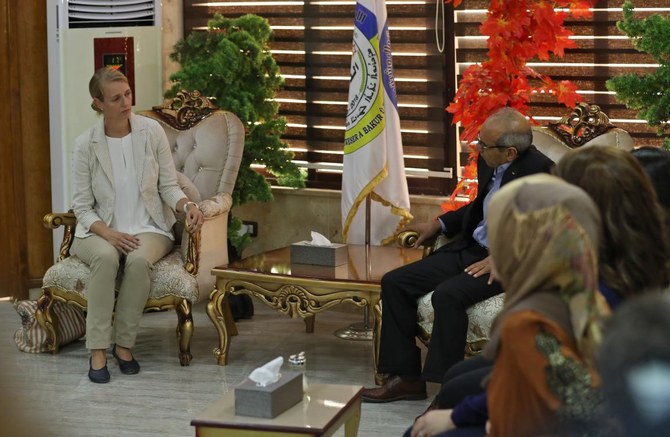
Syria Kurds hand over four Daesh-linked children to Germany
Syria Kurds hand over four Daesh-linked children to Germany
- They included a boy and two sisters who had lost both parents, and a fatherless girl infant
- A spokeswoman for the German foreign ministry confirmed the handover to staff from its consulate


Latest updates


© 2026 SAUDI RESEARCH & PUBLISHING COMPANY, All Rights Reserved And subject to Terms of Use Agreement.