A Saudi app that promotes Arabic reading

Updated 19 August 2019
Follow

A Saudi app that promotes Arabic reading

  • Lamsa was launched in Saudi Arabia in 2012
  • It provides an innovative way of motivating children to learn

DUBAI: The most crucial year in a child’s education may be the age of 8, or third grade, according to a study by the Annie E. Casey Foundation.The organization, which focuses on improving the wellbeing of American children, found this to be the developmental phase when children transition from “learning to read” to “reading to learn.”

The research also established that third graders who lack proficiency in reading are four times as likely to become high-school dropouts.

The significance of this pivotal point in early childhood development is what drives Badr Ward, CEO of Arabic edutainment app Lamsa, to develop innovative ways of motivating kids in the Arab world to read and learn in their language.

“If we don’t encourage reading at that age, we could be taking the risk of them having a life-long issue with catching up,” Ward said.

Since children already spend a considerable amount of their time on connected devices, Ward is convinced that edutainment — media designed to educate through entertainment — is the best way to make screen time “relevant and meaningful.”
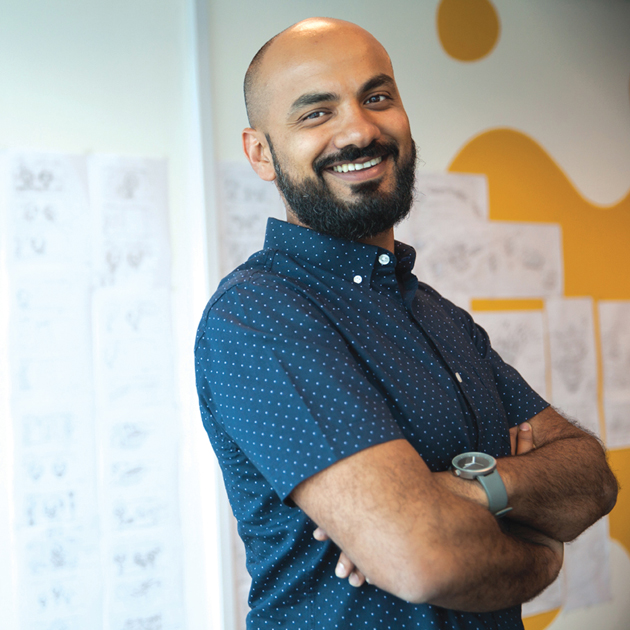


Badr Ward, CEO of Lamsa. (Supplied Photo)

Launched in Saudi Arabia in 2012, Lamsa provides an ad-free platform featuring animated literature, rhymes, songs, interactive games and educational videos in Arabic for children aged between 2 and 8.

Ward said: “We have to face reality. Education systems across the world are legacy systems. Whether we like it or not, technology has changed the way we consume information. Children today have access to devices from the moment they are born. So whether it’s reading on paper or e-books or interactive storytelling, we need to look at encouraging them to read, and to love to read and learn.”

Ward explains that much like a favorite teacher impacts a child’s interest in a subject, edutainment has a significant effect on their curiosity about a topic.

He modelled the characters in the edutainment app after his daughter Joory and son Adam, whose lack of interest in reading prompted him to start Lamsa.

Ward sought advice from his friend Leonard Marcus, an author, historian and expert on English language children’s literature. Marcus recommended taking the kids to a comic book store and letting them explore without forcing them to buy anything.

“So I did that,” Ward said. “We went to the comic book store, and I let them roam around. They were fascinated by the images.”

“Arabic is not just a language. It’s so important for children to understand their heritage and culture.”

Badr Ward, CEO of Arabic edutainment app Lamsa

He then asked his kids if they wanted anything, and they asked to have some of the comics. “In the evening, I found my children opening the comic book and just laughing,” he said.

“Because of that start three years ago, they can’t let go of books now.”

Ward said seeing the power of images and illustrations has made him support using pictures to captivate children.

The lack of quality and culturally relevant educational material in Arabic remains a challenge, he said. For this reason, Lamsa’s content library has been developed to celebrate Arabic not just as a language but as a source of heritage, culture, literature, music and food. The app team works in partnership with Arab authors, illustrators and organizations.

“Arabic is not just a language,” Ward said, adding that for Arab children everywhere, understanding cultural context is crucial to their values, beliefs and identity.

“It’s so important in the development of children to have a clear understanding of where they come from. In order to establish understanding of other cultures and learn tolerance, you need to start with your own. It’s fundamental to confidence, identity and heritage.”


 The Middle East Exchange is one of the Mohammed bin Rashid Al-Maktoum Global Initiatives that was launched to reflect the vision of the UAE prime minister and ruler of Dubai in the field of humanitarian and global development, to explore the possibility of changing the status of the Arab region. The initiative offers the press a series of articles on issues affecting Arab societies.


Balad Beast brings global beats to historic streets

Updated 31 January 2026
Follow

Balad Beast brings global beats to historic streets

  • ‘MDLBEAST put us on the international map,’ say Saudi electronic duo Dish Dash

JEDDAH: The music festival Balad Beast concluded its fourth edition this weekend, having transformed Jeddah’s UNESCO World Heritage district of Al-Balad into an open-air celebration of music, culture and creativity that attracted thousands of music lovers over two nights.

The festival, organized by Saudi music platform MDLBEAST, featured more than 70 local, regional and international artists across four stages, offering audiences a diverse journey through electronic, hip-hop and global sounds.

French Haitian singer-songwriter Naïka performed on the second night of Balad Beast. (Supplied)

Speaking to Arab News, MDLBEAST chief creative officer Ahmad Al-Ammary, also known as DJ Baloo, described Balad Beast as a “cultural takeover” adding that finding the right spaces for dance floors was a challenge, “but Balad is constantly evolving and we work with that change.”

Addressing the challenges of working in a heritage area, he said: “Balad is sensitive and condensed, so logistics can be complex. In our first year, heavy rain flooded one of the planned squares and we had to relocate the Souq Stage to a much smaller space, but it worked and it has remained there ever since.

HIGHLIGHT

Reggae superstar Shaggy noted that the reality of playing live in Saudi Arabia often surprises those who arrive with preconceptions.

“Yes, the alleys are narrow and the district is old, but they’re full of ideas, patterns, colors and visuals. Everything flows here,” he continued. “As a festival, it’s hard to define Balad, because it gives so much of itself creatively. It’s incredibly generous with its ideas and details, and inspiration comes from everywhere.”

Balad Beast featured more than 70 local, regional and international artists across four stages, offering audiences a diverse journey through electronic, hip-hop and global sounds. (Supplied)

Balad Beast featured performances from international artists including US rapper Playboi Carti, making his first appearance in Saudi Arabia; US rapper Destroy Lonely; Swedish DJ and producer Alesso; and Bosnian-German DJ Solomun on the opening night. The following night saw French-Haitian singer-songwriter Naïka, reggae superstar Shaggy, Dutch DJ Franky Rizardo, British DJ Pawsa, and US rapper Tyga, and more take the stage, while Saudi and regional artists including Cosmicat, TUL8TE, Zeina, Vinyl Mode, Moayed, Dish Dash, Musab, Varoo and HiFi appeared across the festival, offering audiences a mix of global and local talent.

Saudi electronic duo Dish Dash reflected on the festival organizer’s impact for local artists.

As a festival, it’s hard to define Balad, because it gives so much of itself creatively. It’s incredibly generous with its ideas and details, and inspiration comes from everywhere.

Ahmad Al-Ammary, MDLBEAST chief creative officer

“MDLBEAST put us on the international map,” the brothers told Arab News. “It helped us get recognized by festivals, promoters and event organizers abroad. When we travel, people don’t expect this level of talent coming from Saudi Arabia, especially considering we didn’t have this scene before.”

Shaggy, who performed a hit-filled set during the festival, told Arab News: “I’ve been blessed with some incredible songs, and I see music as a gift and a tool for service. When I go on stage, I’m there to entertain people, to make them smile and feel good, but that service also supports many livelihoods from the people working at this festival to those who work with me. These songs have become part of people’s lives, and I don’t take that lightly.”

Balad Beast featured more than 70 local, regional and international artists across four stages, offering audiences a diverse journey through electronic, hip-hop and global sounds. (Supplied)

Shaggy also noted that the reality of playing live in Saudi Arabia often surprises those who arrive with preconceptions.

“I’ve performed in Saudi Arabia more than once, and while there are certain rules that are different, it’s not an issue for me. My focus is always on delivering the hits and giving the audience a great time,” he said.

“There’s a big misconception. People have more freedom than (outsiders) think. Everyone has been extremely nice.”

Asked what advice he would offer to aspiring artists, Shaggy said: “Understand that what you’re given is a gift and a form of service. Stay humble, do the work, and remember why you’re doing it.”

As Al-Ammary noted, there are many such aspiring artists now making a name for themselves in the Kingdom.

“Talent is emerging everywhere, at different levels,” he said. “The scene is still in a mysterious and surprising phase. There’s a rawness to it.”