MADINAH: Thousands of pilgrims have visited King Fahd Complex for the Printing of the Holy Qur’an, Quba Mosque, Martyrs of Uhud and a number of historical sites in Madinah. The guests, who came as part of the Custodian of the Two Holy Mosques’ Guests Program for Hajj and Umrah, described the complex as a great edifice to serve Islam and Muslims all over the world.
The pilgrims also expressed their thanks and appreciation to the king for enabling them to perform Hajj this season.
As many as 6,500 pilgrims from 79 countries were hosted by the Ministry of Islamic Affairs, Call and Guidance, which supervised the implementation of the program. There have been 53,747 beneficiaries of the program since its inauguration.
The pilgrims expressed their congratulations to the Saudi leadership on the success of this year’s Hajj season.
The guests said that they valued the services accorded to them during their stay in the holy sites and Makkah while performing Hajj at the expense of King Salman.
There were 2,489,406 pilgrims at this year’s Hajj, according to the General Authority for Statistics (GASTAT), and 1,855,027 of them came from outside the Kingdom. There were 634,379 domestic pilgrims, of whom 67 percent were non-Saudi.
The authority stated that the number of male pilgrims reached 1,385,234, while the number of female pilgrims was 1,104,172.
Last year, more than 1.75 million pilgrims from abroad performed Hajj, according to figures from the Saudi General Directorate of Passports.
The Kingdom has served more than 95.85 million Hajj pilgrims in the last 50 years.


King Salman’s guests visit historical sites in Madinah
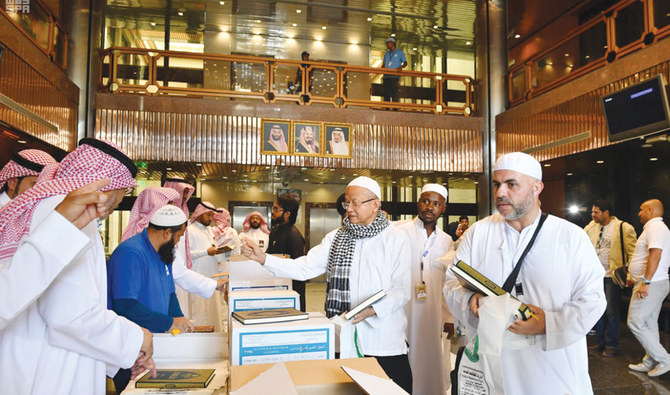
King Salman’s guests visit historical sites in Madinah

- The Kingdom has served more than 95.85 million Hajj pilgrims in the last 50 years


Klija Festival in Buraidah empowers small businesses
- Half a million attend 15-day celebration of heritage; event creates 1,500 seasonal jobs
RIYADH: The 17th Klija Festival in Buraidah drew more than half a million visitors during its 15-day run, celebrating the region’s heritage and entrepreneurial spirit.
Organized by the Qassim Chamber of Commerce, the event highlighted small businesses, providing a platform for entrepreneurs to showcase local products.
More than 340 sales outlets, marketing corners and points of sale welcomed attendees, while the festival provided 1,500 seasonal job opportunities, the Saudi Press Agency reported.
The small business pavilions featured families in the cottage industry, artisans and startups presenting traditional foods, and handicrafts and heritage items that reflect the region’s identity.
Participants said that the festival was a key marketing platform, boosting sales, increasing brand awareness, facilitating knowledge exchange and fostering connections with organizations supporting SMEs.
Mohammed Al-Hanaya, Qassim Chamber secretary-general and festival supervisor, said that the event brought together families, artisans, SMEs, companies and institutions, stimulating commercial activity, opening direct marketing channels and enhancing economic returns.
He added that the festival provided seasonal jobs for more than 1,500 young men and women across operations, marketing and services, supporting the labor market, empowering national talent, and connecting youth to the events and creative economy.
Klija, a traditional cookie made from wheat flour, dates or sugar, date syrup and natural ingredients such as cardamom and lemon, is a rich source of energy, carbohydrates, dietary fiber and natural proteins.
A cultural icon rooted in Qassim’s traditions, the cookie has gained international exposure through the festival, expanding the availability of packaged products.
Starting next year, the festival will be renamed the International Klija Festival, a rebranding approved by Qassim Gov. Prince Faisal bin Mishaal, who described it as a “successful model for turning local initiatives into global economic engines.”
This year’s festival, held at the King Khalid Cultural Center, included international participants from Egypt, Turkiye and Morocco, marking its evolution into a cross-cultural platform.


