

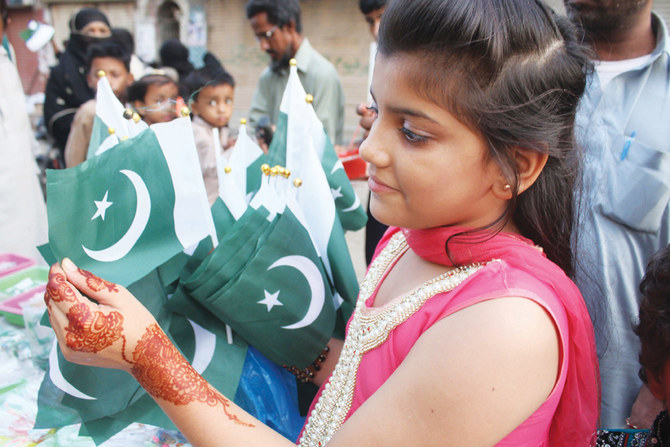

KARACHI: Pakistanis, gearing up to celebrate the nation’s 72 Independence Day on August 14, are finding it difficult to match the zeal and fervor of previous years.
In addition to torrential rains, traders say, the Eid Al-Adha holiday lull has cast a damper on the business mood in Karachi, the country’s commercial hub and the capital of Sindh province.
Pakistan came into existence on Aug. 14, 1947, following the partition of India as the British colonial rulers were preparing to leave the subcontinent. This Independence Day, Pakistan is also observing a “national day of solidarity with the people of Jammu and Kashmir.”
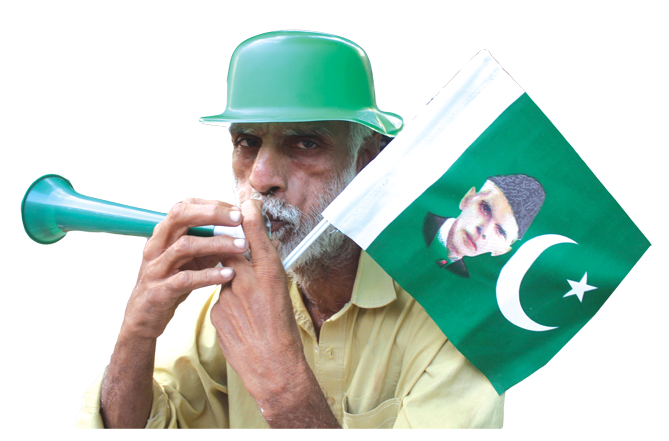
Laxman Das, a vendor in Karachi, prepares for the upcoming celebrations. (AN photo)
Each year around this time, a bump in patriotic sentiment translates into brisk sales of national flags, badges, hats, toys and special dresses among other things.
“This year business is down by almost 50 percent,” Abdullah Abdul Habib, a wholesale trader in Karachi’s paper market, told Arab News on Tuesday.
“The rains in the port city of Karachi, which supplies goods to other part of the country, have disrupted business activities. The fact that the Eid Al-Adha holiday has coincided with the Independence Day week affected sentiments adversely.”
Pakistan meets between 75 and 80 percent of seasonal demand through imports from neighboring China. This year the federal government’s measures to restrict imports in order to keep the “balance of payments” situation under control have led to a reduction in the imports of flags and related items.
“The curbs on imports this year were a major constraint. What we are selling is the leftover stock of the previous year,” Habib said.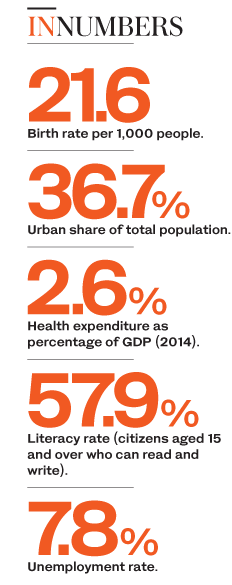
“Due to duties and taxes, imported goods have become almost 40 percent costlier than last year.”
The traders said that flags and badges cost a minimum of 10 rupees ($0.06) this year, and that prices varied depending on the size of the items. Traditionally, kiosks and temporary stalls mushroom in cities and towns across Pakistan as traders attempt to cash in on Independence Day spending.
Muhammad Shoaib, a trader who usually sets up a kiosk in the old city area of Karachi, says the business slowdown is palpable. “Last year business was very good, but this year it is very slow because of bad weather conditions,” he told Arab News.
A number of businessmen also complained about rising prices, blaming the government and the prime minister, former cricketer Imran Khan, for inflation levels reaching over 10.3 percent in July.
“We are surviving but it is not as good as it was last year. Taxes have been imposed by Imran Khan’s government. The poor people who earn a daily wage are heavily affected,” Sarfarz Ahmed, a hawker, said.
“People are still coming for shopping, and we will celebrate Independence Day as usual.”
His views were echoed by another hawker, Shaam Lal, who was trying to sell green bangles to girls. “Last year business was very good. I need my income to support my family. We enjoyed Independence Day,” he told Arab News.
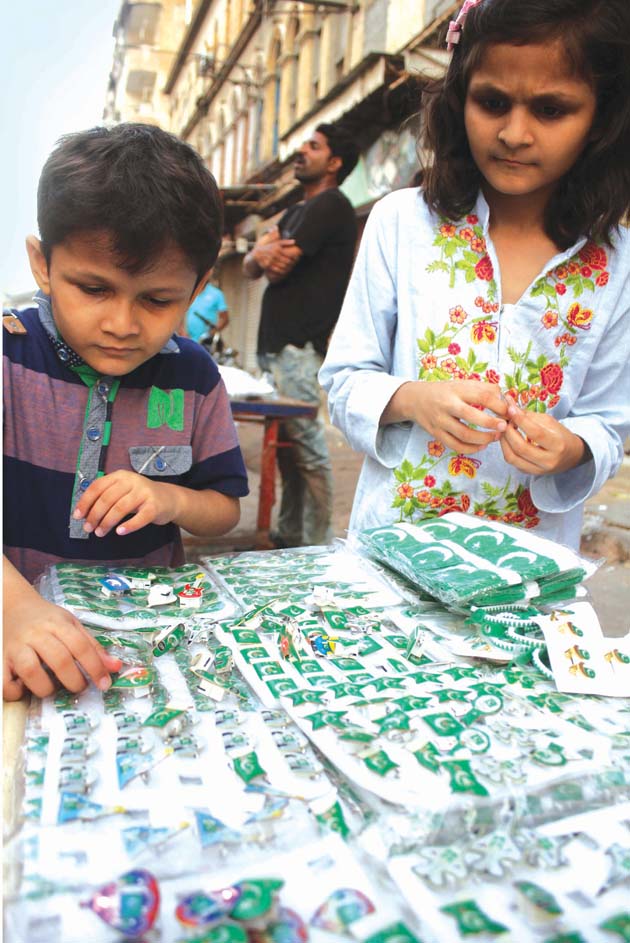
Children sift through badges and buntings to buy goods of their choice for Independence Day celebrations. (AN photo)
“But this year we are worried about our children’s well-being.”
Among the hawkers selling patriotic souvenirs in Karachi’s old city area was Laxman Das. A newcomer to the business, he said his “toy horns for children were much in demand.”
Ali Zaib, a vendor, was happy he had succeeded in selling almost his entire stock of Independence Day knickknacks. “Business is very good,” he said. “I have sold almost all the shirts and flags that I had in stock. People are celebrating August 14.”
Yasir Ali, a teacher, said: “I have come with my children as they wanted to buy flags and badges for Independence Day.”
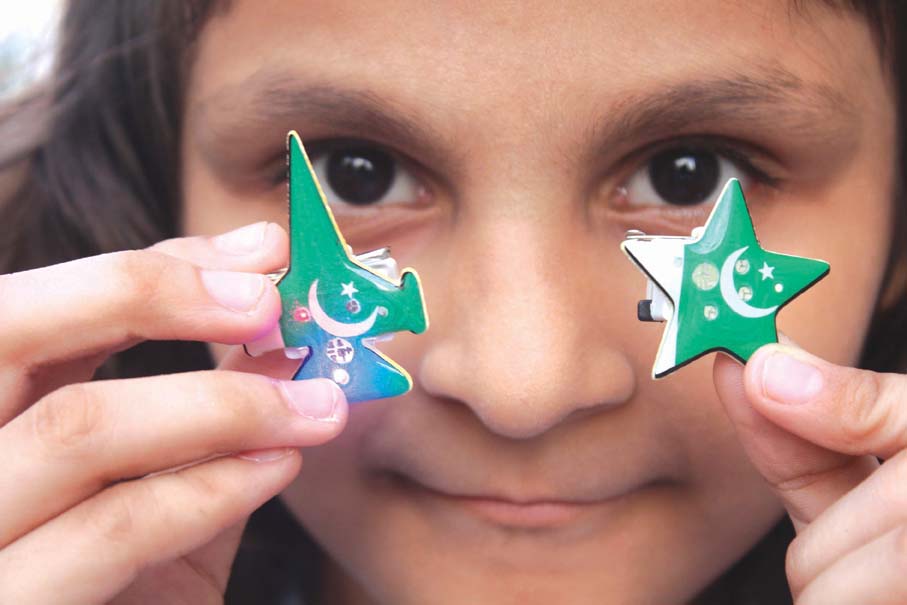
A girl celebrates Pakistani Independence Day in Islamabad. (AN photo)
He said that, for his children, toys painted with the national flag were a major attraction.
Zafar Iqbal, a resident of Lahore, said Pakistanis like him were also buying flags of Kashmir along with Pakistani flags this year. “We are with Kashmir, and support their struggle for freedom,” he said.
Last week India’s parliament approved by a large majority a controversial decision by the federal government to revoke Article 370, a constitutional provision that granted the Muslim-majority region special status.
Indian-administered Kashmir has been on lockdown since, with phone networks and the internet cut off and tens of thousands of troops patrolling the streets.


