


SEOUL: South Korea has put Japan into its own new export category as President Moon Jae-in called Tokyo’s latest measures “very serious,” intensifying a trade war between the two neighbors and US allies.
The move came after Seoul announced earlier this month it would remove Tokyo from its list of trusted trading partners, reciprocating an identical decision by Japan.
That followed Tokyo’s imposition of tough restrictions on exports crucial to tech titans such as Samsung following a series of South Korean court rulings ordering Japanese firms to pay for forced labor during the Second World War.
The dispute has raised concerns over the potential implications for their security cooperation in the face of North Korean missile tests, and the possible impact on global supply chains.
At a meeting with his top aides, Moon reflected on Japan’s colonization of the Korean peninsula in the first half of the 20th century to highlight the gravity of the situation.
“As a victim of great suffering from Japanese imperialism in the past, we, for our part, cannot help but take Japan’s ongoing economic retaliation very seriously,” Moon said.
“It is even more so because this economic retaliation is in itself unjustifiable and also has its roots in historical issues,” he added.
Japan insists its latest measures were enforced on national security grounds.
As a victim of great suffering from Japanese imperialism in the past, we, for our part, cannot help but take Japan’s ongoing economic retaliation very seriously.
Moon Jae-in, President of South Korea
South Korea’s list of trade partners is currently divided into two groups, those who are members of the world’s top four export control agreements and those who are not.
But Seoul’s Trade Ministry said it added a new category for countries that had signed the four pacts “but operate an export control system that violates international norms.”
Japan is the only country in the new category.
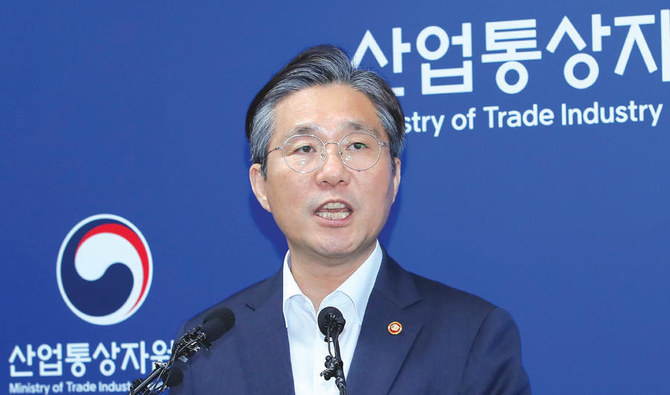
“Since it’s hard to work closely with a country that frequently violates the basic rules ... we need an export control system that addresses this,” said South Korean Trade Minister Sung Yun-mo told reporters.
Sung did not offer examples of such violations by Japan.
The revision will be implemented in September, he said, adding that Seoul was open to negotiations with Tokyo.
Japan could look elsewhere for those goods currently sourced from South Korea, a Japanese government official said.
“We can import them from Taiwan. There are few items that can’t be replaced,” the unnamed official told the Yomiuri Shimbun.
Under the new regulations, South Korean firms must submit five documents — from the current three — to win approvals for exporting sensitive items to Japan, with the process taking up to 15 days.


