HONG KONG: Empty hotel rooms, struggling shops and even disruption at Disneyland: Months of protests in Hong Kong have taken a major toll on the city’s economy, with no end in sight.
City leader Carrie Lam has warned that the international financial hub is facing an economic crisis worse than either the 2003 SARS outbreak that paralyzed Hong Kong or the 2008 financial crisis.
“The situation this time is more severe,” she said. “In other words, the economic recovery will take a very long time.”
The private sector, in particular the tourism industry, has begun counting the cost of more than two months of demonstrations that erupted in opposition to a bill allowing extraditions to China but have morphed into a broader pro-democracy movement.
The figures are stark: Hotel occupancy rates are down “double-digit” percentages, as were visitor arrivals in July. Group tour bookings from the short-haul market have plunged up to 50 percent.
“In recent months, what has happened in Hong Kong has indeed put local people’s livelihoods as well as the economy in a worrying, or even dangerous situation,” warned Edward Yau, Hong Kong’s secretary for commerce and economic development.
The city’s tourism industry says it feels under siege.
“I think the situation is getting more and more serious,” said Jason Wong, chairman of the Travel Industry Council of Hong Kong.
The impact is so bad that travel agents are considering putting staff on unpaid leave as they try to weather the storm, he warned.
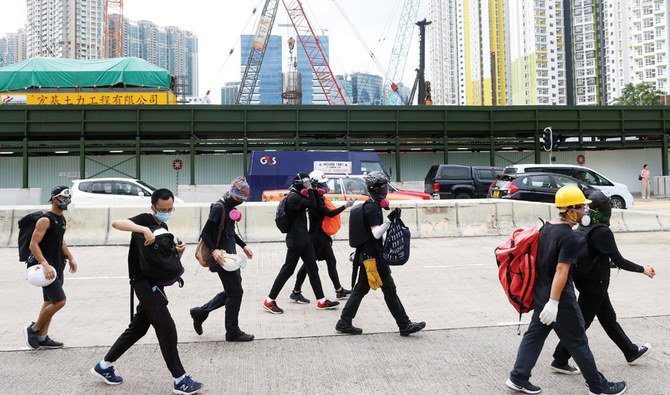
Images of increasingly violent clashes between masked protesters and police firing tear gas in the city’s streets have made global headlines, with protesters announcing new demonstrations throughout August as they press their demands.
A Hong Kong Tourism Board spokesperson said the number of forward bookings in August and September has “dropped significantly,” suggesting the economic toll will linger throughout the summer season.
A string of travel warnings issued by countries including the United States, Australia and Japan is likely to compound the industry’s woes.


![]()

Hong Kong demonstrations hit the tourist economy
Hong Kong demonstrations hit the tourist economy
- A Hong Kong Tourism Board spokesperson said the number of forward bookings in August and September has “dropped significantly,” suggesting the economic toll will linger throughout the summer season


Latest updates


Recommended


© 2026 SAUDI RESEARCH & PUBLISHING COMPANY, All Rights Reserved And subject to Terms of Use Agreement.