

Mina tent city hosts over 2 million Hajj pilgrims

1 / 4
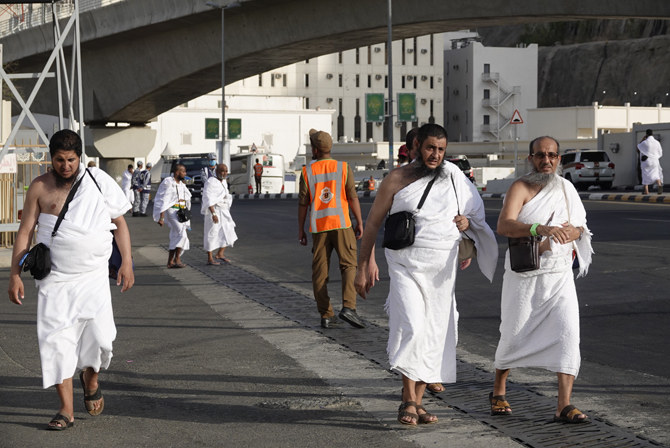
Pilgrims arrive in Mina on the first day of Hajj. (AN photo by Huda Bashatah)
2 / 4
Hajj is meant to be a great equalizer and unifier among Muslims, with pilgrims shedding overt displays of wealth and materialism. (AN photo by Essam Al-Ghalib)
3 / 4
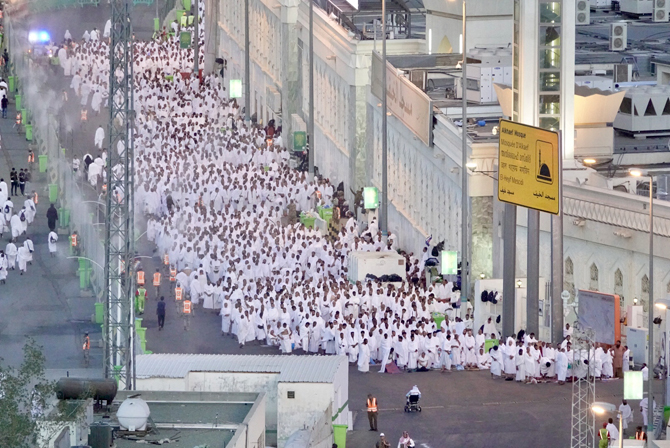
Pilgrims pour into Mina on the first day of Hajj on Friday. (AN photo by Huda Bashatah)
4 / 4
Pilgrims arrive in Mina on the first day of Hajj. (AN photo by Huda Bashatah)
Updated 10 August 2019
Follow

Mina tent city hosts over 2 million Hajj pilgrims

  • From the tent city, the pilgrims move to Mt. Arafat Saturday for a day of repentance, supplication
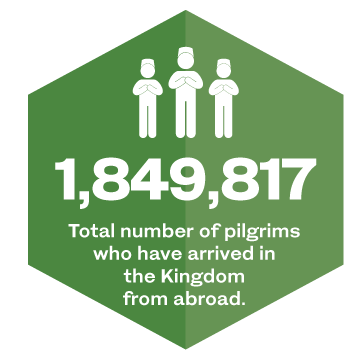
  • More than 1.8 million visas issued online without the need for middlemen, says government official

MINA: More than 2 million pilgrims gathered in the tent city of Mina as Hajj 2019 began on Friday. 

From Mina, the pilgrims will head to Mount Arafat early on Saturday, an area about 20 km east of Makkah. There, the pilgrims will stand shoulder to shoulder for an emotional day of repentance and supplication at the site where Prophet Muhammad delivered his final sermon, calling for equality and unity among Muslims.

“All arms of the state have been deployed (and) we are proud to serve as ‘God’s hosts’,” said security forces spokesman Bassam Attia.


“More than 1.8 million visas were delivered online without the need for middlemen. It’s a success,” said Hajj Ministry official Hatim bin Hassan Qadi.

As the lights of Mina came alive and the pilgrims began to settle in for the night, Arab News caught up with some of them to discuss their feelings about how their first day of Hajj went.
Mohammed Jameel, from Pakistan, is in Mina on his first Hajj. “It’s a pleasure and a blessing. We have been waiting our whole life for these moments. We are very satisfied so far and looking forward to the coming days. We are praying for all the Muslims in the world, especially for those experiencing troubles, our brothers and sisters in Kashmir, in Palestine, etc. We pray for all of them, and we pray for our families and our loved ones,” he said.

Rahaf Niyazi, from Saudi Arabia, is also performing Hajj for the first time. “Everything we’ve seen so far is amazing, and it’s such a blessing to be here. It’s better than I ever imagined it could be,” she told Arab News.

All arms of the state have been deployed and we are proud to serve as God’s hosts.

Bassam Attia, Saudi security forces spokesman

Despite the heat wave that swept through Mina at noon, the weather had cooled somewhat by night, giving pilgrims a much needed respite from the oppressive glare of the sun.

Security guards and Civil Defense volunteers swept through the camps during the day, sprinkling pilgrims with cool water, offering assistance to the disabled and helping pilgrims with directions. The famous sense of camaraderie that defines Hajj was alive and well in Mina, and by the looks of things, Hajj of 2019 is off to a great start.

Security guards in Mina told Arab News that this was the best organized Hajj yet, and things had vastly improved in the past few years. “A lot of the problems we had in the past have all but disappeared,” one said. “This year, Hajj is the best it has ever been. InshaAllah things will continue that way.”


Pilgrims pour into Mina on the first day of Hajj on Friday. (AN photo by Huda Bashatah)

One of the many unsung heroes of Hajj this year is Mohammed Saber, a volunteer physician working with a team of nurses and medical students helping worshippers on their spiritual journey. “This is a big opportunity to serve God’s guests and to serve Muslims,” Saber told Arab News. 

Hajj is meant to be a great equalizer and unifier among Muslims, with pilgrims shedding overt displays of wealth and materialism. 

All male pilgrims wear ihram (a two-piece seamless white cloth) and women don Islamic dress, forgoing makeup and perfume in an effort to draw closer to God and engage in intense worship for the five-day pilgrimage.

The US Consulate in Jeddah said some 20,000 US citizens and residents were expected to be at the pilgrimage. 

To curb the potential for a viral outbreak of any kind, Saudi Arabia this year stopped issuing visas to people from Congo, citing the Ebola outbreak there.


VIEW OUR GALLERY FOR MORE PICTURES

Hajj 2019 Day 1: Pilgrims arrive in Mina for the night ahead of the journey to mount Arafat

Hajj 2019 Day 1: More than 2 million pilgrims make their way from Makkah to Mina


Rebuilding lives: Saudi initiative gives fresh hope to amputees

Updated 08 December 2025
Follow

Rebuilding lives: Saudi initiative gives fresh hope to amputees

  • Baitureh Health Association has provided life-changing support to more than 1,000 people
  • Prosthetic limbs can cost up to $76,000

MAKKAH: The Baitureh Health Association for the Care of Amputees has quickly become one of Saudi Arabia’s most impactful humanitarian initiatives, transforming support for people with lost limbs.

Established in 2020, the association deals with people’s physical, psychological and social needs and fills a long-standing gap in the national health system.

CEO Badr bin Alyan told Arab News that the initiative was created in response to a growing need, driven by amputations linked to accidents, blood disorders, occupational injuries and other causes.

Its operations were “based on service integration rather than fragmentation, enabling beneficiaries to return to their lives with confidence, ability and independence,” he said.

This holistic process covers everything from initial evaluations to psychological and physical rehabilitation, family support, prosthetic fitting and ongoing maintenance.

Its psychological support programs include group sessions led by certified mentors who have undergone similar experiences, as well as field visits to support patients before and after amputation.

More than 1,000 people across the Kingdom have so far benefitted from the association’s work, about 10 percent of them children, whom Alyan said were “the most sensitive and the most in need of intensive psychological and family support.”

Its specialist programs for children — My First Step and Therapeutic Entertainment — help young people adapt to prosthetics, overcome trauma and build confidence in a safe and supportive setting.

The association has completed more than 300 prosthetic fittings, including silicone cosmetic limbs, mechanical, hydraulic, electronic and 3D-printed models. 

Alyan said the type of prosthetic selected depended on a number of factors, such as age, lifestyle, type of amputation, activity level and psychological readiness.

Children also have to undergo frequent adjustments to their new limbs to account for their growth.

Each prosthetic cost between SR20,000 ($5,300) and SR285,000, Alyan said.

The association funds its work through sponsorships, community contributions and strategic partnerships.

Despite its success, Alyan said there were still challenges to be faced, including the lack of a consolidated base for the provision of psychological support and therapy services and prosthetics development and maintenance.

There was also a shortage of local experts, he said.

In response, the association set up a rehabilitation center, which Alyan said would help to localize prosthetics manufacturing, reduce costs and accelerate fitting processes and create opportunities for local experts to develop their knowledge and experience.

But providing prosthetics was only part of the association’s work, he said.

“Rebuilding a human life is the deeper goal.”