ISLAMABAD: Indian High Commissioner Ajay Bisaria would soon fly out of Pakistan, confirmed the spokesman of his diplomatic mission on Friday without divulging further information.
“The high commissioner will leave shortly,” Akhilesh Singh said in a statement. “[His] travel details are not disclosed due to security reasons.”
The Indian envoy’s departure from Islamabad comes only a few days after New Delhi scrapped article 370 of its constitution that promised special status to Indian-administered Kashmir.
The development prompted Pakistan’s ministry of foreign affairs to ask India to withdraw its high commissioner to Pakistan after the country’s National Security Committee (NSC) announced to downgrade diplomatic relations with its eastern neighbor.
“Pursuant to the decision of the NSC today, the government of India has been told to withdraw its High Commissioner to Pakistan,” the ministry announced on Wednesday. “The Indian government has also been informed that Pakistan will not be sending its High Commissioner-designate to India.”
India “regretted” Pakistan’s decision in response, urging Islamabad to reconsider it “so that normal channels for diplomatic communications are preserved.”
The last few days have witnessed an escalation of tensions between the two South Asian nuclear neighbors as Indian-administered Kashmir remains under a security lockdown. The region is also facing a communications blackout, cutting off its residents from the rest of the world.
As the situation stands, the United Nations secretary-general has urged all stakeholders to exercise maximum restraint amid mounting tensions in the region, as media reports suggest that Indian authorities are rounding up hundreds of Kashmiris who are incensed by New Delhi’s recent decision.
“The secretary-general calls on all parties to refrain from taking steps that could affect the status of Jammu and Kashmir,” said a UN spokesman in a recent statement.


![]()
![]()

Indian high commissioner to leave Pakistan ‘shortly,’ says Indian diplomatic mission

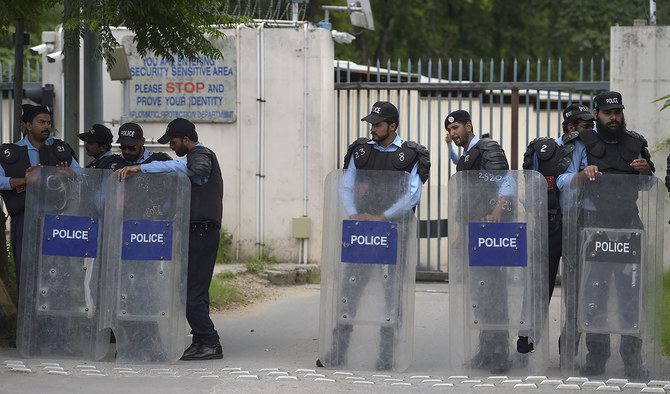
Indian high commissioner to leave Pakistan ‘shortly,’ says Indian diplomatic mission
- Ajay Bisaria’s travel details are not disclosed due to security reasons
- Islamabad expelled Indian envoy after National Security Committee downgraded diplomatic ties with India
Latest updates


Recommended


© 2026 SAUDI RESEARCH & PUBLISHING COMPANY, All Rights Reserved And subject to Terms of Use Agreement.