

Last of ‘Makkah Route’ pilgrims arrive in Saudi Arabia for Hajj

1 / 2
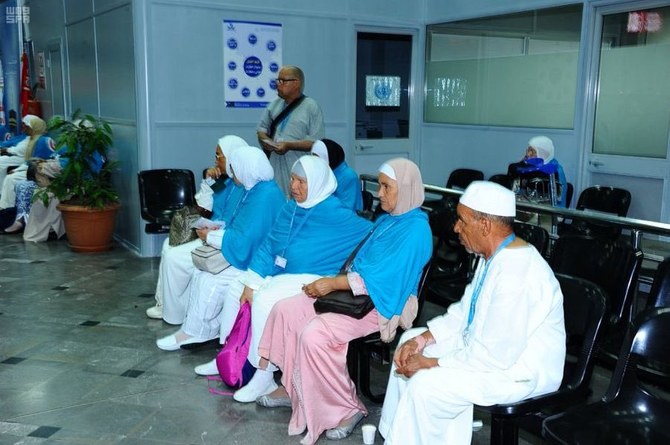
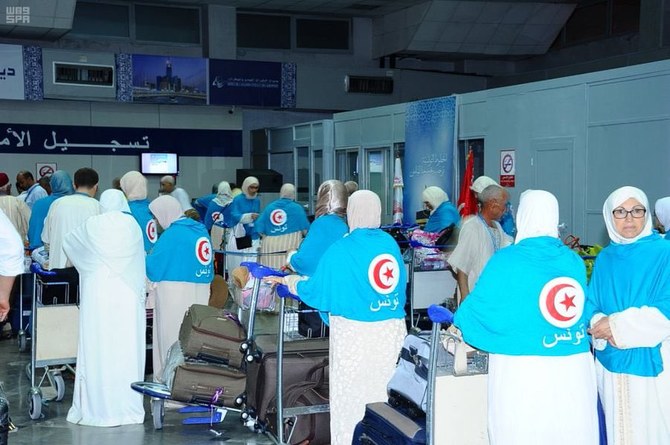
The last group of pilgrims using the initiative arrived in Makkah Wednesday morning from Tunisia. (SPA)
2 / 2
The last group of pilgrims using the initiative arrived in Makkah Wednesday morning from Tunisia. (SPA)
Updated 07 August 2019
Follow

Last of ‘Makkah Route’ pilgrims arrive in Saudi Arabia for Hajj

  • The program established last year allows pilgrims to complete their entry paperwork in the airports they are departing from
  • More than 171,000 pilgrims from Tunisia, Malaysia, Indonesia, Pakistan and Bangladesh have arrived this year

JEDDAH: The last pilgrims traveling under Saudi Arabia’s Makkah Route Initiative arrived in the Kingdom Wednesday ahead of Hajj.

The program established last year allows pilgrims to complete their entry paperwork in the airports they are departing from rather than once they arrive in Saudi Arabia.

More than 171,000 pilgrims from Tunisia, Malaysia, Indonesia, Pakistan and Bangladesh have arrived in the Kingdom this year using the initiative 

The last group arrived in Makkah Wednesday morning from Tunisia.

Pilgrims traveling under the initiative have lauded the program for making their journey as smooth as possible and enabling them to perform their pilgrimage with ease and comfort.

The initiative enables them to bypass the procedures upon arrival in the Kingdom, and head directly to buses waiting to transport them to accommodation in Makkah and Madinah.

The service includes issuing visas, ensuring they comply with health requirements and sorting luggage.

The Makkah Route Initiative is part of the National Transformation Program 2020 to improve services for pilgrims. 

The Kingdom plans to increase the number of countries in the future. 


Alwaleed Philanthropies allocates $15 million for global polio eradication efforts

Updated 11 sec ago
Follow

Alwaleed Philanthropies allocates $15 million for global polio eradication efforts

  • The new contribution will support frontline vaccination campaigns, disease surveillance and rapid outbreak response over three years

DAVOS: Alwaleed Philanthropies, chaired by Prince Alwaleed bin Talal Al-Saud, renewed its commitment to the Global Polio Eradication Initiative on Thursday with a $15 million contribution during the World Economic Forum Annual Meeting 2026 in Davos, Switzerland.

The announcement was made by Princess Lamia Bint Majed Al-Saud, secretary general of Alwaleed Philanthropies, and Bill Gates, chair of the Gates Foundation.

The new contribution will support frontline vaccination campaigns, disease surveillance and rapid outbreak response over three years, helping the program reach children in vulnerable and conflict-ravaged areas through the Gates Philanthropy partners.

The donation comes at a pivotal moment for the global effort to end polio, as the program intensifies operations in the last remaining endemic countries and responds to outbreaks worldwide.

With cases of wild poliovirus now confined to just two countries — Afghanistan and Pakistan — sustained political leadership and financing remain essential to protect hard-won gains and ensure that no child is left behind.

The princess said the contribution “builds on Alwaleed Philanthropies’ long-standing support for global health and its partnership with the Global Polio Eradication Initiative, reinforcing the critical role of philanthropy in addressing some of the world’s most complex public health challenges.”

Gates said that polio eradication “is within sight, but the last mile is the hardest.” He added: “Alwaleed Philanthropies’ latest commitment is exactly the kind of leadership the world needs to build a future where no family has to live in fear of polio paralyzing their child.”

Mike McGovern, chair of the Polio Oversight Board, said sustained support enables organizations to reach children in vulnerable and remote communities and to preserve the progress made over the past four decades.

Launched in 1988, the GPEI, led by national governments and supported by its core partners, has reduced polio cases by more than 99 percent and protected over 20 million people from paralysis.

The World Health Organization and UNICEF play a leading role, working alongside governments and communities to sustain access, build trust and ensure that polio eradication efforts reach the most vulnerable children.