

Ponting calls for cricket to ditch neutral umpires

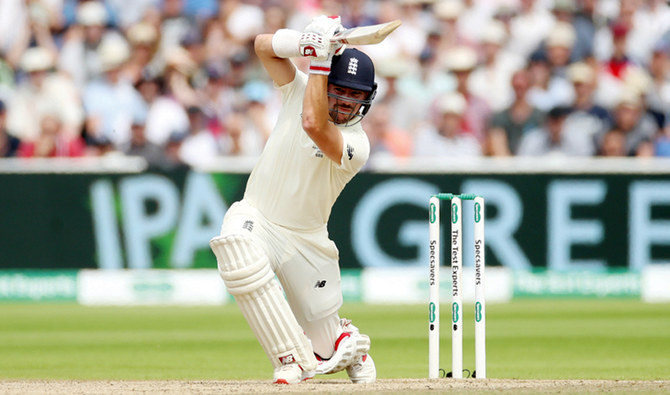
Rory Burns hit his first Test century to give England the chance to build a big first-innings lead over Australia. (Reuters)
Updated 03 August 2019
Follow

Ponting calls for cricket to ditch neutral umpires

MELBOURNE: Former Australia captain Ricky Ponting on Saturday called for cricket to ditch its requirement to have neutral umpires after a number of incorrect decisions in the first Test of the Ashes series in England.

Aleem Dar of Pakistan and West Indian Joel Wilson have drawn criticism after a number of their calls were overturned by the review system during the opening days at Edgbaston.

Ponting, who is part of the Marylebone Cricket Club’s (MCC) influential Cricket Committee, said he would ensure the matter is discussed at their next meeting.

“It’s already been spoken about a lot among the players. If it’s not brought up (at that next MCC meeting), I’ll make sure it’s added to the agenda,” he told the Cricket Australia website.

“I would like to think the game has come far enough now for the game to not have neutral umpires.

“People might say that with all the technology we’ve got now, it doesn’t matter that much. But it’s not a good spectacle when pretty obviously wrong decisions are made,” he added.

“There’s been a lot of negativity about the DRS (Decision Review System) over the years, but we’re pretty lucky that we had it (at Edgbaston).”

The International Cricket Council mandated the use of neutral umpires in 2002, meaning English and Australian officials — widely considered among the best in the world — cannot be part of the Ashes series.

Ponting pointed to England’s Richard Kettleborough as a top umpire forced to miss out.

“Surely Richard Kettleborough and the like would want to be umpiring the best series. The best umpires can end up missing out on all the big tournaments,” he said.

“It could force umpires into retirement a bit early as well when someone like (former Australian umpire) Simon Taufel is spending most of his life (overseas), which is a bit harder than spending your time in Australia.”

Former Australia spinner Shane Warne, another member of the MCC Cricket Committee, also criticized the umpiring on day one of the Edgbaston Test, calling it “horrific.”

“England are bowling very well. The umpiring has been horrific from ball 1 & so has the reviews process of the right ones from Australia,” he said on Twitter.

The MCC’s Cricket Committee, guardians of the laws of the game, is an independent body comprising current and former players and umpires who meet twice a year to discuss issues around the sport.


Arab Cup 2025 attendance surpasses recent AFCON and AFC Asian Cup

Updated 5 sec ago
Follow

Arab Cup 2025 attendance surpasses recent AFCON and AFC Asian Cup

  • The tournament, held under FIFA jurisdiction for the second time, achieved a record average attendance of 38,644 fans per match
  • Total attendance more than doubled since 2021, with Algeria vs. UAE quarter-final pushing it past one million spectators

RIYADH: For a tournament often dismissed by critics as little more than a friendly or “B-team” competition, the 2025 Arab Cup delivered a compelling response.

A total of 1,236,600 people attended the 32 matches across the tournament, an average of 38,644 spectators per game, as the Arab Cup returned to Qatar for a second consecutive time after its successful staging in 2021. That earlier tournament, initially launched as a Confederations Cup-like test event ahead of the World Cup, drew 571,605 spectators in total.

Despite those figures, the Arab Cup has faced persistent criticism. Questions have been raised around the quality of play and refereeing standards, with some supporters – both within and beyond the Arab world – branding the tournament “meaningless.”

Yet when placed alongside recent continental competitions, the attendance figures tell a different story.

The 2023 African Cup of Nations in Ivory Coast attracted 1,109,593 fans across 52 matches, an average of 21,338 per game. Meanwhile, the 2023 AFC Asian Cup, also hosted in Qatar, recorded 1,507,790 spectators over 51 matches — roughly 29,565 per game, the highest average in the competition’s history.

Direct comparisons, however, require context. Continental — as opposed to regional — competitions draw support from across vast geographies, while the Arab Cup benefits from strong expatriate communities based in the host nation. Expecting the same travel patterns from fans in East Asia or West Asia would be, to say the least, unrealistic.

Even so, the attendance of more than 38,000 fans per game is significant. The Arab Cup was not always popular, with the attendance in 2021 struggling to rise above an average of 17,000 per game. Only four games at the 2025 edition fell below the 20,000 mark.

Historical context further underlines this shift. The 2011 AFC Asian Cup in Qatar, along with multiple editions of the West Asian Football Federation Championship held across the region, struggled to surpass a figure of 13,000 fans per game.

While Morocco will bask in the glory of the 2025 Arab Cup, the tournament itself has shown a broader shift in football engagement across the Arab World — one no longer driven solely by interest in European leagues, but by growing confidence in domestic teams, national projects and regional competitions.

From Saudi Arabia’s ambitions in club football to Morocco’s recent international success and Qatar’s continued role as a host, momentum continues to build across the Middle East and North Africa, with the Arab Cup one of the latest competitions offering tangible evidence of that change.