

Steeped in history: The Kaaba’s cover Kiswa

1 / 20
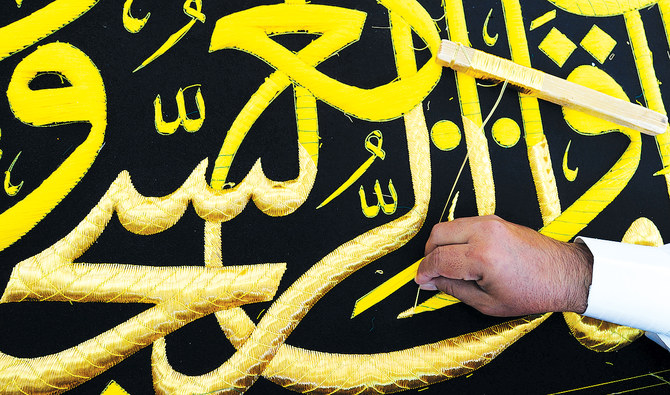
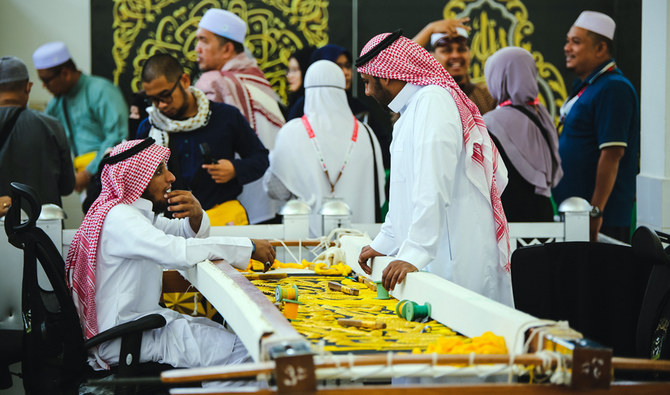
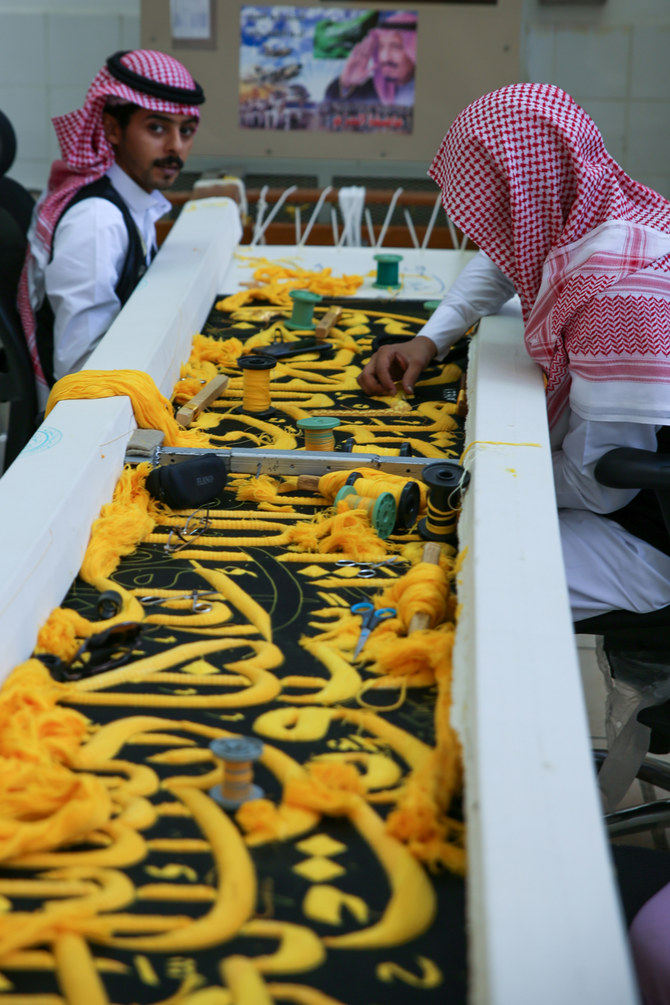
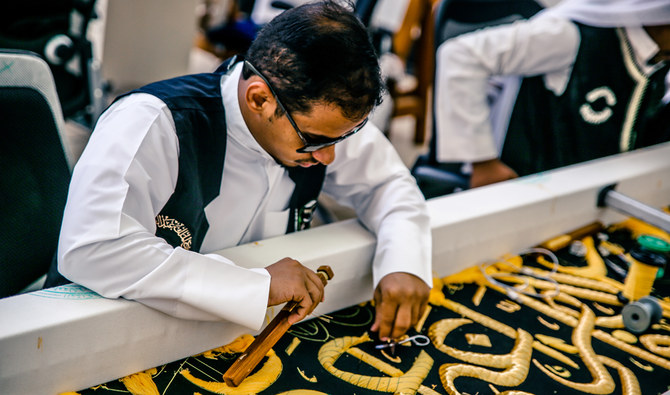
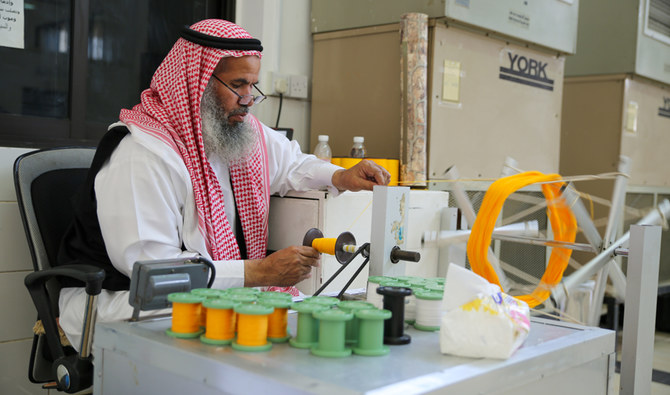
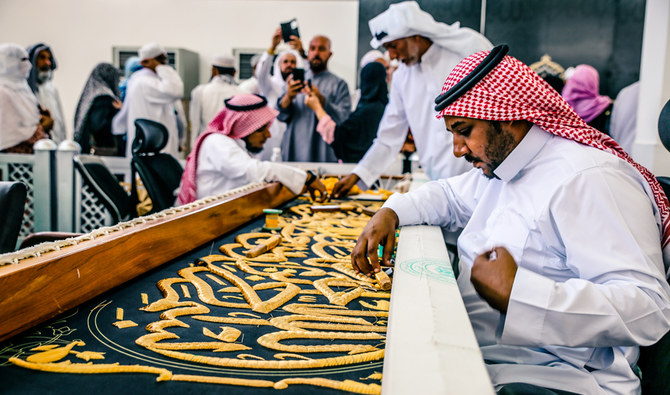
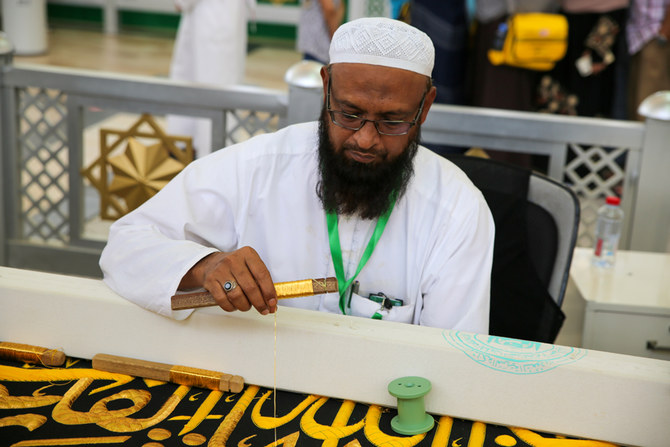
The curtain is fabricated at the King Abdul Aziz Complex for Holy Kaaba Kiswa in Makkah. (AFP)
2 / 20
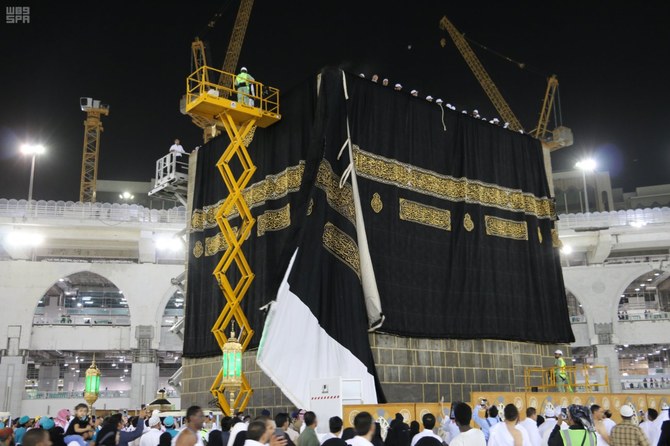
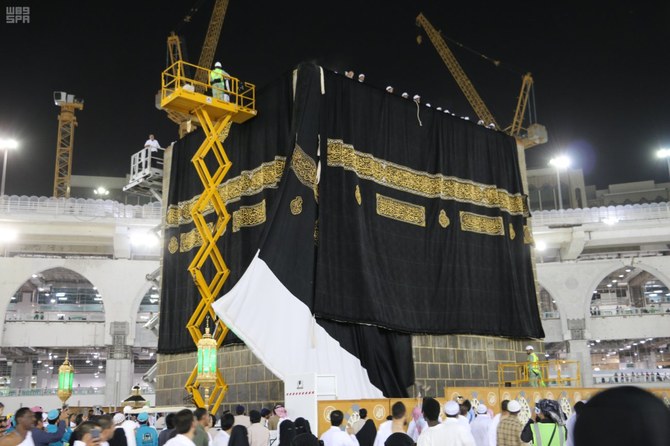
The Kiswa of the Kaaba is replaced on Saturday Aug. 10, 2019. (SPA)
3 / 20
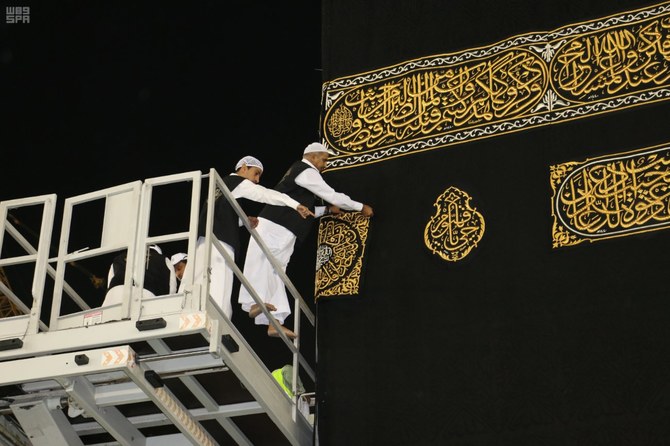
The Kiswa of the Kaaba is replaced on Saturday Aug. 10, 2019. (SPA)
4 / 20
The Kiswa of the Kaaba is replaced on Saturday Aug. 10, 2019. (SPA)
5 / 20
The Kiswa of the Kaaba is replaced on Saturday Aug. 10, 2019. (SPA)
6 / 20
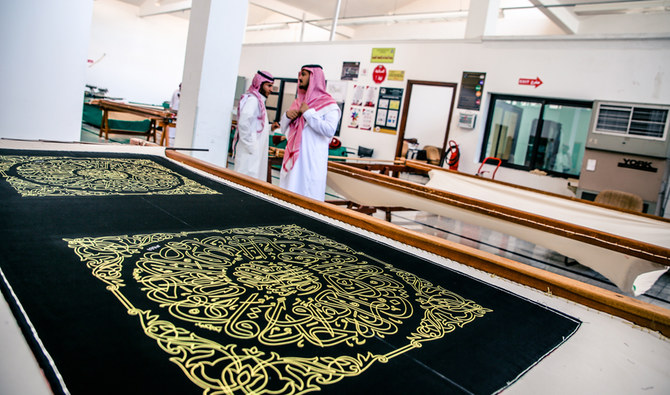
The curtain is fabricated at the King Abdul Aziz Complex for Holy Kaaba Kiswa in Makkah. (AN photo by Essam Al-Ghalib)
7 / 20
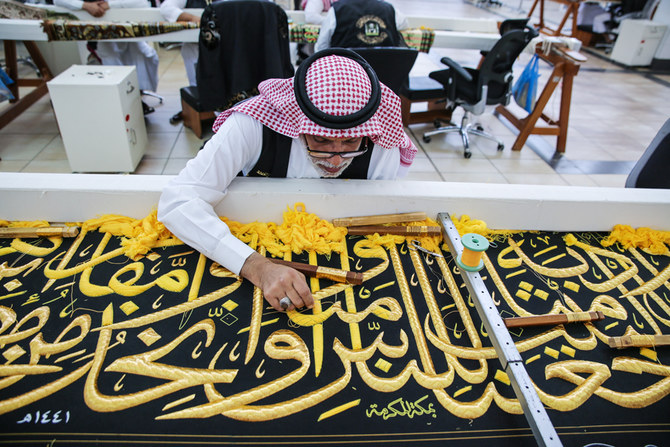
The curtain is fabricated at the King Abdul Aziz Complex for Holy Kaaba Kiswa in Makkah. (AN photo by Essam Al-Ghalib)
8 / 20
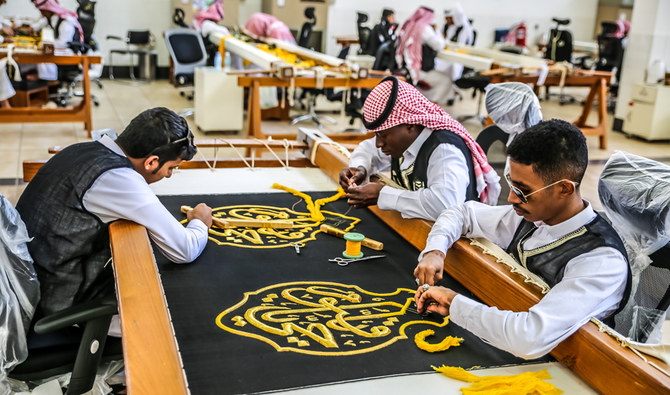
The curtain is fabricated at the King Abdul Aziz Complex for Holy Kaaba Kiswa in Makkah. (AN photo by Essam Al-Ghalib)
9 / 20
The curtain is fabricated at the King Abdul Aziz Complex for Holy Kaaba Kiswa in Makkah. (AN photo by Essam Al-Ghalib)
10 / 20
The curtain is fabricated at the King Abdul Aziz Complex for Holy Kaaba Kiswa in Makkah. (AN photo by Essam Al-Ghalib)
11 / 20
The curtain is fabricated at the King Abdul Aziz Complex for Holy Kaaba Kiswa in Makkah. (AN photo by Essam Al-Ghalib)
12 / 20
The curtain is fabricated at the King Abdul Aziz Complex for Holy Kaaba Kiswa in Makkah. (AN photo by Essam Al-Ghalib)
13 / 20
The curtain is fabricated at the King Abdul Aziz Complex for Holy Kaaba Kiswa in Makkah. (AN photo by Essam Al-Ghalib)
14 / 20
The curtain is fabricated at the King Abdul Aziz Complex for Holy Kaaba Kiswa in Makkah. (AN photo by Essam Al-Ghalib)
15 / 20
The curtain is fabricated at the King Abdul Aziz Complex for Holy Kaaba Kiswa in Makkah. (AN photo by Essam Al-Ghalib)
16 / 20
The curtain is fabricated at the King Abdul Aziz Complex for Holy Kaaba Kiswa in Makkah. (AN photo by Essam Al-Ghalib)
17 / 20
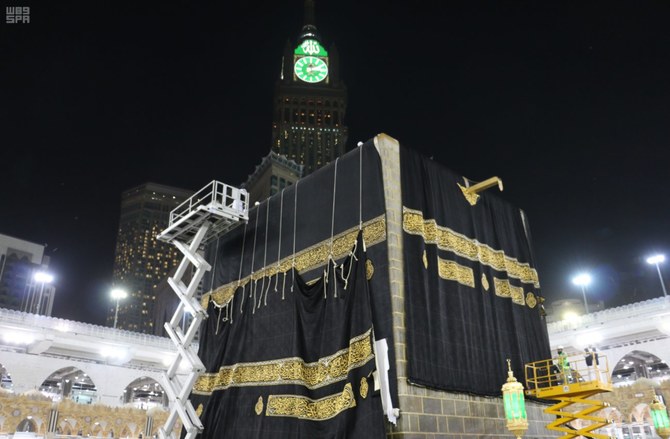
The Kiswa of the Kaaba is replaced on Friday August 9, 2019. (SPA)
18 / 20
The curtain is fabricated at the King Abdul Aziz Complex for Holy Kaaba Kiswa in Makkah. (AN photo by Essam Al-Ghalib)
19 / 20
The curtain is fabricated at the King Abdul Aziz Complex for Holy Kaaba Kiswa in Makkah. (AN photo by Essam Al-Ghalib)
20 / 20
The curtain is fabricated at the King Abdul Aziz Complex for Holy Kaaba Kiswa in Makkah. (AN photo by Essam Al-Ghalib)
Updated 10 August 2019
Follow

Steeped in history: The Kaaba’s cover Kiswa

  • Craftsmen have labored through the centuries in different cities to manufacture the fabric every year
  • The Kiswa has been made in Saudi Arabia since 1926 at the King Abdul Aziz complex in Makkah

JEDDAH: In a tradition dating back centuries, a new black curtain, or Kiswa, is draped around the Kaaba in the Grand Mosque in Makkah once a year.

The fabric is made of high-quality silk, with verses of the Qur’an woven into it in the form of gold and silver thread running across the Kaaba’s belt.

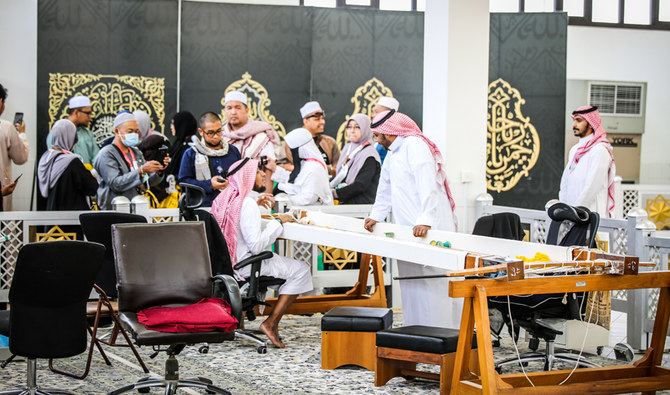
As pilgrims around the world begin their Hajj journeys, about 200 craftsmen of Saudi and other nationalities are engaged in producing the black curtain at the King Abdul Aziz Complex for Holy Kaaba Kiswa in Makkah.

They are dyeing, weaving, printing and manufacturing fabric pieces with great care and skill. Once perfumed and stitched to perfection, the finished silk curtain will be unveiled on the ninth day of the Islamic month of Dhu Al-Hijjah.

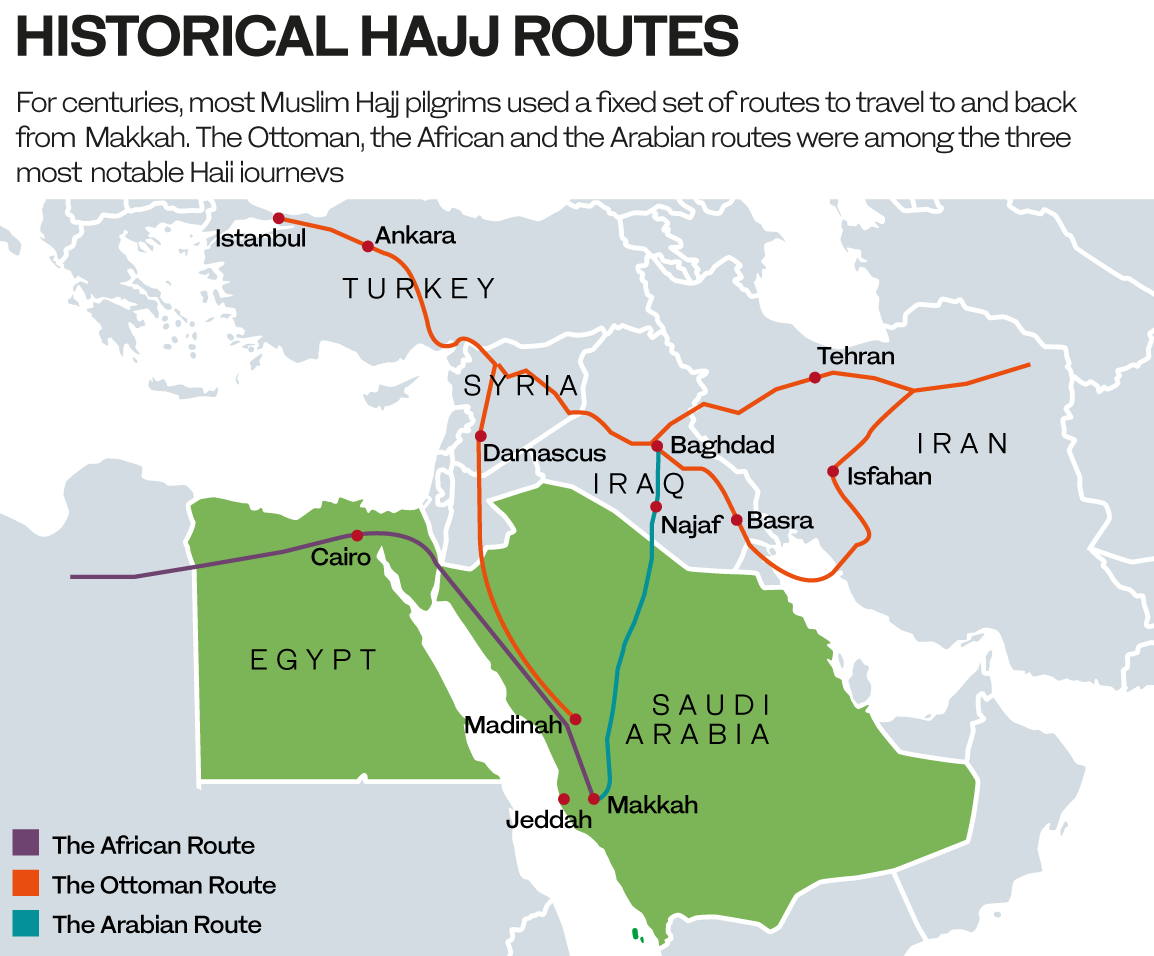
Before the establishment of the complex in 1926 by King Abdul Aziz, the Kiswa was supplied by different countries, most prominently Egypt. 

A wide variety of fabrics and colors have been used through the centuries for manufacturing the Kiswa, a duty that is considered sacred.

From the writings of Arab historian Abu Al-Walid Al-Azraqi, it is known that Muslim Caliph Omar ibn Al-Khattab had the Kaaba draped with a light, white Egyptian cloth called Al-Qabbati, after sending a request to Amr ibn Al-Aas, governor of Egypt at the time, according to Egyptian history researcher Abdelmajid Abdel Aziz.

Uthman ibn Affan, the third caliph, ordered two Kiswas to be produced. The first, made of silk tapestry, was used to adorn the Kaaba on the first day of Hajj. The second, made from Al-Qabbati, was applied on the 27th day of Ramadan.

The tradition of annually draping the Kaaba with a new Kiswa continued for centuries, but the timing differed from one Islamic era to another.

During the Umayyad period, a new Kiswa was draped around the Kaaba on Ashura, the 10th day of the first month of Muharram.
It was replaced by another Kiswa at the end of Ramadan. The practice remained unchanged during the Abbasid period.

The rule of Abbasid Caliph Al-Ma’moon saw the Kaaba get a new Kiswa three times a year. The first was a red silk Kiswa on the first day of Hajj; the second was the white Al-Qabbati on the eve of the seventh Hijri month; and the third, made of white silk, on the 27th day of Ramadan.

Until 1192, the order to make the Kiswa always went to craftsmen who lived on an island in Tannis Lake (now known as Al-Manzila Lake) in Egypt’s northeast. Tannis bagged this coveted role by dint of its reputation as a textile-manufacturing hub.

But Salah al-Din — the first sultan of Egypt and Syria, and founder of the Ayyubid dynasty — ordered Tannis to be abandoned during the Christian Crusades. The manufacturing skills migrated to other parts of Egypt, notably Cairo.

The technology of the textile industry became more developed after the 13th century AD. The materials and techniques that began to be used ensured that a typical Kiswa did not wear out within a year.

During the Mamluk  dynasty,  Kiswa production became very expensive, forcing the sultan, Al-Nasir ibn Qalawun, to order Egypt’s governor to use the taxes from the villages of Bassous and Abul-Gheit for the purpose. But after many years, the tax revenue proved insufficient.

Later on, the cost of Kiswa production by the  Egyptians was covered by an endowment created by Al-Nasir Ibn Qalawun.

During his rule, Sultan Soliman Al-Qanooni realized that the money from the endowment was insufficient, so he ordered the acquisition of seven villages in addition to three acquired in 1567 AD to create a dedicated revenue stream.

The proceeds from the 10 villages were then earmarked for manufacturing Kiswas for the Kaaba. This arrangement later proved to be the greatest contribution by Ottoman rulers.

Muhammad Ali Pasha, the Ottoman governor of Egypt from 1805 to 1848, ordered the expenses for making the Kiswa to be met by the state treasury.

This is how the historic Dar Al-Khoronfosh workshop came into existence in Cairo’s Al Gamaleya neighborhood.

In 1926, after the takeover of the Hijaz region, King Abdul Aziz ordered the establishment of a Kiswa factory in Makkah. The site was the Ajyad neighborhood near the Grand Mosque.

The present-day complex is located in Makkah’s Umm Al-Joud district. The black silk curtain is usually ready two months before the beginning of Hajj, when the keeper of the Kaaba, the Bani Shaiba family, formally takes possession of it. 


Mawhiba awards 68 students grand prizes for science competition

Updated 5 sec ago
Follow

Mawhiba awards 68 students grand prizes for science competition

  • The winning students will carry Saudi Arabia’s banner at the International Science and Engineering Fair, “ISEF 2026,” alongside other global talents

RIYADH: The King Abdulaziz and His Companions Foundation for Giftedness and Creativity, or Mawhiba, revealed on Thursday the grand prize recipients of the Ibdaa Science and Engineering Fair, marking the conclusion of the 16th National Olympiad for Scientific Creativity.

The event, held from Jan. 25-29, in strategic collaboration with the Ministry of Education, represents the culmination of Saudi Arabia’s premier youth science competition.

The winning students will carry Saudi Arabia’s banner at the International Science and Engineering Fair, “ISEF 2026,” alongside other global talents.

Their selection follows an intensive four-month scientific gauntlet that attracted more than 357,000 participants submitting more than 34,000 research projects.

Sixty-eight exceptional students emerged victorious with grand prizes.

Earlier in the day, Mawhiba announced 84 students as recipients of special recognitions from a consortium of 12 ministries, agencies, and prominent national and international institutions.

The special awards comprised 59 domestic honors and 25 international distinctions for exceptional projects featured at the Ibdaa 2026.

The path to victory proved demanding. Participants navigated multiple elimination rounds, beginning with 16 regional showcases that advanced 500 projects.

Four centralized exhibitions followed, narrowing the field to 200 finalists for the Ibdaa Science and Engineering Fair.

An expert jury of 166 evaluators drawn from more than 40 public and private universities, plus additional research centers, assessed each submission, assigning five judges per project to ensure thorough evaluation.

The Ibdaa Olympiad operates as an annual scientific tournament through the strategic partnership of Mawhiba and the Ministry of Education.

Competitors submit individual research projects adhering to rigorous specifications and protocols.

Distinguished academics and specialists apply systematic scientific benchmarks to identify exemplary work worthy of advancement to elite competitive tiers, ultimately selecting the finest entries for representation at ISEF and comparable international scientific forums and competitions.