

Steeped in history: The Kaaba’s cover Kiswa

1 / 20
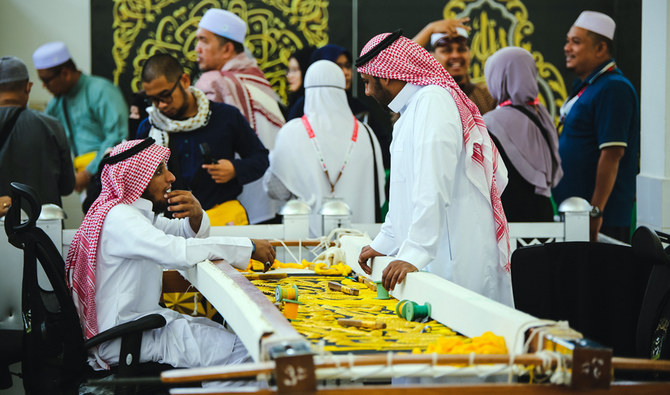
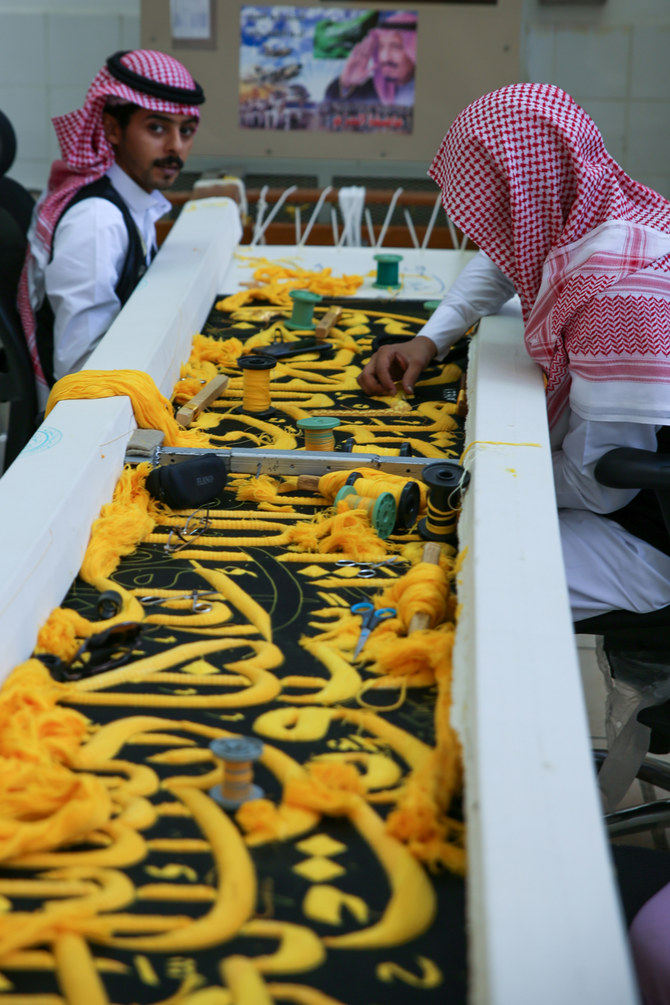
The curtain is fabricated at the King Abdul Aziz Complex for Holy Kaaba Kiswa in Makkah. (AFP)
2 / 20
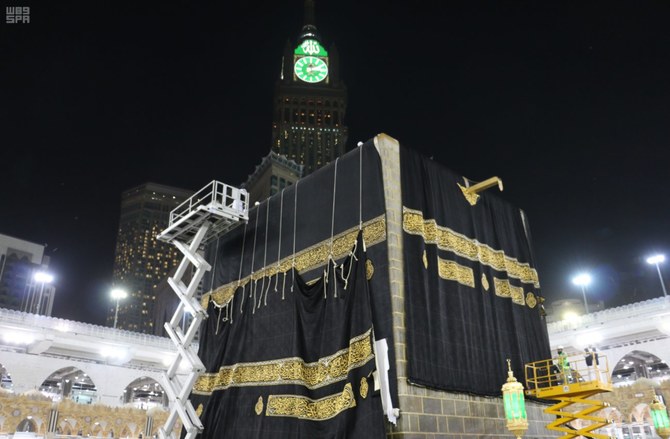
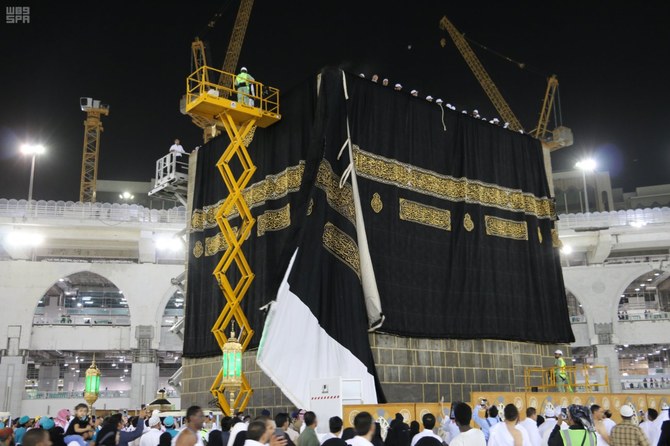
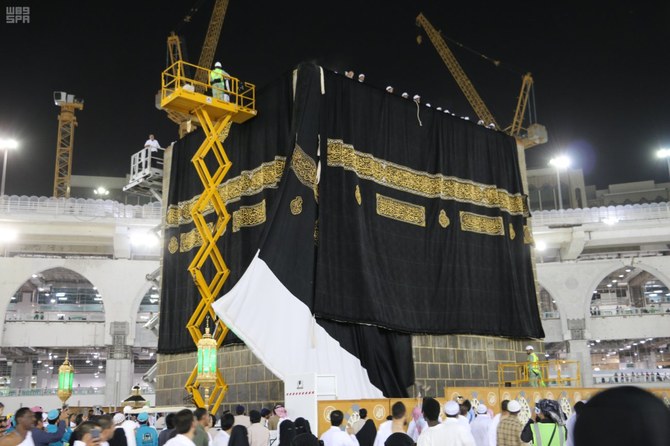
The Kiswa of the Kaaba is replaced on Saturday Aug. 10, 2019. (SPA)
3 / 20
The Kiswa of the Kaaba is replaced on Saturday Aug. 10, 2019. (SPA)
4 / 20
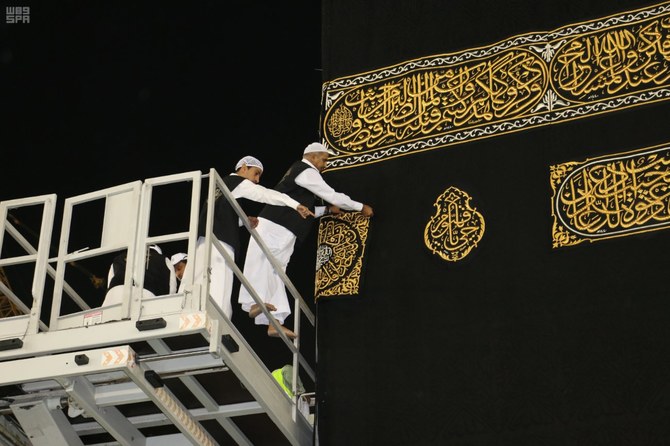
The Kiswa of the Kaaba is replaced on Saturday Aug. 10, 2019. (SPA)
5 / 20
The Kiswa of the Kaaba is replaced on Saturday Aug. 10, 2019. (SPA)
6 / 20
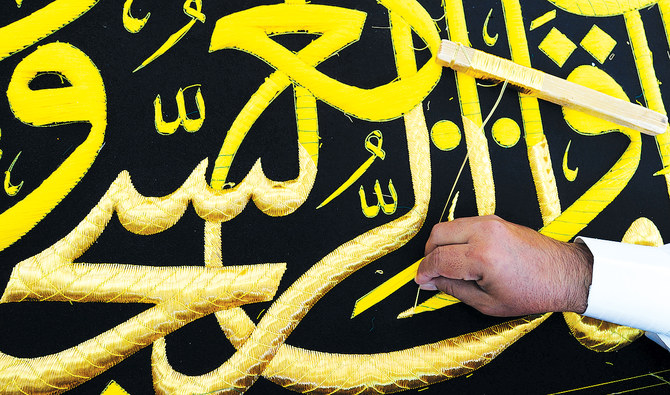
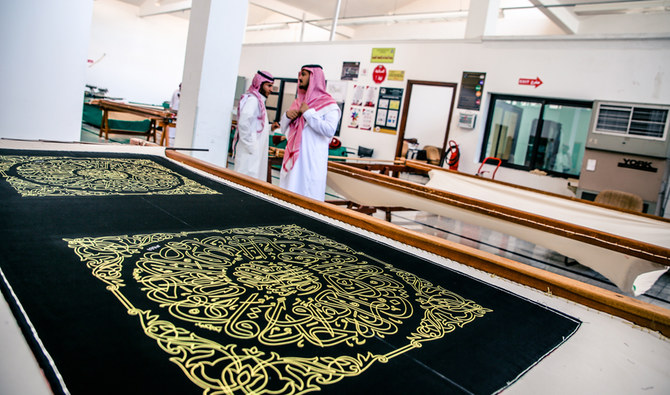
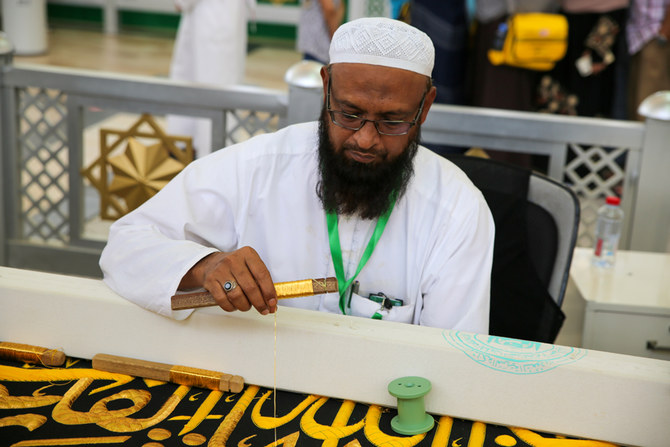
The curtain is fabricated at the King Abdul Aziz Complex for Holy Kaaba Kiswa in Makkah. (AN photo by Essam Al-Ghalib)
7 / 20
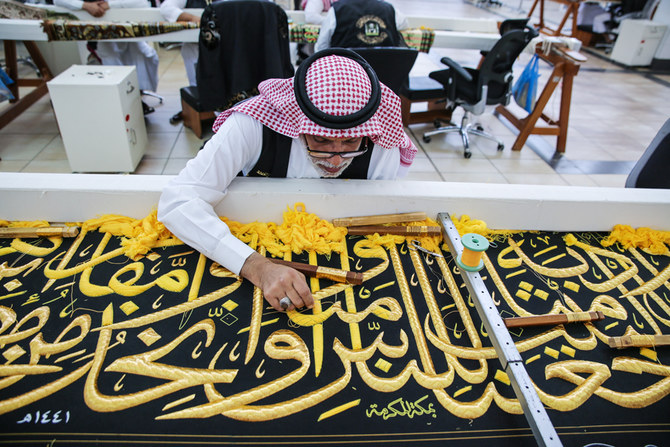
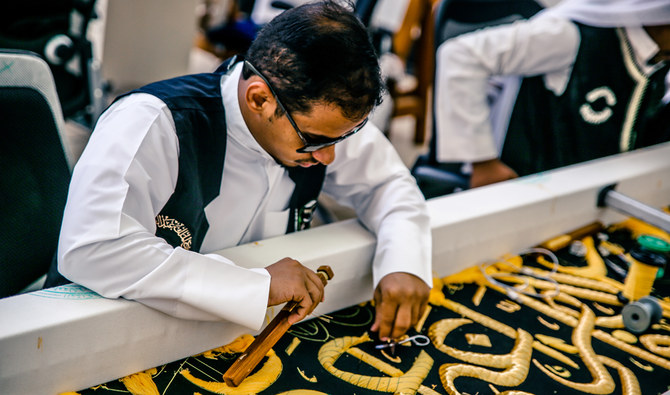
The curtain is fabricated at the King Abdul Aziz Complex for Holy Kaaba Kiswa in Makkah. (AN photo by Essam Al-Ghalib)
8 / 20
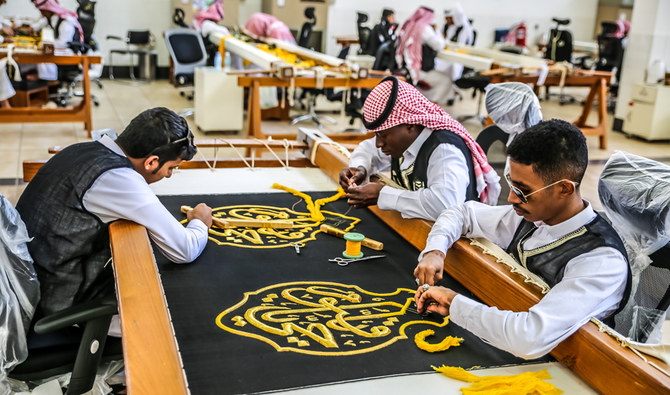
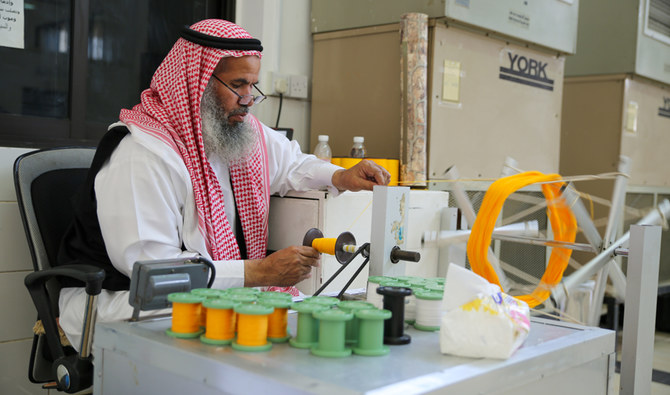
The curtain is fabricated at the King Abdul Aziz Complex for Holy Kaaba Kiswa in Makkah. (AN photo by Essam Al-Ghalib)
9 / 20
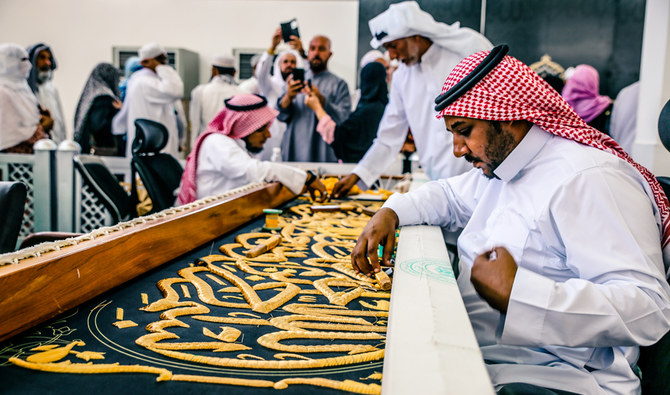
The curtain is fabricated at the King Abdul Aziz Complex for Holy Kaaba Kiswa in Makkah. (AN photo by Essam Al-Ghalib)
10 / 20
The curtain is fabricated at the King Abdul Aziz Complex for Holy Kaaba Kiswa in Makkah. (AN photo by Essam Al-Ghalib)
11 / 20
The curtain is fabricated at the King Abdul Aziz Complex for Holy Kaaba Kiswa in Makkah. (AN photo by Essam Al-Ghalib)
12 / 20
The curtain is fabricated at the King Abdul Aziz Complex for Holy Kaaba Kiswa in Makkah. (AN photo by Essam Al-Ghalib)
13 / 20
The curtain is fabricated at the King Abdul Aziz Complex for Holy Kaaba Kiswa in Makkah. (AN photo by Essam Al-Ghalib)
14 / 20
The curtain is fabricated at the King Abdul Aziz Complex for Holy Kaaba Kiswa in Makkah. (AN photo by Essam Al-Ghalib)
15 / 20
The curtain is fabricated at the King Abdul Aziz Complex for Holy Kaaba Kiswa in Makkah. (AN photo by Essam Al-Ghalib)
16 / 20
The curtain is fabricated at the King Abdul Aziz Complex for Holy Kaaba Kiswa in Makkah. (AN photo by Essam Al-Ghalib)
17 / 20
The Kiswa of the Kaaba is replaced on Friday August 9, 2019. (SPA)
18 / 20
The curtain is fabricated at the King Abdul Aziz Complex for Holy Kaaba Kiswa in Makkah. (AN photo by Essam Al-Ghalib)
19 / 20
The curtain is fabricated at the King Abdul Aziz Complex for Holy Kaaba Kiswa in Makkah. (AN photo by Essam Al-Ghalib)
20 / 20
The curtain is fabricated at the King Abdul Aziz Complex for Holy Kaaba Kiswa in Makkah. (AN photo by Essam Al-Ghalib)
Updated 10 August 2019
Follow

Steeped in history: The Kaaba’s cover Kiswa

  • Craftsmen have labored through the centuries in different cities to manufacture the fabric every year
  • The Kiswa has been made in Saudi Arabia since 1926 at the King Abdul Aziz complex in Makkah

JEDDAH: In a tradition dating back centuries, a new black curtain, or Kiswa, is draped around the Kaaba in the Grand Mosque in Makkah once a year.

The fabric is made of high-quality silk, with verses of the Qur’an woven into it in the form of gold and silver thread running across the Kaaba’s belt.

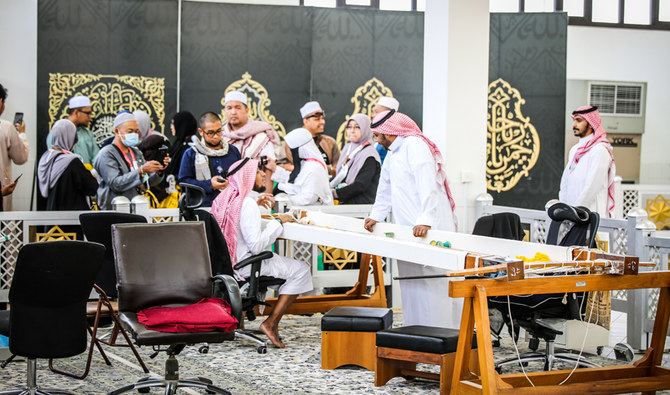
As pilgrims around the world begin their Hajj journeys, about 200 craftsmen of Saudi and other nationalities are engaged in producing the black curtain at the King Abdul Aziz Complex for Holy Kaaba Kiswa in Makkah.

They are dyeing, weaving, printing and manufacturing fabric pieces with great care and skill. Once perfumed and stitched to perfection, the finished silk curtain will be unveiled on the ninth day of the Islamic month of Dhu Al-Hijjah.

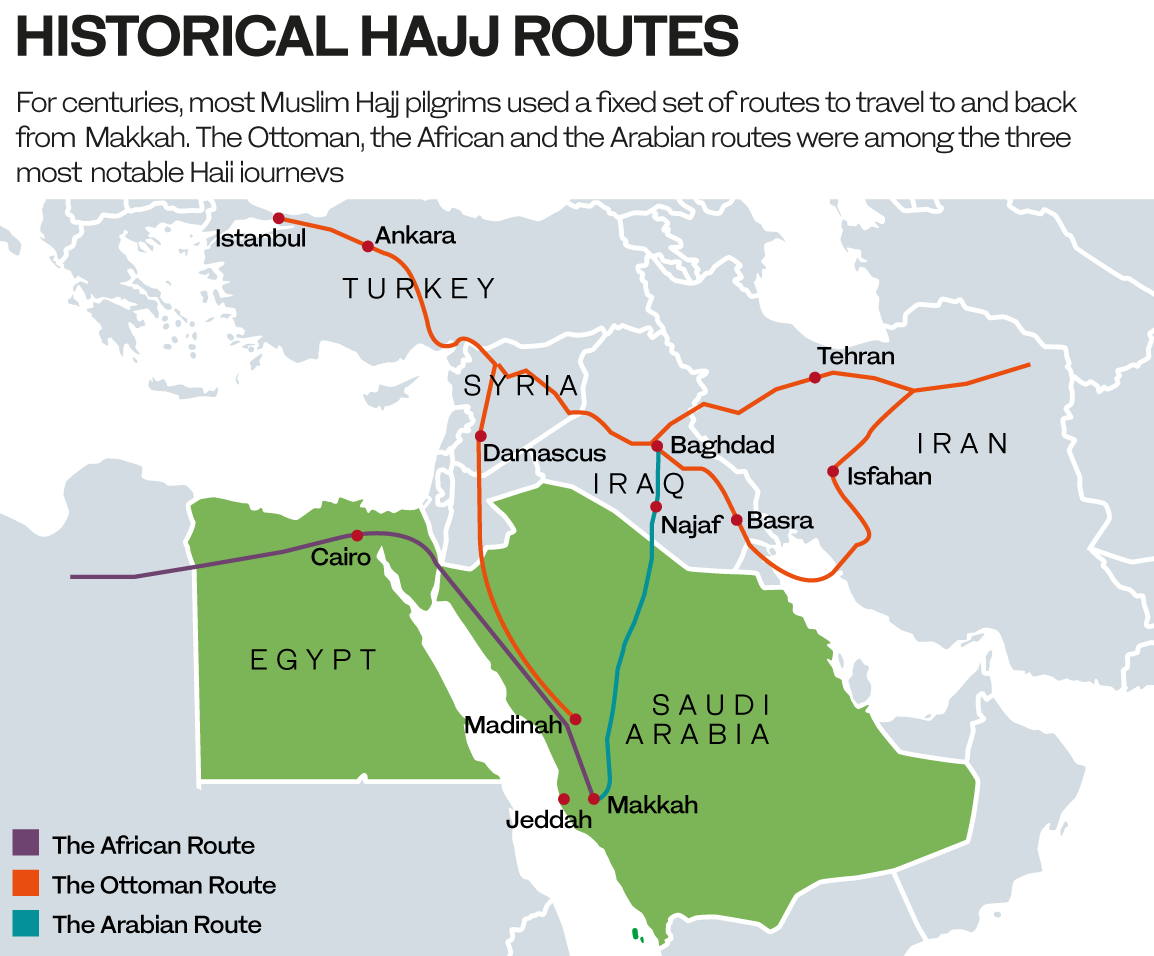
Before the establishment of the complex in 1926 by King Abdul Aziz, the Kiswa was supplied by different countries, most prominently Egypt. 

A wide variety of fabrics and colors have been used through the centuries for manufacturing the Kiswa, a duty that is considered sacred.

From the writings of Arab historian Abu Al-Walid Al-Azraqi, it is known that Muslim Caliph Omar ibn Al-Khattab had the Kaaba draped with a light, white Egyptian cloth called Al-Qabbati, after sending a request to Amr ibn Al-Aas, governor of Egypt at the time, according to Egyptian history researcher Abdelmajid Abdel Aziz.

Uthman ibn Affan, the third caliph, ordered two Kiswas to be produced. The first, made of silk tapestry, was used to adorn the Kaaba on the first day of Hajj. The second, made from Al-Qabbati, was applied on the 27th day of Ramadan.

The tradition of annually draping the Kaaba with a new Kiswa continued for centuries, but the timing differed from one Islamic era to another.

During the Umayyad period, a new Kiswa was draped around the Kaaba on Ashura, the 10th day of the first month of Muharram.
It was replaced by another Kiswa at the end of Ramadan. The practice remained unchanged during the Abbasid period.

The rule of Abbasid Caliph Al-Ma’moon saw the Kaaba get a new Kiswa three times a year. The first was a red silk Kiswa on the first day of Hajj; the second was the white Al-Qabbati on the eve of the seventh Hijri month; and the third, made of white silk, on the 27th day of Ramadan.

Until 1192, the order to make the Kiswa always went to craftsmen who lived on an island in Tannis Lake (now known as Al-Manzila Lake) in Egypt’s northeast. Tannis bagged this coveted role by dint of its reputation as a textile-manufacturing hub.

But Salah al-Din — the first sultan of Egypt and Syria, and founder of the Ayyubid dynasty — ordered Tannis to be abandoned during the Christian Crusades. The manufacturing skills migrated to other parts of Egypt, notably Cairo.

The technology of the textile industry became more developed after the 13th century AD. The materials and techniques that began to be used ensured that a typical Kiswa did not wear out within a year.

During the Mamluk  dynasty,  Kiswa production became very expensive, forcing the sultan, Al-Nasir ibn Qalawun, to order Egypt’s governor to use the taxes from the villages of Bassous and Abul-Gheit for the purpose. But after many years, the tax revenue proved insufficient.

Later on, the cost of Kiswa production by the  Egyptians was covered by an endowment created by Al-Nasir Ibn Qalawun.

During his rule, Sultan Soliman Al-Qanooni realized that the money from the endowment was insufficient, so he ordered the acquisition of seven villages in addition to three acquired in 1567 AD to create a dedicated revenue stream.

The proceeds from the 10 villages were then earmarked for manufacturing Kiswas for the Kaaba. This arrangement later proved to be the greatest contribution by Ottoman rulers.

Muhammad Ali Pasha, the Ottoman governor of Egypt from 1805 to 1848, ordered the expenses for making the Kiswa to be met by the state treasury.

This is how the historic Dar Al-Khoronfosh workshop came into existence in Cairo’s Al Gamaleya neighborhood.

In 1926, after the takeover of the Hijaz region, King Abdul Aziz ordered the establishment of a Kiswa factory in Makkah. The site was the Ajyad neighborhood near the Grand Mosque.

The present-day complex is located in Makkah’s Umm Al-Joud district. The black silk curtain is usually ready two months before the beginning of Hajj, when the keeper of the Kaaba, the Bani Shaiba family, formally takes possession of it. 


Saudi House kicks off Davos with push on Vision 2030, AI platform and ‘humanizing’ tourism

At Saudi House, ministers and executives set out how the Kingdom sees the next phase of its transformation. (Supplied)
Updated 20 January 2026
Follow

Saudi House kicks off Davos with push on Vision 2030, AI platform and ‘humanizing’ tourism

  • Saudi ministers dominate pre-summit spotlight at Saudi pavilion, touting Vision 2030’s next phase and human capital as key to global edge
  • Ministry of Economy and Planning announced the SUSTAIN Platform which aims to accelerate AI-enabled, cross-sector collaboration for sustainable development

DAVOS: For regulars at the World Economic Forum, Monday in Davos is usually a chance to ease into the week, a time to reconnect, plan meetings and prepare for the intense schedule ahead.

This year, Saudi Arabia moved quickly to fill that lull, taking center stage with a packed program of panels ahead of Tuesday’s official opening.

At the Saudi House — the Kingdom’s official pavilion on the Promenade, returning after its debut as a standalone venue at the 2025 WEF Annual Meeting — Saudi ministers and global executives set out how the Kingdom sees the next phase of its transformation.

Monday’s speakers at the Saudi House included Minister of Finance Mohammed Al-Jadaan, Minister of Investment Khalid Al-Falih, Minister of Tourism Ahmed Al-Khateeb, and President and Vice Chairman of Meta Dina Powell McCormick. (Supplied)

Established by the Ministry of Economy and Planning, the venue is pitched as a platform for international thought leaders to tackle the challenges, opportunities and solutions shaping the global economy.

Opening a session on the Kingdom’s role at this year’s Forum and the next phase of Vision 2030 — now in its 10th year and roughly two-thirds complete — Princess Reema bint Bandar, Saudi Arabia’s ambassador to the US, said human capital “is the actual driver if you want a competitive, modern economy.”

She described one of the biggest achievements of the past decade as the emergence of a highly qualified cohort of young Saudis who could work anywhere in the world but “choose to come home, choose to build at home and choose to deliver at home,” calling this “the biggest symbol of the success of Vision 2030.”

Who can give you optimum access to opportunities while addressing risks? I contend that Saudi Arabia has been able to provide that formula.

Khalid Al-Falih, Saudi minister of investment

On the same panel, Minister of Finance Mohammed Aljadaan said this success is rooted in a “behavioral change” that has strengthened the Kingdom’s credibility with both international partners and its own citizens.

“Credibility comes from being very pragmatic, making sure that you maintain your fiscal policy discipline, but at the same time refocus your resources where it matters,” he said, warning that “markets will call your bluff if you’re not serious.”

The Saudi House, a cross-ministerial initiative led by the Ministry of Economy and Planning, is intended to underscore the Kingdom’s “commitment to global cooperation” by offering “a platform where visionary ideas are shared and shaped,” while showcasing opportunities and lessons from its “unprecedented national transformation.”

Lubna Olayan, Chair of the Corporate Board, Olayan Group

Echoing earlier comments to Arab News, Economy and Planning Minister Faisal Alibrahim said the Kingdom’s role as an anchor of stability has helped unlock its potential, stressing that while the objective is to decouple from reliance on a single commodity, “2030 is not the finishing line.”

Khalid Al-Falih, Saudi minister of investment, said Saudi Arabia has been able to enable access to opportunities while addressing major risks, arguing that few countries can match the Kingdom’s overall mix.

“No country has all of those to 100 percent,” he said. “But who can give you the mix that gives you optimum access to opportunities while addressing all of those risks?

Dr. Bedour Alrayes, Deputy CEO, Human Capability Development Program, Saudi Arabia

“I contend that Saudi Arabia has been able to provide that formula and the proof is in the pudding,” noting that local investment has doubled in recent years to reach levels comparable with India and China.

While societal transformation dominated the morning discussions, the afternoon turned to technology, tourism, sport and culture, four strategic sectors expected to spearhead Vision 2030’s next phase.

The Ministry of Economy and Planning used the day to announce the SUSTAIN Platform, due to launch in 2026, which aims to accelerate AI-enabled, cross-sector collaboration for sustainable development.

The ministry said SUSTAIN will translate the Kingdom’s public and private-sector coordination mandate into a practical national tool to help government entities, businesses, investors, academia and civil society identify credible partners, form trusted coalitions and move initiatives “from planning to implementation more efficiently,” addressing a global challenge where fragmented partnerships often slow delivery and blunt impact.

“We are in a moment in time where technology may well impact the face of humanity,” said Dina Powell McCormick, recently appointed president and vice chairman of Meta, welcoming the Kingdom’s “desire” to partner with technology companies and its embrace of innovation.

Minister of Tourism Ahmed Alkhateeb, discussing how technology is being deployed in his sector, underlined that “in travel and tourism, people are very important. We learn about other people’s culture through interacting with people. We digitalize the unnecessary and humanize the necessary.”

He added that while technological transformation is a priority, “we don’t want to replace this big workforce with technology. I think we need to protect them in Saudi Arabia, where we’re being a model. I’m an advocate of keeping the people.”

Throughout the week, Saudi House will host more than 20 sessions, including over 10 accredited by the WEF, across six themes: Bold Vision, Insights for Impact, People and Human Capability, Quality of Life, Investment and Collaboration, and Welcoming the World.

The pavilion will also launch “NextOn,” a new series of influential and educational talks featuring leading global voices.