

Mariah Idrissi calls out US fashion brand for hijab faux pas

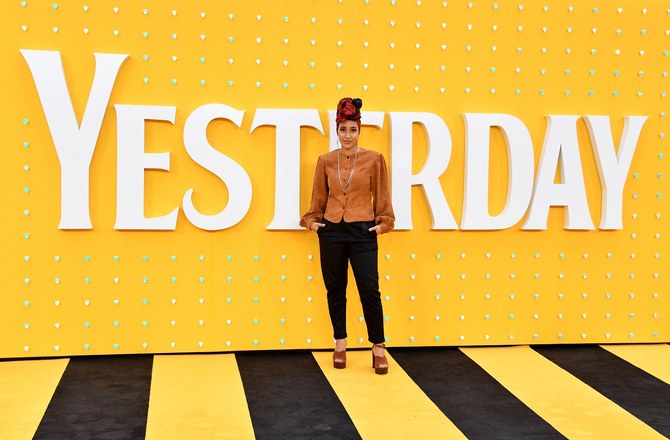
Mariah Idrissi echoed the need for big brands to choose the right consultants when targeting shoppers. (Getty)
Updated 31 July 2019
Follow

Mariah Idrissi calls out US fashion brand for hijab faux pas

DUBAI: British-Moroccan model and influencer Mariah Idrissi and Haute Hijab founder Melanie Elturk took to Instagram Tuesday to share their concerns about the misrepresentation of Muslim women in the fashion industry.

It all kicked off when Elturk, who founded accessories e-tailer Haute Hijab in 2010, shared a promotional image used by US clothing store Banana Republic on its website.

The image features a hijab-wearing woman wearing a short-sleeved t-shirt and while Elturk “(loves) that they’re representing our community,” she added that she is “personally going to let them know that… there are guidelines to hijab outside of just covering hair (sic).”

“While I love that (the) hijab is becoming more mainstream and applaud @bananarepublic for their efforts in inclusivity… I have to pause at the way it’s portrayed,” she added.

“Brands will continue to invest in this space, but without proper checks in place, you have images like this. All it would have taken was a consultation with a Muslim brand or group to advise in order to do it right and respect our values,” she said.

Idrissi echoed the need for big brands to choose the right consultants when targeting shoppers.

“I’m out here on… all these platforms to explain the importance of getting the right people to consult for brands that want to tap into the ‘Muslim dollar’ and then this happens. Why are these errors happening still?” she said, before adding that fashion brands should employ the right people to consult on or style photoshoots to avoid such issues.  

Banana Republic launched its range of four hijabs on Tuesday.

Born and raised in London, Idrissi is of Moroccan-Pakistani descent and made headlines in 2015 when she became the first model to wear a hijab in a major international fashion campaign, starring in H&M’s “Close the Loop” adverts.

Since then, she has been at the forefront of the modest fashion movement, working with major retailers including MAC cosmetics and ASOS. She also featured in Rihanna’s Fenty Beauty campaign.

Referring to the feedback from her H&M campaign in that talk, she said, “It made me realize that I’m not only a hijabi model, I’ve also had this weight placed on me as a spokeswoman for hijab, for modesty, for fashion, for Islam… And, of course, I wouldn’t change it for the world, but it shows me that we still have a long way to go in changing people’s mentalities.”


World of Coffee trade show capitalizes on Gulf’s strong coffee culture

Updated 06 January 2026
Follow

World of Coffee trade show capitalizes on Gulf’s strong coffee culture

DUBAI: Long regarded as the birthplace of coffee brewing, the Middle East is entering a new phase of cafe culture — and the fifth edition of World of Coffee, which takes place in Dubai from Jan. 18-20, will help drive that momentum.

Saudi Arabia alone is home to more than 5,100 branded cafes, with daily coffee consumption exceeding 36 million cups. Coffee is part of the social and cultural fabric, from traditional majlis gatherings to contemporary specialty cafes.

“Saudi Arabia’s coffee sector is evolving rapidly. There is increasing investment in quality, education, and presentation, alongside renewed interest in origin storytelling and cultural context,” said Shouq Bin Redha, exhibition manager for World of Coffee Dubai 2026, where Saudi Arabia will host a national pavilion.

“Saudi coffee has a very distinct identity rooted in heritage, ritual, and hospitality. Its profile is closely tied to traditional preparation methods and regional flavor preferences, which sets it apart on the global stage,” she told Arab News. “The national pavilion reflects this balance between tradition and modernization.”

Organized by DXB LIVE in partnership with the Specialty Coffee Association, World of Coffee Dubai has expanded dramatically, growing from 5,000 sq. meters in 2022 to more than 20,000 sq. meters in 2026. The event brings together producers, traders, roasters, cafe owners and innovators from around the world.

“At its core, the event is about bringing together the full coffee value chain in one place,” Redha said. “We want participants to leave not only having discovered new products or origins, but with stronger partnerships, clearer market insight, and a deeper understanding of how the industry is evolving.”

She added: “The Gulf has become an increasingly attractive market for producers because it combines strong consumer demand with a growing appreciation for quality, origin, and traceability.”

The UAE’s coffee market alone exceeds $3.2 billion, while Dubai continues to strengthen its position as one of the world’s most cafe-dense and diverse cities.

“Dubai, in particular, offers a unique gateway to multiple markets at once. For producers, World of Coffee Dubai provides direct access not only to local buyers, but to an international audience that uses the city as a regional and global trading hub,” Redha said.

When it comes to trends in the Gulf’s coffee scene, Redha said she expected to see “continued diversification in sourcing, with buyers exploring a broader range of origins and flavor profiles. There is also growing interest in coffees that offer greater transparency, whether through direct trade relationships, clearer traceability, or stronger sustainability credentials.”