LONDON: The children in the British Museum playing at reconfiguring Abdulrahman and Turki Gazzaz's jigsaw-style map of the 22 Arab League States are, in their naivety, creating similar chaos that was caused by the British and French officials responsible for drawing up post-war boundaries across the Middle East.
That seemingly cavalier approach to carving out states has blighted the region — often the Europeans who drew up the maps had little knowledge or interest in the myriad identities of the people whose countries they were defining.
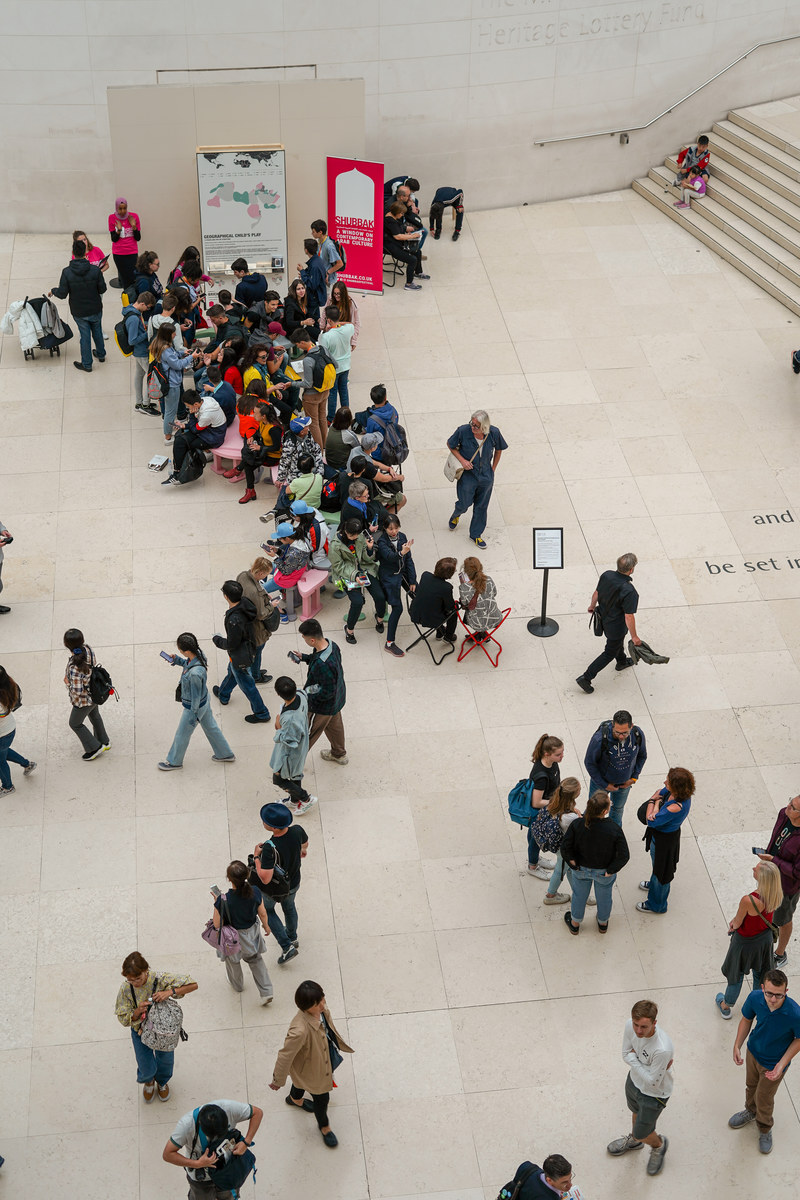
Shubbak. (Supplied)
The Saudi Arabian brothers’ work — “Geographical Child’s Play” — was commissioned for Shubbak, an annual art festival now in its fifth year which brings work by Arab artists to London's stages, concert halls, cinemas, galleries, museums and streets. Arab News caught up with the Jeddah-based artists (and founders of Bricklab studio) at the British Museum, where their sculpture was attracting interest from visitors from all over the world.
Each ‘state’ in the sculpture is represented by a three-dimensional piece. The pieces are decorated in pastel colors (with shades abstracted from the pan-Arab colors), which, coupled with their low height makes them reminiscent of children’s seating in a nursery. One key feature of the work is that — regardless of the way in which the 22 pieces are arranged, they are always interconnected. The work is described in the promotional materials as “an invitation to imagine geopolitics through the lens of play and deliberately naïve hope.”
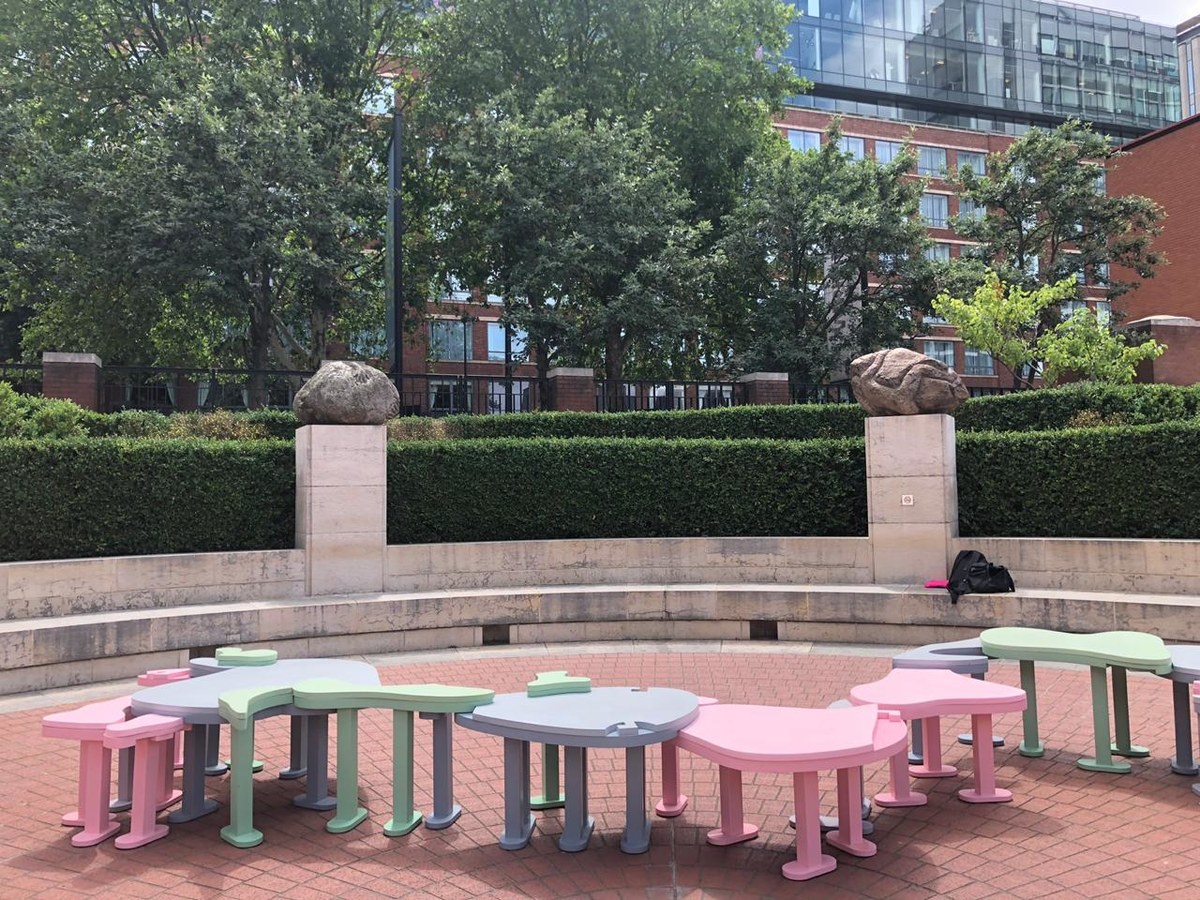
Geographical Child's Play. (Supplied)
“We wanted something playful that also serves as an educational tool,” Abdulrahman explained. “Some people try to read the names of all the 22 countries, while others just enjoy the tactility of the material.”
The brothers, who both trained as architects, had originally intended to use a hard rubber surface, but — in the transition “from conceptualization to realization” — they decided they wanted a softer surface too. “We wanted to use different materials like wood and foam together to create a contrast,” said Abdulrahman. “We were looking for tactile materials. This aspect is something we are always interested in at Bricklab. Most of the projects we work with involve us breaking the concept down to its material form and trying to carry it through.”
In addition to three London venues — the British Library, British Museum and the National Theatre — the installation has also been exhibited in Milton Keynes as part of the town’s community festival Art in the Park. That particular location, Abdulrahman said, was his favorite. “It was just families and children really interacting with the artwork and mainly just having fun,” he explained.
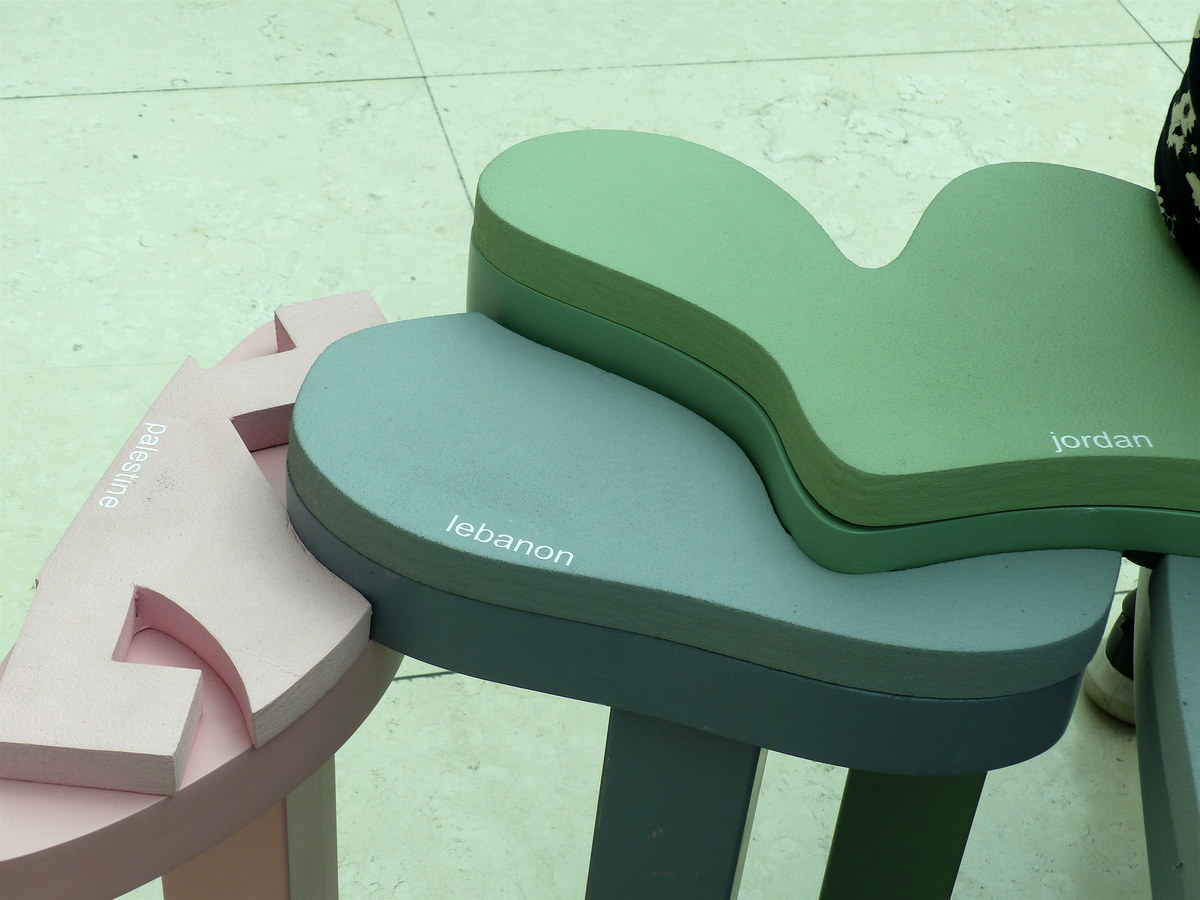
Geographical Child's Play. (Supplied)
“At the British Library, which is a lovely space, people were treating it more as an educational tool and shying away from touching the work. We, and the invigilators, had to encourage them. Here at the British Museum, people are much more relaxed about engaging with the work.”
According to Turki, showing “Geographical Child’s Play” in the UK makes the piece even more relevant.
“Initially the project was very political, because the role that the British have played in shaping the Arab world, and Arab identity in general, is undeniable,” he said. “The Arab revolt was instigated in large (part) by the British, and reading about some of the policy makers, you see that the people in the background, who were holding office in Egypt or India at the time, were playing instrumental roles in shaping what we understand as Arab identity today.
“By bringing this work here to London — especially here, to the British Museum — I think we are asking the question, ‘What is our identity now?’ And if we were to remove it from the Western understanding, or the British understanding, of the Arab world, what might that identity be?”
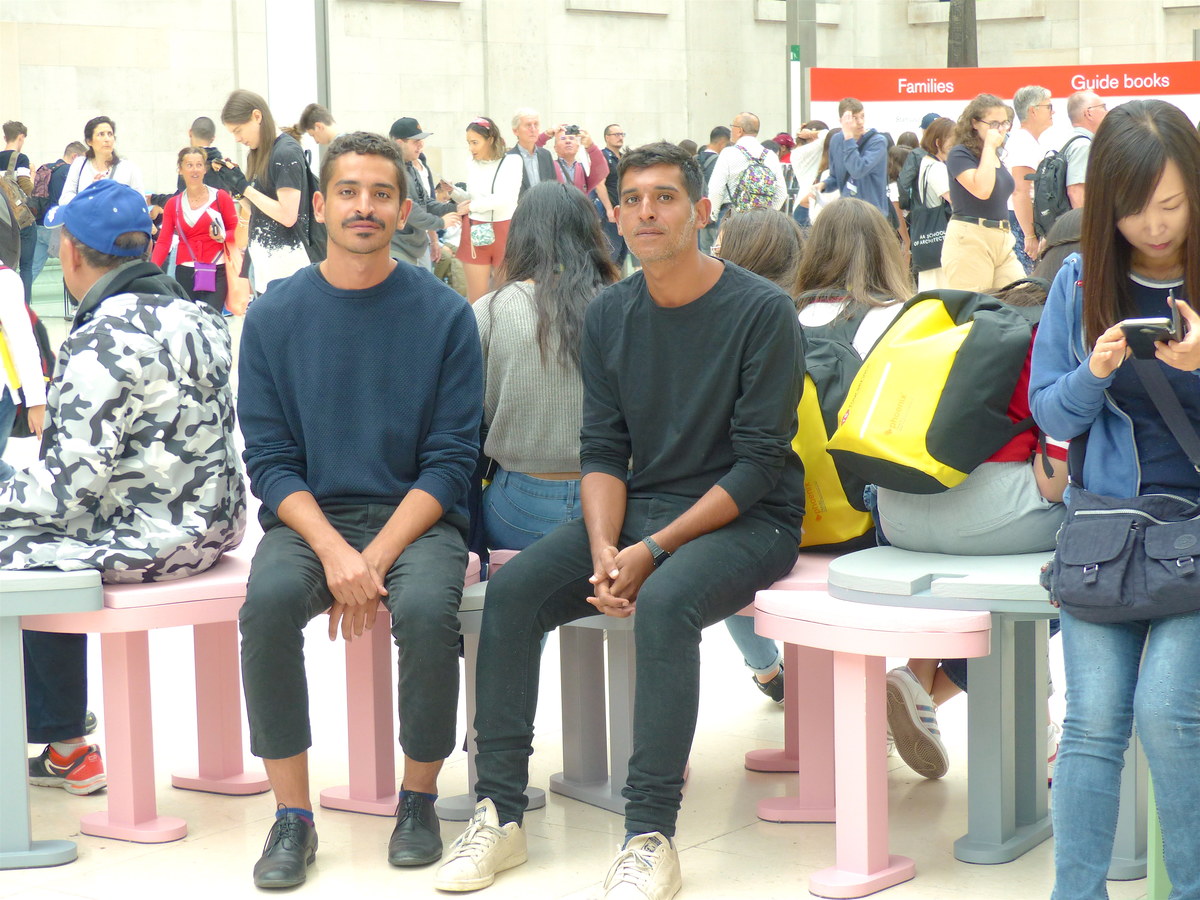
Turki and Abdulrahman Gazzaz with their sculpture Geographical Child's Play at the British Museum. (Supplied)
He pointed out that the borders between Arab countries were ‘blurred’ before the interference of British, French and Ottoman Empire officials.
“If you take a village in the south of Saudi on the border with Yemen, you can barely tell where Yemen ends and Saudi starts,” he said. “I think it is interesting to acknowledge how abstract these borders are and how cultures merged — and this is something that is true generally, not just particular to the Arab world.”
The brothers are encouraged by the creative progress they see happening in their home country.
“The community of art is growing, and speaks truthfully to us as a society,” said Abdulrahman. “We are lucky to be around at this time when the arts are really being promoted and supported. Without such support, we wouldn’t be here. We are getting tremendous support back in Saudi. There is this really meaningful belief in emerging architects and artists who look at things from a critical perspective and try to have a certain commentary rather than shying away from the truth. And that is what we have always tried to do and to achieve.”