

Family and friends await return of jailed Pakistani trucker pardoned by Saudi Arabia

1 / 2
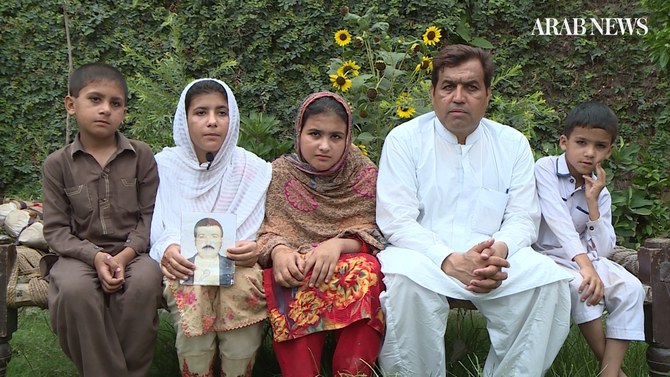
Hidayatullah, the brother of Pkaistani trucker Zahir Hussain Zar Khan, detained in Saudi Arabia since 2012, poses for a photo with Khan's four children in Peshawar, Pakistan. One of Khan's daughters is seen holding a photograph of her father who is set to return to Pakistan after being pardoned by the Kingdom this month. (Photo Arab News)
2 / 2
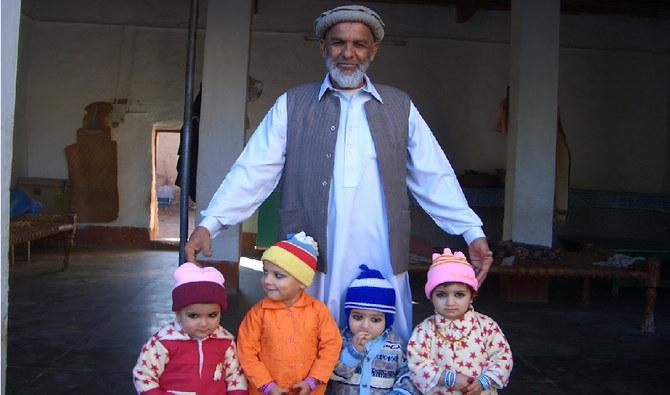
In this undated file photo, late father of Zahir Hussain Afridi sits with his grandchildren at his hometown in Khyber tribal district in 2011. Afridi’s father died whole his son was detained in Saudi Arabia after four people were killed in an accident with his vehicle in 2012. Two weeks ago, Saudi Arabia’s bait-ul-maal social welfare organisation paid off Afridi's blood money and now his family and friends excitedly await his return home after spending seven years in a Saudi prison. (Photo credit family)
Updated 27 July 2019
Follow

Family and friends await return of jailed Pakistani trucker pardoned by Saudi Arabia

  • Afridi imprisoned in 2013 after his vehicle killed four in road accident, Kingdom's bait ul maal pays blood money this month
  • Relatives, neighbours all praise for Saudi crown prince and government for allowing Afridi's freedom

WAZIR DHAND, Khyber Agency: Afreen Khan was four years old when she last saw her father.

Zahir Hussain Zar Khan went to Saudi Arabia from the Pakistani town of Peshawar in 2012 to work as a trucker but ended up in jail after getting into a road accident that killed four people. Since then, unable to pay the 1.3 million riyals – or $350,000 – in blood money to the relatives of those who had died, Khan has languished in jail.
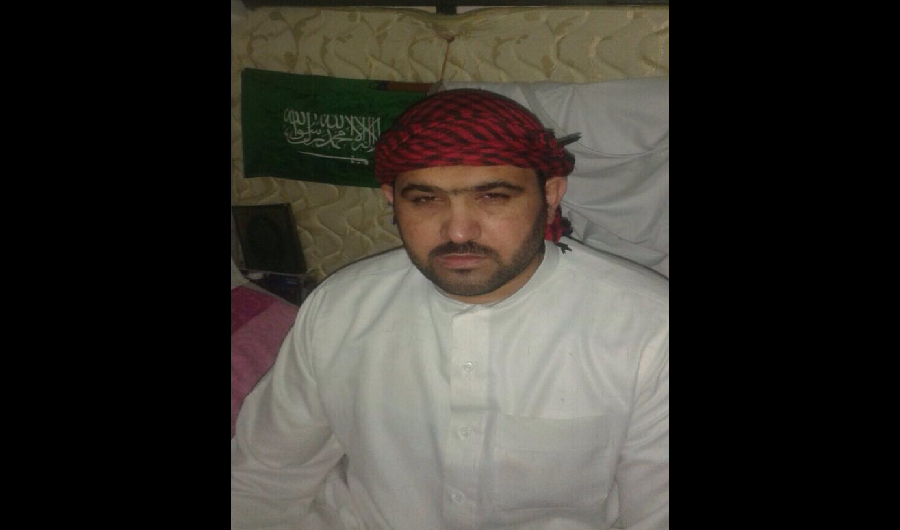


In this undated file photo, Zahir Hussain Afridi, a tribesman from Khyber tribal district, poses for a photo in Saudi Arabia in 2011. Two weeks ago, Saudi Arabia’s bait-ul-maal social welfare organisation paid off Afridi's blood money and now his family and friends excitedly await his return home after spending seven years in a Saudi prison. (Photo courtesy Afridi family)

This month, Saudi Arabia’s bait-ul-maal social welfare organization paid off the blood money and now his family and friends excitedly await his return home. His daughter Afreen will finally see her father again.

“It feels like Eid every day,” 11-year-old Afreen said, speaking about the time since she had heard her father would walk free. “We pray for Crown Prince Mohammed bin Salman and the government of Saudi Arabia for paying the blood money which led to the release of my father. We have missed him for years.”


In this undated file photo, late father of Zahir Hussain Afridi sits with his grandchildren at his hometown in Khyber tribal district in 2011. Afridi’s father died whole his son was detained in Saudi Arabia after four people were killed in an accident with his vehicle in 2012. Two weeks ago, Saudi Arabia’s bait-ul-maal social welfare organisation paid off Afridi's blood money and now his family and friends excitedly await his return home after spending seven years in a Saudi prison. (Photo credit family)

Khan’s brother Hidayatullah Khan said he had received a copy of the order of a Makkah court about two weeks ago saying Khan would be home in the next two weeks.

“We are poor people. We could not have paid the blood money without the cooperation of Saudi authorities even if we had toiled for seven more years,” Hidayatullah said.

Bismillah Khan, the detained man’s first cousin, said jubilant relatives and villagers were now daily visiting his hometown of Wazir Dhand, a dusty hamlet on the outskirts of Peshawar, to congratulate his family.


In this file photo, Zahir Hussain Afridi (right) poses for a picture with his friend at his hometown of Khyber tribal district in 2010. Two weeks ago, Saudi Arabia’s bait-ul-maal social welfare organisation paid off Afridi's blood money and now his family and friends excitedly await his return home after spending seven years in a Saudi prison. (Photo credit family)

“You cannot gauge our happiness. I traveled to Saudi Arabia last year for umrah and tried to meet my cousin in prison but I could not see him,” Bismillah said.

Nasrullah Khan, a neighbor, said a steady procession of villagers had been arriving at the residence of the truck driver each day to congratulate his family over his release orders.

“The announcement that hundreds of Pakistani prisoners would be set free on the instruction of the crown prince is something we will remember as long as we live,” he said

Hidayatullah added: “I wish there was a way we could convey to the crown prince how grateful and happy we are today at the release of our loved one from prison.”


Pakistan mulls 'Super App' for public services, document verification in major technology push

Updated 15 February 2026
Follow

Pakistan mulls 'Super App' for public services, document verification in major technology push

  • Pakistan has been urging technology adoption in public, private sectors as it seeks to become a key tech player globally
  • The country this month launched the Indus AI Week to harness technology for productivity, skills development and innovation

KARACHI: Pakistan is planning to launch a “Super App” to deliver public services and enable digital document verification, the country's information technology (IT) minister said on Sunday, amid a major push for technology adoption in public and private sectors.

Pakistan, a country of 240 million people, seeks to become a key participant in the global tech economy, amid growing interest from governments in the Global South to harness advanced technologies for productivity, skills development and innovation.

The country's information and communications technology (ICT) exports hit a record $437 million in Dec. last year, according to IT Minister Shaza Fatima Khawaja. This constituted a 23% increase month on month and a 26% increase year on year.

Pakistan's technology sector is also advancing in artificial intelligence (AI) and cloud computing, marked by the launch of Pakistan’s first sovereign AI cloud in November, designed to keep sensitive data domestic and support growth in the broader digital ecosystem.

“In developed countries, citizens can access all government services from a mobile phone,” Fatima said, announcing plans for the Super App at an event in Karachi where more than 7,000 students had gathered for an AI training entrance test as part of the ‘Indus AI Week.’

“We will strive to provide similar facilities in the coming years.”

Khawaja said the app will reduce the need for in-person visits to government offices such as the National Database and Registration Authority (NADRA) and the Higher Education Commission (HEC).

The Indus AI Week initiative, which ran from Feb. 9 till Feb. 15. was aimed at positioning Pakistan as a key future participant in the global AI revolution, according to the IT minister.

At the opening of the weeklong initiative, Prime Minister Shehbaz Sharif announced that Pakistan would invest $1 billion in AI by 2030 to modernize the South Asian nation’s digital economy.

“These initiatives aim to strengthen national AI infrastructure and make the best use of our human resource,” Khawaja said, urging young Pakistanis to become creators, inventors and innovators rather than just being the consumers of technology.