Brazil at diplomatic impasse with Iran over US sanctions

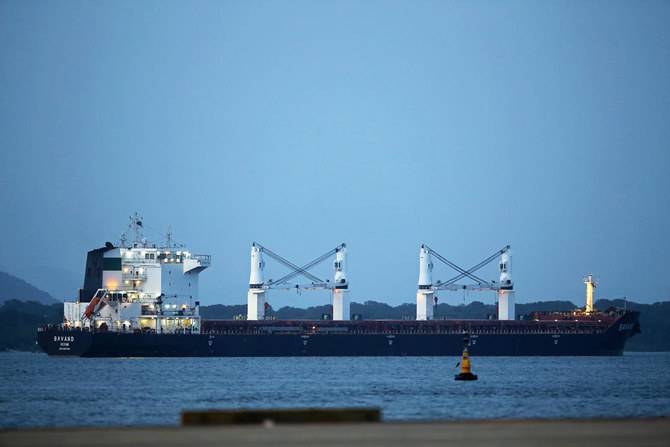
Iranian ship Bavand, loaded with 48,000 tons of corn, is seen anchored in the port of Paranagua, Brazil, on July 19, 2019. (AFP / Heuler Andrey)
Updated 25 July 2019
Follow

Brazil at diplomatic impasse with Iran over US sanctions

  • Iran threatens to halt imports from Brazil if it continues to refuse to refuel two Iranian vessels stranded there
  • In addition to its imports of Brazilian corn, Iran is fifth largest buyer of beef and soybeans from the South American country

RIO DE JANEIRO: Brazil is entangled in a diplomatic spat that could potentially damage a long-standing commercial relationship with Iran, which is the biggest buyer of Brazilian corn.
Seyed Ali Saqqayian, Iran’s ambassador to Brasilia, was quoted Wednesday in Iran’s semi-official Fars news agency saying that Tehran could reconsider imports from Brazil if it continues to refuse to refuel two Iranian vessels stranded there.
The ships have been waiting off the coast of the southern state of Parana since early June. Brazil’s state-run oil giant, Petrobras, has declined to supply fuel because it says the vessels are under US sanctions and it would risk significant fines for doing so.
Brazilian President Jair Bolsonaro, who has sought closer ties with US President Donald Trump, said he stood by the US-backed sanctions on Iran.
“We’re aligned with their policy, so we do what we have to do,” Bolsonaro said over the weekend.
The consequences could be stiff if Brazil does not bow to pressure.
In addition to its imports of Brazilian corn, Iran is fifth largest buyer of beef and soybeans from the South American country. Brazil exported a total of $2.26 billion worth of commodities to Iran in 2018, according to official data.
A bilateral agreement between the countries also includes cooperation on matters such as energy, science and technology.
“Petrobras, which has shares in the US market, doesn’t want to make any faux-pas,” said José Alfredo Graca Lima, a former consul-general of Brazil in New York and Los Angeles.
Eleva Quimica, the Brazilian company seeking to export Brazilian corn aboard the ships, contends that agricultural commodities are protected under a “humanitarian exception.”
The company recently sued Petrobras in Parana and won, but the issue is still being disputed in the courts.
Brazil’s ministry of foreign affairs said it was involved with the case, but did not provide further details.
An official, who spoke on condition of anonymity because they did not have permission to speak to the press, said Eleva Quimica had asked Brazil’s Supreme Court to force Petrobras to provide a list of other fuel providers that could help.



UN chief Guterres warns ‘powerful forces’ undermining global ties

Updated 5 sec ago
Follow

UN chief Guterres warns ‘powerful forces’ undermining global ties

  • Guterres paid tribute to Britain for its decisive role in the creation of the United Nations
  • He said 2025 had been a “profoundly challenging year for international cooperation and the values of the UN“

LONDON: UN chief Antonio Guterres Saturday deplored a host of “powerful forces lining up to undermine global cooperation” in a London speech marking the 80th anniversary of the first UN General Assembly.
Guterres, whose term as secretary-general ends on December 31 this year, delivered the warning at the Methodist Central Hall in London, where representatives from 51 countries met on January 10, 1946, for the General Assembly’s first session.
They met in London because the UN headquarters in New York had not yet been built.
Guterres paid tribute to Britain for its decisive role in the creation of the United Nations and for continuing to champion it.
But he said 2025 had been a “profoundly challenging year for international cooperation and the values of the UN.”
“We see powerful forces lining up to undermine global cooperation,” he said, adding: “Despite these rough seas, we sail ahead.”
Guterres cited a new treaty on marine biological diversity as an example of continued progress.
The treaty establishes the first legal framework for the conservation and sustainable use of marine diversity in the two-thirds of oceans beyond national limits.
“These quiet victories of international cooperation — the wars prevented, the famine averted, the vital treaties secured — do not always make the headlines,” he said.
“Yet they are real. And they matter.”