ISLAMABAD: Taliban political spokesman Suhail Shaheen said on Tuesday thousands of Taliban fighters would become part of the Afghan army and other security forces after US and other foreign troops left Afghanistan following a peace deal with the United States.
The United States and the Taliban are close to an agreement to end an 18-year-long Afghan civil war. The deal is expected to be centered on a US pledge to withdraw troops in exchange for a Taliban promise not to let Afghanistan be used as a base for terrorism, officials say.
US Special Representative for Afghanistan Reconciliation Zalmay Khalilzad will travel to Afghanistan and Qatar from July 22 – August 1 to restart talks with the Taliban in Doha.
“We have agreed that the army will stay as an institution,” the Taliban spokesman told Arab News via telephone when asked about the fate of thousands of Taliban fighters after the peace deal. “The army is required and will remain as a base, as a foundation but reforms are needed.”
He said participants at Moscow’s intra-Afghan conference this month had also called for reforms in Afghan security institutions, adding that future intra-Afghan meetings would decide how reforms would be introduced.
“Yes of course they (Taliban) will be part of the security system. They have rendered huge sacrifices for the liberation of the country,” Shaheen said.
To another question about whether the Taliban would be part of any future political system and the government, the Taliban spokesman answered in the affirmative adding: “But they will not be the part of the present administration. There will be a new system and a new government and we will definitely be part of that.”
When asked if the Taliban could become a political party when foreign troops withdrew, Shaheen said: “Our leadership will decide about the future policy. Our top priority is to end the occupation and second, to establish an Islamic government and we will take Afghans into confidence. Our leaders will decide as to how would we work.”
He said the Taliban would allow women the right to education, jobs and business under Islamic principles, adding that they would have to observe the Islamic veil.
“There had been no curbs on women education during our previous government. But we had been in the state of war that time and had no financial resources and the priority had been to maintain security as there had been anarchy and chaotic situation that time. But we want the world to help us and we will establish good relations with the world and to solve all our problems under an Islamic system,” Shaheen said.
He said the Taliban neither recognized the present system in Kabul nor the constitution in its present form.
“We recognize the constitution as a necessity and want another constitution,” Shaheen said. “We think other institutions are also necessary but we do not recognize the present institutions and that is why we are holding intra-Afghan conferences to discuss how the constitution and institutions should be.”
When asked if the Taliban recognized the present democratic system, Shaheen said: “We believe in an Islamic system.”
He said there was a possibility the Taliban and the United Sates could “conclude certain final points” in the possible peace deal within a month and even before the Muslim festival of Eid, likely to be celebrated in Afghanistan on Aug. 11.
“I am hopeful we will reach an agreement before Eid,” he said.
To a question about US Secretary of State Mike Pompeo’s statement that he hoped to have a peace deal by September 1, Shaheen said he was hopeful an agreement could materialize even before that as “we want to end bloodshed and destruction in our country.”
“The ball is in their (US) court,” Shaheen said. “They should come up with a reasonable offer.”


![]()

Taliban says its fighters will join Afghan security forces after US troops leave
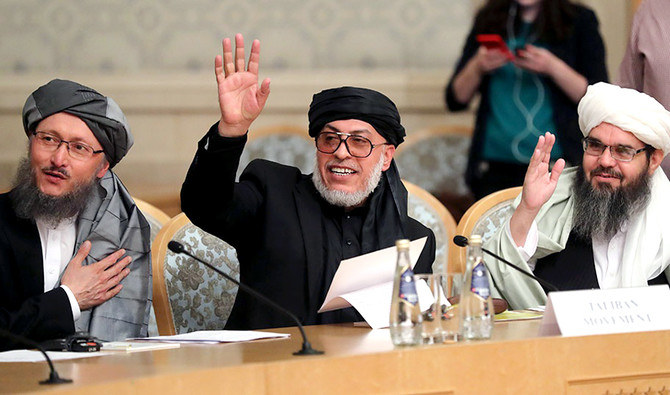
Taliban says its fighters will join Afghan security forces after US troops leave
- Taliban spokesman Suhail Shaheen says Taliban will be part of any future government in Kabul
- Possibility of a peace deal in the next month, even before Eid on August 11, Shaheen says
Latest updates




© 2026 SAUDI RESEARCH & PUBLISHING COMPANY, All Rights Reserved And subject to Terms of Use Agreement.