



PESHAWAR: The Election Commission of Pakistan on Sunday announced results of the first-ever provincial elections in Pakistan’s seven previously lawless tribal regions bordering Afghanistan, confirming that independent candidates had won six out of 16 general seats.
In all, 285 candidates, which included 202 independents, contested the election, with Prime Minister Imran Khan’s Pakistan Tehreek-e-Insaf (PTI) party winning five seats, Jamiat Ulema-i-Islam-Fazl (JUI-F) securing three seats while Jamaat-e-Islami (JI) and Awami National Party (ANP) getting one seat each.
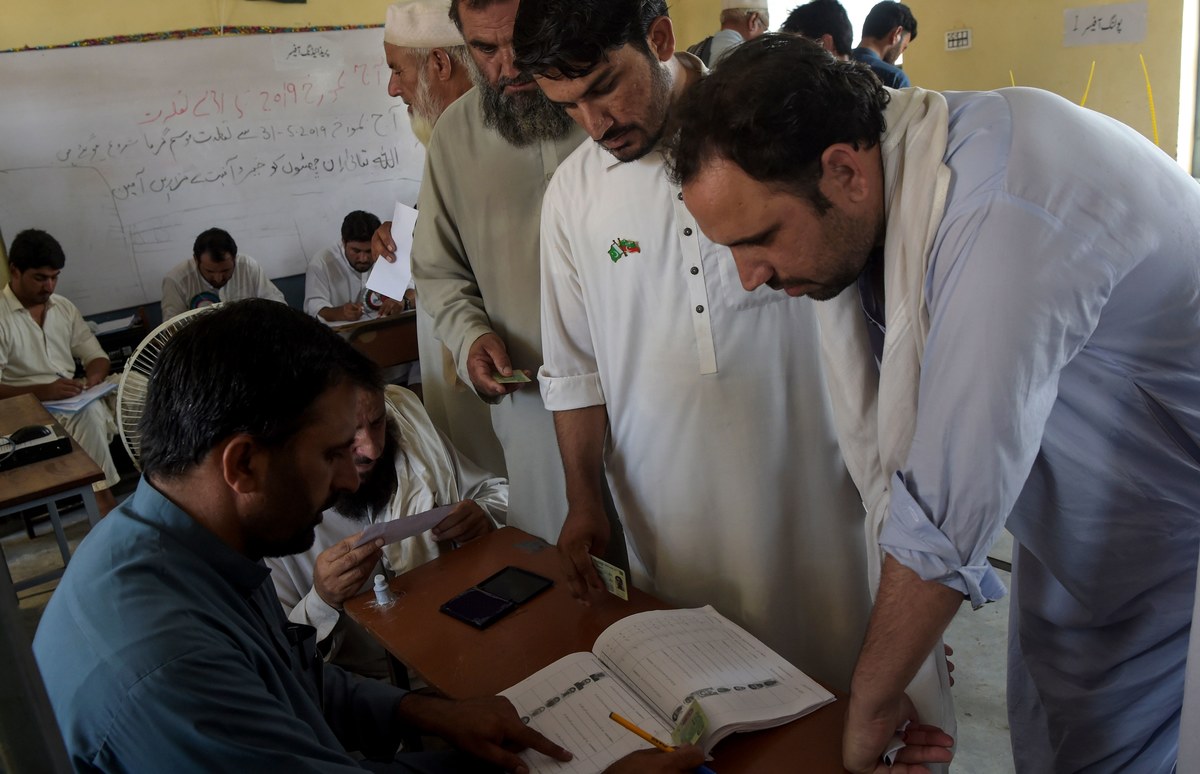
Tribesmen interact with an election official in a polling station for the first provincial elections in Jamrud, a town of the Khyber Pakhtunkhwa province on July 20, 2019. (AFP)
According to a preliminary report of the Free and Fair Election Network (FAFEN), a conglomerate of more than 50 domestic civil society organizations, nearly 27.6 percent of the registered voters in seven tribal districts voted in the electoral contest.
“However, these elections did not yield a turnout that was expected, which remained lower by 6.3 percent in comparison to the turnout for the National Assembly seats on July 25 last year,” the report added.
FAFEN further noted that “almost 20 percent of women voters turned out to vote in this election as compared to 23.8 percent on July 25, 2018.”
The election observation network also informed it had not received “any report on bar on women’s voting,” though it maintained there could be “further elaborations on this matter in the detailed report based on the observation of more than 1,600 polling stations and their result forms.”
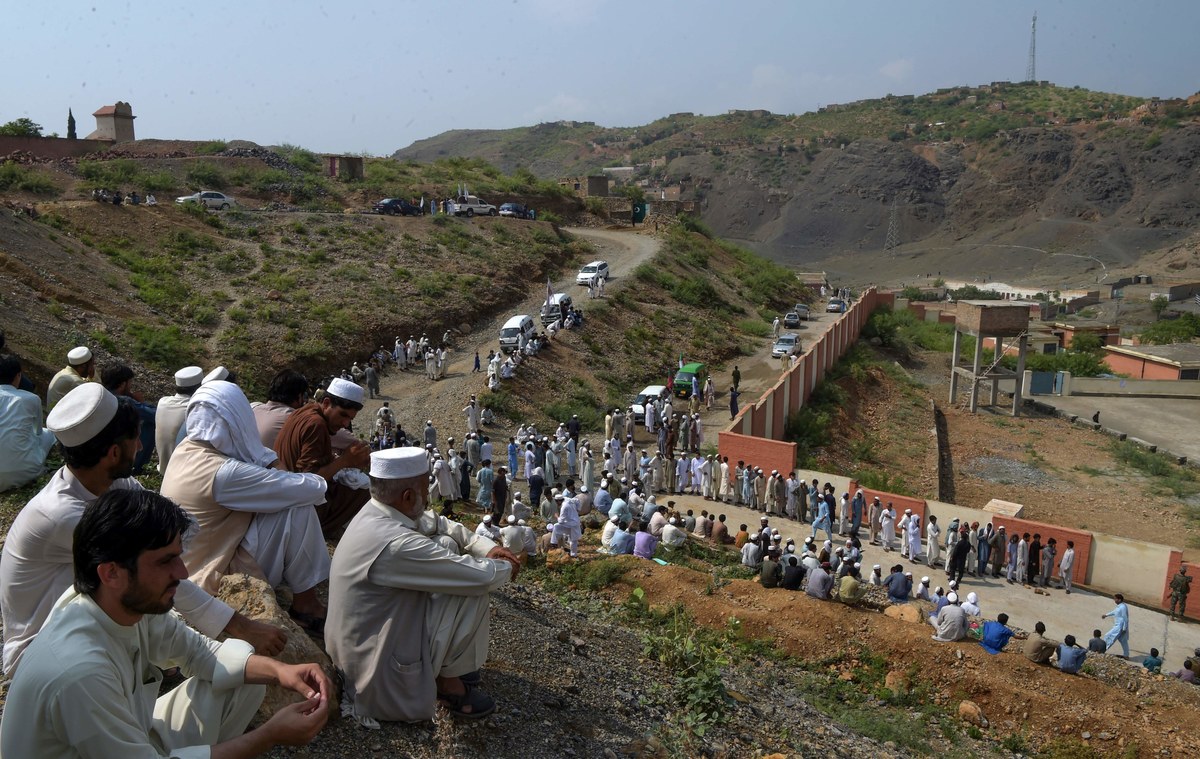
Tribesmen line up to cast their vote outside a polling station for the first provincial elections in Jamrud, a town of the Khyber Pakhtunkhwa province on July 20, 2019. Pakistan's tribal areas held their first ever provincial elections on July 20 amid high security, a key step bringing the northwestern region into the political mainstream after years of turmoil fuelled by militancy. (AFP)
Polling in Pakistan’s tribal districts concluded without any major reported incident of violence, with tens of thousands of troops and special unit police patrolling the province on Saturday. Last May, Pakistan’s parliament voted to merge the seven tribal districts – North Waziristan, South Waziristan, Kurram, Mohmand, Khyber, Bajur and Orkazai – called the Federally Administered Tribal Areas (FATA) into KP province, granting the area’s five million majority ethnic Pashtuns the same constitutional rights as other Pakistanis. Previously, the area was ruled by draconian colonial era laws that denied people even basic rights.
Over the years, the lawlessness of the region has also seen it become a haven for militants, gun runners and drug smugglers, with residents complaining they are caught between the brutality of the militant groups that sheltered there and a state that has tried to combat them through military operations. Security remains precarious.
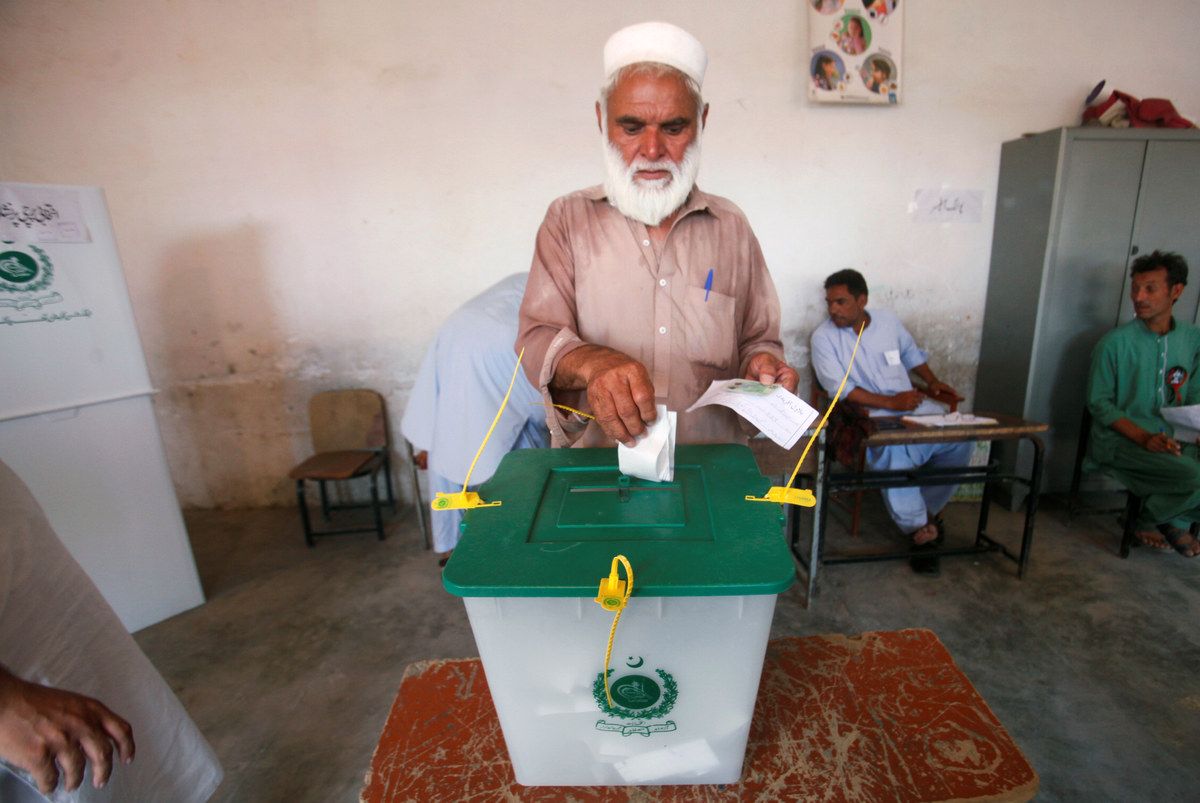
A voter casts his vote at a polling station during the first provincial elections in Jamrud, Pakistan July 20, 2019. (REUTERS)
Though the result of Saturday’s election will have little direct impact on national politics, the exercise marks a significant milestone for an impoverished region that, without provincial status, had long suffered from a lack of national investment.
“It is really a historic moment and people are celebrating and jubilant in a manner as if it were Eid,” Sohail Khan, a spokesman for the provincial Election Commission of Pakistan (ECP), told Arab News.
Complaints of vote-rigging and influence peddling by some of the candidates and their supporters were also reported by media in the run-up to the elections, though the ECP denies this.
Despite these challenges, including the inaccessibility of polling stations for people from remote corners of the mountainous region, there were reports of a large voter turnout. Reports on social media said cellphone signals and Internet were jammed through the tribal areas on Saturday. Many people complained that they were assigned polling stations 50 miles away when there were booths right outside their homes.


