ISLAMABAD: Pakistani Hajj pilgrims widely appreciated the Kingdom’s ‘Road to Makkah’ project, with several lauding the pre-departure and immigration facilities made available at the Islamabad airport, as the country flies five to six Hajj flights to Saudi Arabia every day, officials told Arab News.
According to the Ministry of Religious Affairs (MRA), a total of 39,853 Hajj pilgrims from across the country reached Saudi Arabia by Monday.
“More than thousand Hajj pilgrims are getting their pre-departure immigration clearance daily at Islamabad airport under Road to Makkah project,” said Imran Siddique, spokesperson for the MRA.
“The most beautiful part of my journey to Saudi Arabia is that all officials [at the Islamabad airport] provided us great help under the Road to Makkah project,” Brig. (r) Nasir Zia, one of the pilgrims who reached Madinah last week, said in a video message.
“The Saudi officials also gave us personal attention [at the Islamabad airport], immigration process was smooth and we reached here [in Madinah] without any hassle,” he said.
Pakistan began Hajj flights for its 200,000 nationals on July 4.
Under the Road to Makkah project – an initiative aimed at facilitating Hajj pilgrims from across the Muslim world – around 22,000 Pakistani pilgrims can avail the pre-departure immigration clearance at the Islamabad airport.
Saudi immigration team is working round the clock at the Islamabad airport to facilitate Hajj pilgrims. “We are getting positive feedback from our pilgrims [about the Road to Makkah initiative],” said Siddique, adding that he hoped “this facility will also be extended to other airports of Pakistan in coming years.”
Providing details of other facilities available under the project, he said that a make-shift hospital and two field units have been set up in Madinah – as part of the Pakistan Hajj Medical Mission – wherein 19 doctors and 34 paramedical staff have been deputed to provide timely medical facilities to the pilgrims.
Siddique added that a total of 13 catering companies have been providing quality food to all the pilgrims at their residences while 115 government officials are deployed to help in case of any emergency.
A team of Saudi officials had earlier set up special immigration counters at the Islamabad airport to help pilgrims save on 10 to 12 hours of waiting time at Saudi airports. Pakistan was included in the project after Saudi Crown Prince Mohammad bin Salman concluded his visit to the country in February this year.
Lauding the quality of food and accommodation provided by the Kingdom, Muhammad Akmal Khan who reached Madinah on July 5 for the pilgrimage said in a video message: “We are staying here in a five-star hotel … being kept like princes and kings. We are feeling like home here.”
“We have no complaints. The staff is very cooperative here,” Shaukat Ali, another pilgrim said.
All pre-Hajj flight operations in Pakistan will conclude on August 5, while post-Hajj flights will operate from August 17 to September 14 this year.


More than 1000 Pakistani pilgrims benefiting from ‘Road to Makkah’ program every day
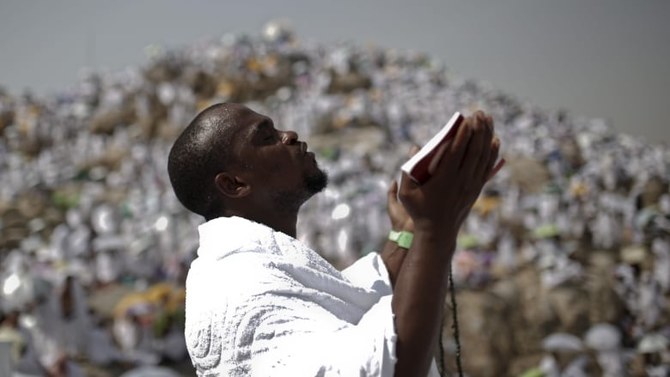
More than 1000 Pakistani pilgrims benefiting from ‘Road to Makkah’ program every day

- Pilgrims praise Saudi officials for giving personal attention, running a smooth immigration process in Islamabad
- Nearly 40,000 Hajj pilgrims from Pakistan reached Saudi Arabia by Monday

Saudi Wafi Energy signs agreement to supply lubricants to Hyundai vehicles in Pakistan
- Wafi Energy Pakistan says Shell Helix HX8 0W-20 AH lubricant specifically caters to Hyundai vehicles’ requirements
- Lubricant delivers comprehensive engine protection and enhanced fuel efficiency, says Wafi Energy Pakistan
ISLAMABAD: Saudi company Wafi Energy Pakistan Limited announced on Wednesday that it has inked an agreement with Hyundai’s official manufacturing partner to supply premium lubricants for the company’s vehicles in Pakistan.
Wafi Energy, an affiliate of the Asyad Group, became the majority shareholder of Shell Pakistan Limited (SPL) in November 2024 and now holds approximately 87.78 percent of the total issued share capital of SPL, one of the oldest multinationals in Pakistan. The SPL has a network of over 600 sites, countrywide storage facilities and a broad portfolio of global lubricant brands.
Hyundai Nishat Motors is a joint venture among three leading international businesses: The Nishat Group, the Japan-based Sojitz Corporation and Millat Tractors Ltd. Hyundai Nishat Motors manufactures, markets and distributes Hyundai’s product line in Pakistan.
“Wafi Energy Pakistan Limited and Hyundai Nishat Motors have signed a strategic agreement for the supply of Shell lubricants for Hyundai vehicles in Pakistan,” the Saudi company said in a press release.
The contract signing ceremony in Lahore marked the launch of Shell Helix HX8 0W-20 AH, the company said.
Wafi Energy Pakistan said the lubricant is specifically designed in line with Hyundai’s technical specifications. It delivers comprehensive engine protection, enhanced fuel efficiency and optimized performance suited to local driving conditions across Pakistan, the statement said.
“Shell Helix HX8 0W-20 AH is the second co-branded lubricant introduced under the Hyundai–Shell collaboration in Pakistan, further expanding the jointly developed product range,” Wafi Energy said.
“Through this collaboration, customers can confidently rely on authentic, OEM-approved lubricants that meet the highest standards of performance and reliability.”
Wafi Energy has two retail stations in Pakistan’s Karachi and Rawalpindi cities. It has also built a 730-foot plastic road outside its Karachi head office using 2.5 tons of waste lubricant bottles.


