VATICAN CITY: The mystery of the 1983 disappearance of the 15-year-old daughter of a Vatican employee took yet another twist Saturday following excavations this week at a Vatican City cemetery. The Vatican said it had discovered two sets of bones under a stone slab that will be formally opened next week.
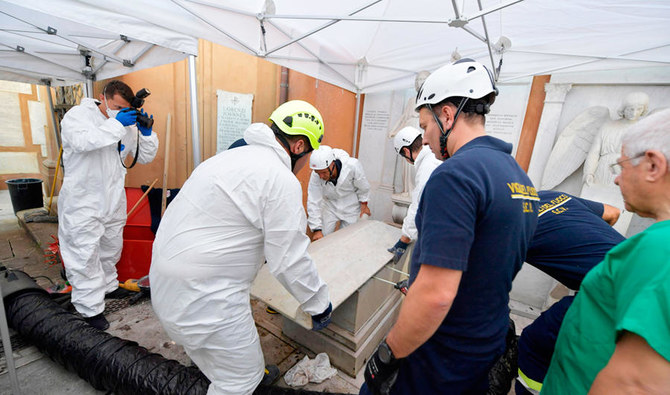
The new discovery came after Vatican on Thursday pried open the tombs of two 19th-century German princesses in the cemetery of the Pontifical Teutonic College in hopes of finding the remains of Emanuela Orlandi.
Orlandi’s family had received a tip that she might be buried there. But the tombs turned out to be empty, creating yet another mystery about where the dead princesses were.
The Vatican vowed to keep investigating and noted that any bones in the tombs might have been displaced during structural work carried out on both the college building and a cemetery near St. Peter’s Basilica in the 1800s and in more recent decades.
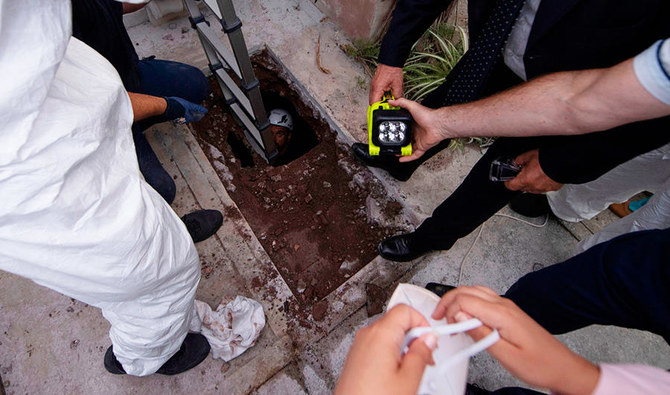
On Saturday, Vatican spokesman Alessandro Gisotti said further searches had centered on the areas adjoining the princesses’ tombs. He said investigators had located two ossuaries, or sets of bones, under a stone slab manhole covering inside the Teutonic college itself.
He said the area was immediately sealed off and would be opened in the presence of forensic experts on July 20.
Gisotti added that the bones were found in two holes carved out of a large stone that was covered by an old pavement stone a few meters (yards) behind the princesses’ tombs. That area is now technically inside a building of the Teutonic College, after expansion work on the building encroached onto the cemetery field.
The last recorded structural work done on the building and the cemetery was in the 1960s and 1970s. Orlandi disappeared in 1983.
She vanished after leaving her family’s Vatican City apartment to go to a music lesson in Rome. Her father was a lay employee of the Holy See.
Her case has been one of the enduring mysteries of the Vatican, kept alive by the Italian media and a quest by her brother to find answers. Over the years, her disappearance has been linked to everything from the plot to kill St. John Paul II to the financial scandal of the Vatican bank and Rome’s criminal underworld.
The last major twist in the case came in 2012, when Italian forensic police exhumed the body of a reputed mobster from the crypt of a Roman basilica in hopes of finding Orlandi’s remains as well. The search turned up no link.
Last year, bones were found underneath the Vatican’s embassy to Italy in Rome. Italian media immediately speculated the remains could belong to Orlandi or another girl who went missing at around the same time. But forensic tests showed the bones long predated their disappearances.
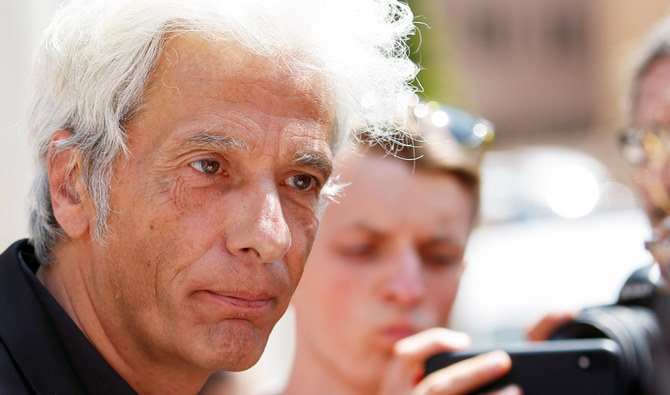
Pietro Orlandi, the missing girl’s brother, has long demanded the Vatican give the family full access to all information it has about his sister’s disappearance.
The family’s lawyer, Laura Sgro, said Saturday she had been informed of the discovery of the bones and that the family was pleased that the investigation was continuing.
“Our interest is to actively cooperate with Vatican prosecutors to understand better how those two tombs could have been empty,” she said in a statement. “If we understand together, it’s better.”
In 2017, an Italian investigative journalist caused a sensation when he published a five-page document that had been stolen from a locked Vatican cabinet that suggested the Holy See had been involved in Orlandi’s disappearance. The Vatican immediately branded the document a fake, though it never explained what it was doing in the Vatican cabinet.
The document was purportedly written by a cardinal and listed supposed expenses used for Orlandi’s upkeep after she disappeared.
Gisotti said this week that the Holy See “has always shown attention and closeness to the suffering of the Orlandi family and in particular Emanuela’s mother” and that its decision to excavate the Teutonic cemetery at the family’s request was evidence of that attention.


Vatican mystery over missing girl deepens as bones are found
Vatican mystery over missing girl deepens as bones are found

- Pietro Orlandi, the missing girl’s brother, has long demanded the Vatican give the family full access to all information it has about his sister’s disappearance


Saudi ambassador becomes first foreign envoy to meet Bangladesh’s new PM
- Tarique Rahman took oath as PM last week after landslide election win
- Ambassador Abdullah bin Abiyah also meets Bangladesh’s new FM
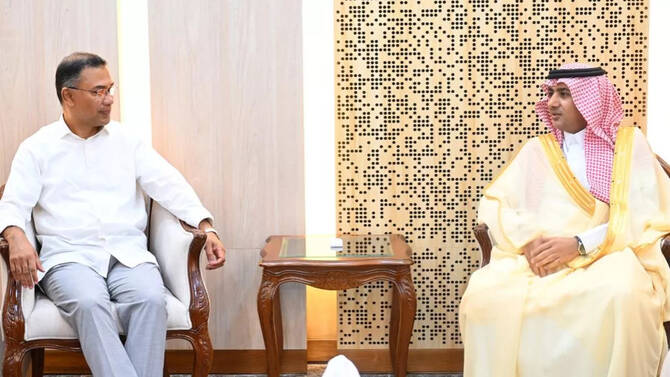
Dhaka: Saudi Arabia’s ambassador to Dhaka became on Sunday the first foreign envoy to meet Bangladesh’s new Prime Minister Tarique Rahman since he assumed the country’s top office.
Rahman’s Bangladesh Nationalist Party made a landslide win in the Feb. 12 election, securing an absolute majority with 209 seats in the 300-seat parliament.
The son of former Prime Minister Khaleda Zia and former President and BNP founder Ziaur Rahman, he was sworn in as the prime minister last week.
The Saudi government congratulated Rahman on the day he took the oath of office, and the Kingdom’s Ambassador Abdullah bin Abiyah was received by the premier in the Bangladesh Secretariat, where he also met Bangladesh’s new foreign minister.
“Among the ambassadors stationed in Dhaka, this is the first ambassadorial visit with Prime Minister Tarique Rahman since he assumed office,” Saleh Shibli, the prime minister’s press secretary, told Arab News.
“The ambassador conveyed greetings and best wishes to Bangladesh’s prime minister from the king and crown prince of Saudi Arabia … They discussed bilateral matters and ways to strengthen the ties among Muslim countries.”
Rahman’s administration succeeded an interim government that oversaw preparations for the next election following the 2024 student-led uprising, which toppled former leader Sheikh Hasina and ended her Awami League party’s 15-year rule.
New Cabinet members were sworn in during the same ceremony as the prime minister last week.
Foreign Minister Khalilur Rahman is a former UN official who served as Bangladesh’s national security adviser during the interim government’s term.
He received Saudi Arabia’s ambassador after the envoy’s meeting with the prime minister.
“The foreign minister expressed appreciation for the Saudi leadership’s role in promoting peace and stability in the Middle East and across the Muslim Ummah. He also conveyed gratitude for hosting a large number of Bangladeshi workers in the Kingdom and underscored the significant potential for expanding cooperation across trade, investment, energy, and other priority sectors, leveraging the geostrategic positions of both countries,” the ministry said in a statement.
“The Saudi ambassador expressed his support to the present government and his intention to work with the government to enhance the current bilateral relationship to a comprehensive relationship.”
Around 3.5 million Bangladeshis live and work in Saudi Arabia. They have been joining the Saudi labor market since 1976, when work migration to the Kingdom was established during the rule of the new prime minister’s father.
Bangladeshis are the largest expat group in the Kingdom and the largest Bangladeshi community outside Bangladesh and send home more than $5 billion in remittances every year.


