WASHINGTON: Pakistan, which supported Afghanistan’s former Taliban regime, on Friday joined the United States, Russia and China in a call on the insurgents to agree to a cease-fire and negotiations with Kabul.
Pakistan joined the three powers in talks in Beijing that come as the United States moves closer to an agreement with the Taliban to pull troops from Afghanistan and end its longest-ever war.
The four countries “encouraged all parties to take steps to reduce violence leading to a comprehensive and permanent cease-fire that starts with intra-Afghan negotiations,” said a joint statement issued by the United States.
They called for direct negotiations involving the Taliban, President Ashraf Ghani’s government and other Afghans to “produce a peace framework as soon as possible.”
Members of the Taliban and government met earlier this week in Qatar, a breakthrough even though participants were said to be there in a personal capacity.
The Taliban, believing they have an upper hand as they seek a US troop withdrawal, have refused to negotiate with the internationally recognized government or to halt its deadly campaign of attacks.
Pakistan, whose relations with the United States have been rocky over its handling of extremists, has sought to use its influence with the Taliban to help reach a deal.
Pakistani Prime Minister Imran Khan is set to come to Washington on July 22 to meet with President Donald Trump, who is impatient to end the war launched after the September 11, 2001 attacks.
US negotiator Zalmay Khalilzad has sought understandings with Russia and China despite the two powers’ rivalries with the United States.
The Soviet Union fought US-backed Islamic guerrillas in a disastrous intervention in the 1980s, while China is keen to prevent any spread of extremism.


![]()

Pakistan joins US-led call for Afghan ceasefire, talks
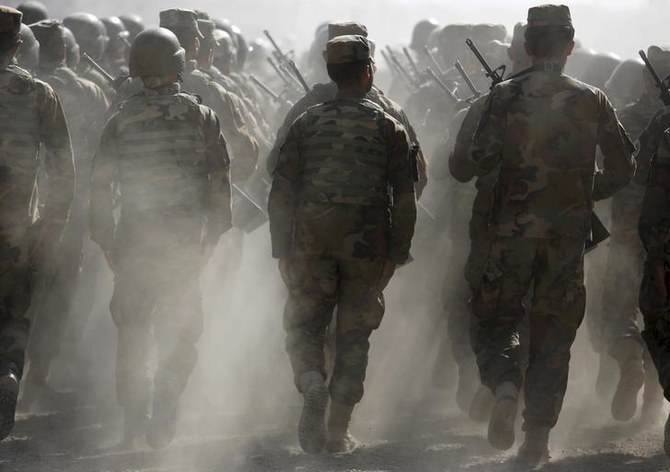
Pakistan joins US-led call for Afghan ceasefire, talks
- A joint statement issued by the US has urged Afghan factions to ‘produce a peace framework as soon as possible’
- Pakistani Prime Minister Imran Khan is set to visit Washington on July 22 to meet with President Donald Trump
Latest updates





© 2026 SAUDI RESEARCH & PUBLISHING COMPANY, All Rights Reserved And subject to Terms of Use Agreement.