



MONAKHEL: At Ewaz Muhammad Khan’s home in the small, dusty town of Monakhel in northwestern Pakistan on Thursday, friends and relatives burst into tears as they hugged him one by one.
This is no scene of mourning. The tears are of joy and gratitude as Khan readies to join almost two million foreign pilgrims in Makkah, Saudi Arabia, for Hajj, the annual pilgrimage that Muslims from around the world make to follow in the footsteps of the Prophet Muhammad (peace be upon him).
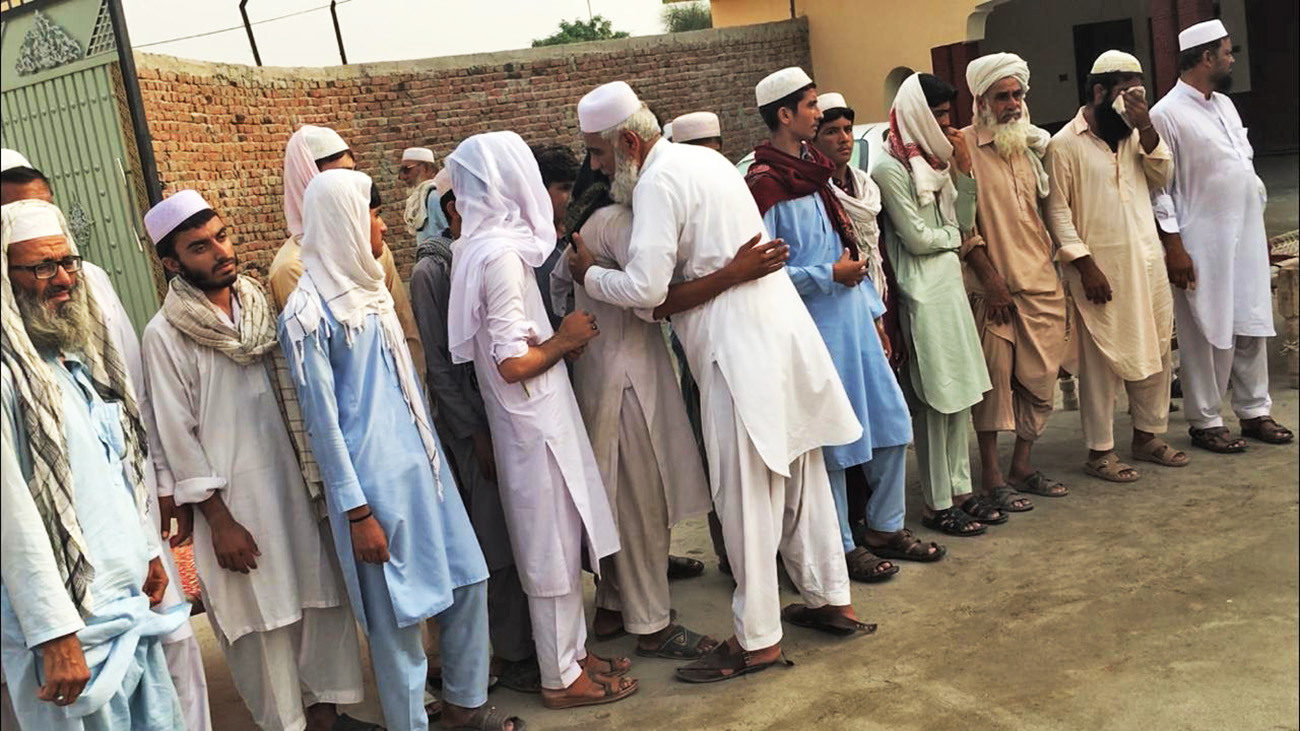
Ewaz Muhammad Khan embraces villagers who queue up at his residence while another individual (second from right) bursts into tears after saying goodbye to him on July 11, 2019. Khan is embarking on the sacred Hajj pilgrimage this year. (AN Photo)
On Thursday, hundreds of residents from Monakhel, 140 kilometers away from Khyber Pakhtunkhwa province’s capital city of Peshawar, gathered at Khan’s house for a meal and to say goodbye.
In the past, the long journey to Makkah was full of peril for foreign pilgrims, who often did not know if they would return home. While such dangers no longer exist, devout Muslims still reflect on the fragility of life as they embark on the journey.
“I’m leaving behind my relatives, friends and villagers and I’m not sure if I’ll meet them again,” 55-year-old Khan told Arab News, describing feeling “a strange sense of joy and tranquility” over the news received on June 26 that he would be performing Hajj this year.
On that day too, he said, hundreds of villagers had gathered at his residence to congratulate him and to invite him for banquets to celebrate the occasion. Many even gave him cash, hoping he would spend it in Makkah and Madinah, two of Islam’s holiest cities, and become a source of divine blessing for them.
In the last 15 days, Khan said he had attended more than 60 lunches, dinners and tea parties because it was unimaginable to turn down invitations from family and friends wanting to celebrate the auspicious occasion.
“There were days when I attended two dinner parties on the same night since people get upset if you don’t acknowledge their generosity,” Khan said, smiling.
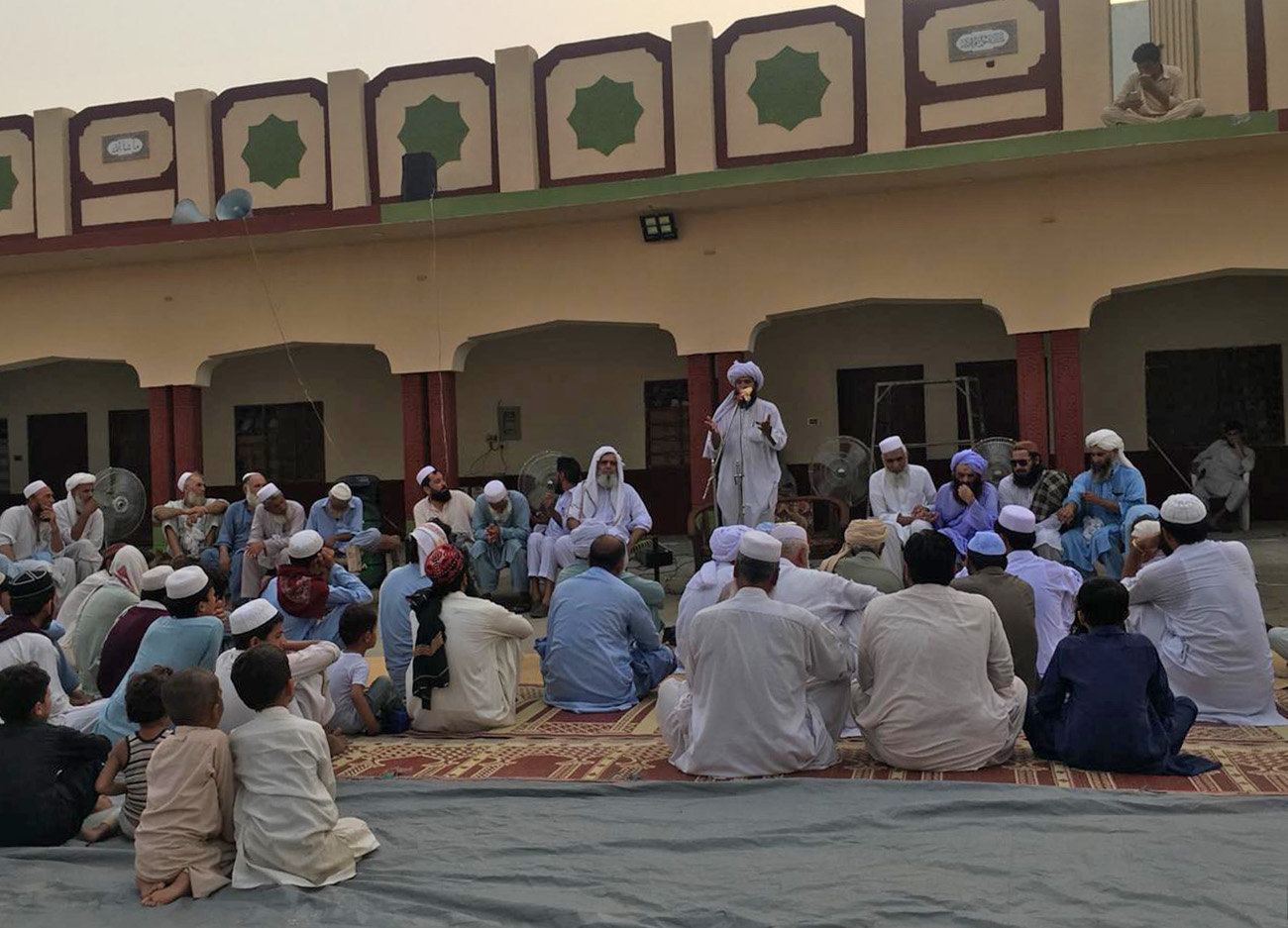
A religious scholar delivers a sermon about various aspects of the Hajj while Ewaz Muhammad Khan (fourth from right in the first row) sits with other villagers and listens to the sermon on July 11, 2019. (AN Photo)
Last week, it was Khan’s turn to repay the favor, and he arranged a massive banquet and led congregation prayers attended by hundreds of villagers. The day after the event, soon after breakfast, hoards of people arrived at his house with garlands and gifts. As he hugged each and every guest, they requested him to pray for them while performing Hajj, many telling him specifically what to ask for.
Octogenarian Rehan Shah said he had walked for nearly an hour to reach Khan’s home.
“I can’t afford to go to the Hajj,” he said. “But it’s enough for me to meet a man who’s visiting the house of God in Makkah.”
Hanifullah Khattak, Khan’s younger brother, said he felt “incredibly blessed” that someone so close to him would be embarking on the spiritual journey of a lifetime.
“Hajj may be one of the hardest rituals, yet it brings people closer together,” Khan said on Thursday as he got into a car to drive to Islamabad from where he will take a special Hajj flight to Saudi Arabia on Sunday. “It’s both inspiring and powerful in many ways.”


