Opposing rallies mark ‘dog meat day’ in South Korea

1 / 3
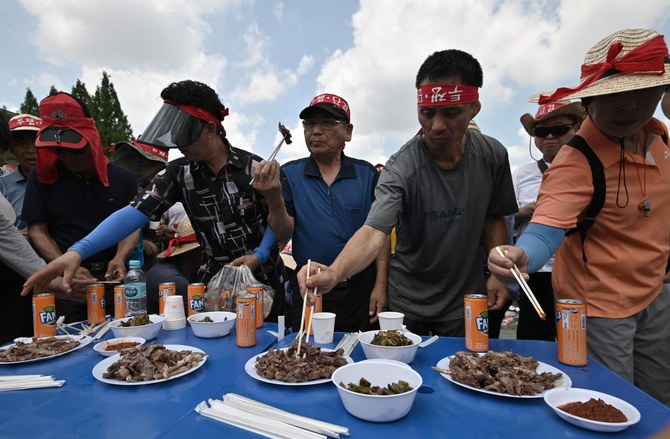
South Korean dog farmers eat dog meat during a counter-rally against animal rights activists demonstrating against the meat’s trade on Friday, July 12, 2019. (AFP)
2 / 3
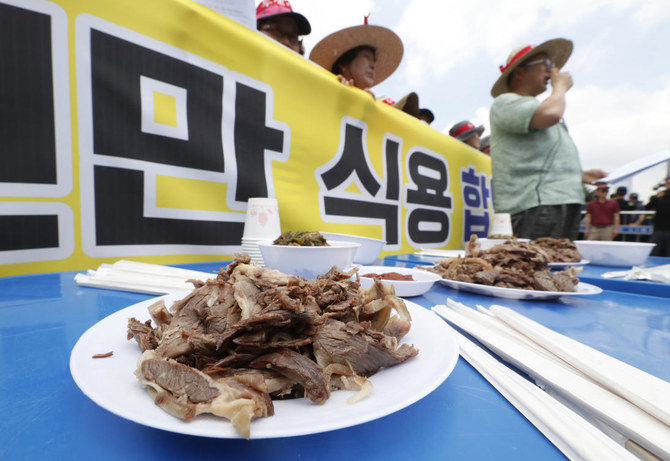
Members of the Korean Dog Meat Association stage a rally to support eating dog meat in front of the National Assembly in Seoul on Friday, July 12, 2019. (AP)
3 / 3
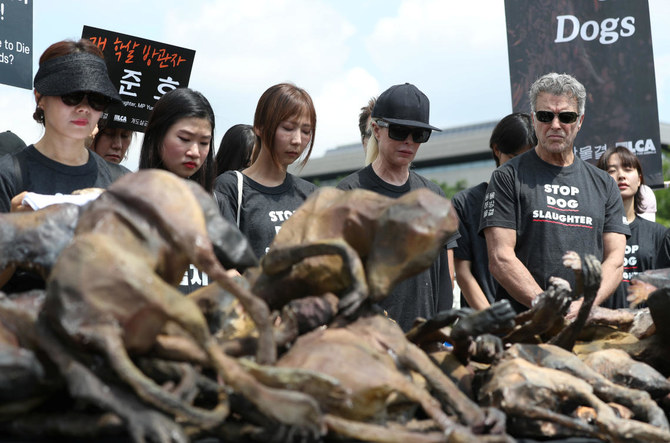
American actor Kim Basinger and Chris DeRose, president of Last Chance for Animals attend a rally against the practice of eating dog meat in Seoul on July 12, 2019. (Yonhap via Reuters)
Updated 12 July 2019
Follow

Opposing rallies mark ‘dog meat day’ in South Korea

  • Dog meat is neither legal nor explicitly banned in South Korea
  • Many people still oppose outlawing dog meat because they view it as surrendering to Western pressure

SEOUL, South Korea: Dozens of people opposing dog meat consumption, including American actress Kim Basinger, rallied in Seoul on Friday to mark a “dog meat day” in South Korea.
About 20 others stood on the opposite side calling for a legalization of dog meat during a protest near the National Assembly building. There were no reports of violence.
Under a traditional belief, Friday is the first of three hottest days in South Korea. Many South Koreans believe eating dog meat or chicken soups on those three days gives them strength to beat the heat.
“They do not need your tears, they need your help,” Basinger said. “We have to end this cruelty on this planet. We have to help anything suffering, and these dogs and cats are suffering.”
The anti-dog meat protesters held placards that read “How Many Millions Have to Die Before Dog Meat Ends?” They also put mock dog carcasses on a table.
About 10 meters away from them were farmers who raise dogs that are sold to restaurants. They brought along steamed dog meat and ate it with kimchi.
Anti-dog meat rallies routinely take place on the three hottest days.
Dog meat is neither legal nor explicitly banned in South Korea. Dog meat restaurants are a dwindling business in South Korea in recent years as pets grow in popularity. A survey last year indicated that about 80 percent of South Koreans had never eaten dog meat in the past year.
But many people still oppose outlawing dog meat because they view it as surrendering to Western pressure.


Recovery of New Zealand landslide victims halted on safety concerns

Updated 25 January 2026
Follow

Recovery of New Zealand landslide victims halted on safety concerns

  • Six people, including two teenagers, are presumed dead after heavy rains triggered Thursday’s landslide at Mount Maunganui
  • Authorities have been working to identify the victims after human remains were found at the site on Saturday

SYDNEY: New Zealand authorities suspended recovery efforts on Sunday for victims of a landslide that hit a busy campground on the country’s North Island.
Six people, including two teenagers, are presumed dead after heavy rains triggered Thursday’s landslide at Mount Maunganui on the island’s east coast, bringing down soil and rubble at the site in ‌the city ‌of Tauranga, crowded ‌with ⁠families on ‌summer holidays.
Authorities have been working to identify the victims after human remains were found at the site on Saturday.
But a crack found at the site prompted recovery work to cease for the day ⁠on Sunday, said police Superintendent Tim Anderson.
“As a result ‌of that, we’ve had ‍to pull ‍all our staff out,” Anderson told reporters ‍at Mount Maunganui, adding, “We’ve had to do that for the safety of everyone concerned.”
He did not specify when work would resume, saying the authorities were taking it “day by day at the moment.”
Prime ⁠Minister Christopher Luxon said on Saturday it was “devastating to receive the news we have all been dreading,” after the rescue operation shifted to recovery.
“To the families who have lost loved ones — every New Zealander is grieving with you,” Luxon posted on X.
The heavy rain this week unleashed another landslide ‌in the neighboring suburb of Papamoa, killing two.