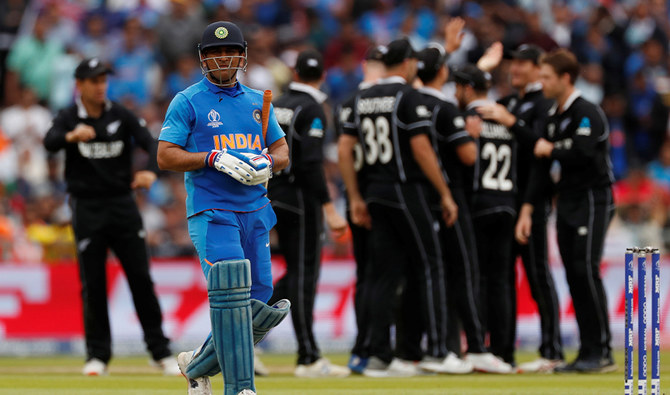
KARACHI: Almost thirty hours since the match began on Tuesday, New Zealand defeated India at Manchester on Wednesday to cap off one of the greatest upsets in cricket World Cup history. The heavily fancied Indian side, which had topped the group stages, was blown away at the top by New Zealand’s bowling, and despite a late blitz by Ravindra Jadeja that threatened to take the match to the wire, the Kiwis held their resolve to enter their second consecutive World Cup final.
One has to go back thirty years to find comparable shocks in knockout matches at the World Cup. Certainly, the twin defeats of hosts and group toppers India and Pakistan in 1987 at the hands of England and Australia respectively would be close in terms of the unexpectedness of the results. Another call would be Pakistan’s defeat of New Zealand in 1992, when just like the Kiwis now, Pakistan had barely made the semifinals while their rivals were table-toppers and in red hot form. But beyond that, it is hard to think of a more surprising result.
In hindsight, the match being delayed by the rain to a second day generally helped New Zealand. Though they had little luck in their brief batting innings today, their bowlers are often at their best during early morning conditions, and they were devastating here. India had lost only four wickets in 80 overs of the first power play across eight matches — here they lost as many in one power play alone. This exposed their major frailty — their middle order, which hasn’t had to do much thanks to the great form of those at the top. But here, they had little answers as the score went from 5/3 to 92/6. This was when the enigmatic MS Dhoni was at the crease with Jadeja.
Earlier in the tournament, Dhoni was batting at the end as India tried to chase down a huge total against England. Had they won, Pakistan would have been playing this semifinal. Instead, Dhoni played an awkward innings and never made a fist of the chase, and all of Pakistan seemed to howl conspiracy. When Dhoni again failed to finish the chase in this match and India lost, plenty of Pakistani celebrities, politicians and others threw shade at India’s legendary player. Such reactions ignored the fact that during the last few years Dhoni’s rapidly limiting batting had seen him struggle frequently.
But then again, one can be forgiven for expecting the impossible from Dhoni, who bowed out of the World Cup with a legacy as perhaps the greatest ODI batter, or at least finisher of all time.
Indeed, this also explains his popularity within Pakistan. Tariq Alam, a renowned domestic batter during the heyday of limited overs cricket in Karachi, once said, “I only regard someone as a batsman [if he] can take the match with him and return having finished it. If you make 30-40 and get out, then those runs are useless for the team.”
Not only does this describe Dhoni’s career perfectly, it was one of several traits that made him more like a Pakistani cricketer than an Indian one. Journalist Sid Monga once wrote that “he is the biggest Pakistani cricketer India has ever produced… As with Pakistani cricketers, you cannot tell what he is thinking, what his next move is. You can’t put anything beyond him.... Almost entirely uncoached, flipping the bird to convention at every step, he has become an ODI batsman as accomplished, chillingly calculating and psychologically damaging as Javed Miandad was. There hasn’t been a more authentic “Made in Pakistan” hologram.”
The comparison with Miandad was particularly apt. Miandad was possibly the first ODI batter to perfect the art of the chase, and like Dhoni’s World Cup winning shot in 2011, Miandad’s most famous stroke was also a match-winning six. Here at Manchester, Dhoni had a chance to reprise Miandad at 1992. Back then, the veteran had held up one end resolutely as a younger batter tore up things at the other. Similarly, Dhoni’s go-slow approach seemed to be making sense when Jadeja was shredding the Kiwi attack, and made an Indian win go from impossible to probable.
But eventually, Dhoni ended up reprising his spiritual predecessor’s own World Cup exit. In 1996, Miandad hung around gamely as wickets fell around him in the quarter-final vs India, but such was his aura that despite the mounting challenge people believed that as long as Miandad was there, Pakistan had a chance. The commentary in this match felt the same about Dhoni, but once he was out it was obvious that like Miandad back then, this was the final, failed stance of a champion no longer up to the task.
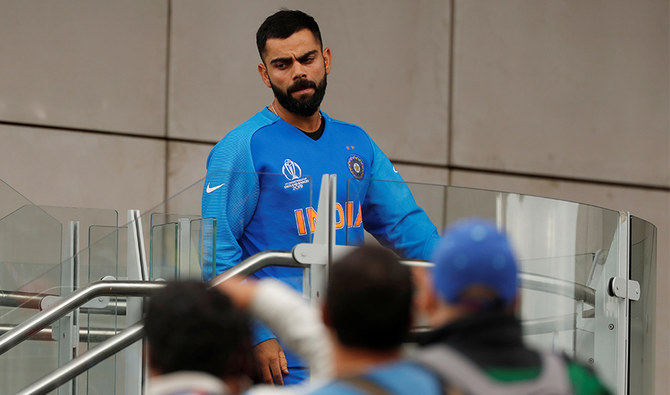
But this wasn’t Dhoni’s fault alone. Bigger questions might be asked of the temperament of his captain Virat Kohli. Despite having a divine record in chases and pressure situations, Kohli now owns a pedestrian record when it comes to knockouts in ICC tournaments. His tally in six World Cup knockout matches is just 73, with almost half those runs coming in one innings. His wicket came in a thundering opening that as per his own admission, cost his team the match in a tournament they had largely bossed: “It always feels disappointing when you’ve played such good cricket and then 45 minutes of bad cricket puts you out of the tournament. It’s difficult to accept, it’s difficult to come to terms with, but look, New Zealand deserve it because they put enough pressure on us and they were far sharper when it came to the crunch moments.”
His counterpart, New Zealand’s Kane Williamson was his usual poker-faced self in the aftermath. This was New Zealand’s record-equalling eighth semifinal, yet only their second win in one. The last Kiwi team to make the final was considered the best to ever play for the country, while this one had come into this match with three consecutive defeats and tags of being undeserving semifinalists. But Williamson was unfazed as always, noting that “being underdogs coming into the semis didn’t mean too much as long as we’ve played best cricket, all these sides have beaten each other, we knew on our day anything can happen.”
And in the end, anything did happen — in fact, it was a shock that has little comparison or precedence in cricket history.


![]()
![]()

MS Dhoni and India crash to upset loss against New Zealand
MS Dhoni and India crash to upset loss against New Zealand
- New Zealand defeated India to cap off one of the greatest upsets in cricket World Cup history
- In 1992, Pakistan had barely made the semifinals while their rivals were table-toppers and in red hot form
Latest updates


© 2026 SAUDI RESEARCH & PUBLISHING COMPANY, All Rights Reserved And subject to Terms of Use Agreement.