DOHA: The US peace envoy for Afghanistan, Zalmay Khalilzad left for China on Tuesday after meeting with the Taliban negotiators in Doha to redress the differences over the time-frame for foreign troop withdrawal — the only issue seen as a major hurdle in reaching a final deal.
Khalilzad claims that Taliban and the US reached an accord over three out of the four key issues and that progress had been made on the fourth.
“I had a meeting with the Taliban this morning. Headed to China now and then will return to Washington to report and consult on the Afghan Peace Process,” he tweeted.
Khalilzad is likely to attend a conference in Beijing organized by the Shanghai Institute for International Studies on Afghan peace process. Former Afghan President Hamid Karzai will also attend the conference.
Meanwhile, Taliban officials in Doha have said that the seventh round of Afghan peace talks will resume after both sides have briefed their leaders on the discussions held so far.
“There is break for consultations with the leaders and this round will resume later to finalize the remaining issues,” Taliban spokesman Suhail Shaheen told Arab News, without giving further details. He did not say when the talks will restart.
Shaheen, however, wrote on twitter that the two sides will meet soon after consultations with their respective leaders and finalize whatever has been discussed.
Taliban sources, familiar with Tuesday’s talks said that both sides had constituted committees to address different issues currently under discussion. These committees met on Tuesday to iron out technical details pertaining to these issues including withdrawal of foreign forces, preventing Afghan soil from being used against the US in future, cease-fire, and direct talks between the Taliban and the Afghan government.
Taliban have refused to declare cease-fire and hold talks with the Kabul administration unless the US announced a time-frame for complete withdrawal of forces.
Khalilzad is visiting China days after senior Taliban negotiators traveled to Beijing for talks with the Chinese officials on the country’s role in the peace process asking China to become one of the key guarantors if the US and Taliban sign a peace deal.
China had also offered to host the intra-Afghan talks if all sides agreed to the proposal joining the line with Uzbekistan and Indonesia, but the Taliban rejection the move.
Taliban delegation and Khalizlad met following a two-day intra-Afghan conference in Doha in which the Taliban political representatives, Afghan government officials, politicians, women and civil society activists agreed on a roadmap for peace stressing the need to “minimize civilian casualties to zero.”
“Civilians should not be affected, war continues, but our aim is to reduce civilian casualties,” read the joint resolution passed at the end of the Intra-Afghan Peace Conference late Monday.
The joint statement pledged to “guarantee the security of public institutions like schools, religious madrassas, hospitals, markets, water dams and other working locations.”
Although, not binding in nature, the statement further urged the stakeholders to take confidence-building measures, including “unconditional release of elderly, disabled and ill inmates,” ahead of the direct negotiations.
Doha conference, which was jointly hosted by Qatar and Germany, witnessed the attendance of Afghan government representatives for the first time but the three officials spoke in their personal capacity.
The participants stressed continuation of dialogue and said they have “full consensus that achieving sustainable, far-reaching and a dignified peace, which is the demand of the Afghan people, is the only possible through Afghan inclusive negotiations.”
The conference announced full support for peace negotiations currently underway between the Taliban and the US in Qatar to find out a political solution to the conflict.


![]()
![]()

Taliban, US to resume peace talks after brief break
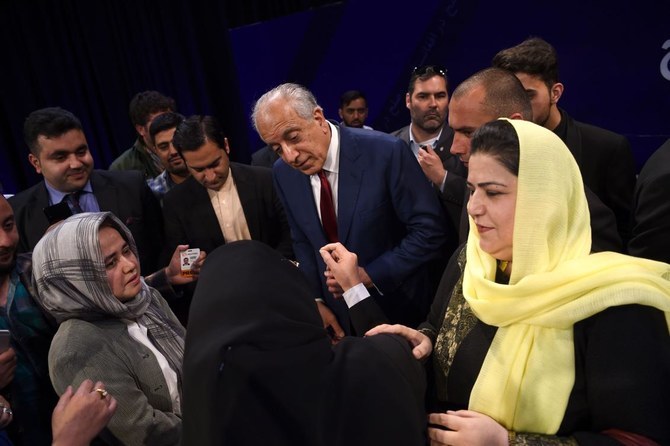

Taliban, US to resume peace talks after brief break
- Taliban and US delegates agree to resume talks after consultation with their leadership
- China could become one of the key guarantors if the US and Taliban sign a peace deal
Latest updates


© 2026 SAUDI RESEARCH & PUBLISHING COMPANY, All Rights Reserved And subject to Terms of Use Agreement.