

Japanese artist Ryu Itadani is ‘fascinated’ by the Gulf’s urban landscape

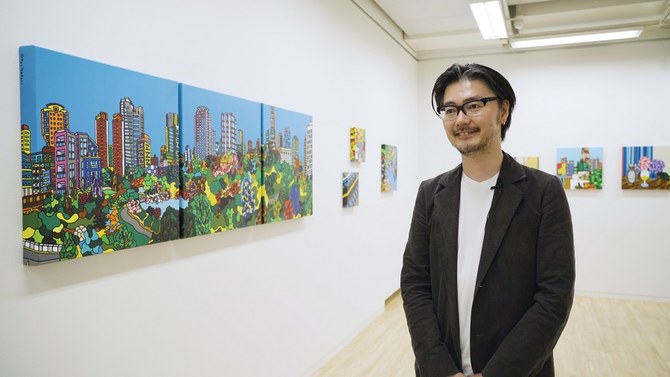
Japanese artist Ryu Itadani is known for his color-rich artwork. (Arab News/Alexis Wuillaume)
Updated 06 July 2019
Follow

Japanese artist Ryu Itadani is ‘fascinated’ by the Gulf’s urban landscape

TOKYO: Ask Japanese artist Ryu Itadani what he enjoys painting and his answer complements his style beautifully: “I only paint things that I like, so I guess that means everything I paint is my favorite thing to paint.”

His likes are diverse — he paints everything from landscapes, to boats and trains, to everyday objects such as water bottles and toothpaste tubes. Despite the relative normalcy of his subjects, or maybe because of it, Itadani has made a name for himself in the art world.

Born in Osaka in 1974, Itadani has lived in Toronto, London, Tokyo, and Berlin, which is his current city of residence. His art style has been described as “vibrant” and “sophisticated minimalist.” His works have been featured in the likes of Vogue Japan and Monocle and hang in Lexus outlets in Dubai and New York.

Dressed in a nondescript t-shirt and blazer, the artist took us on a guided tour of his latest exhibition, “Enjoy the View,” hosted at the Pola Museum Annex in Tokyo.
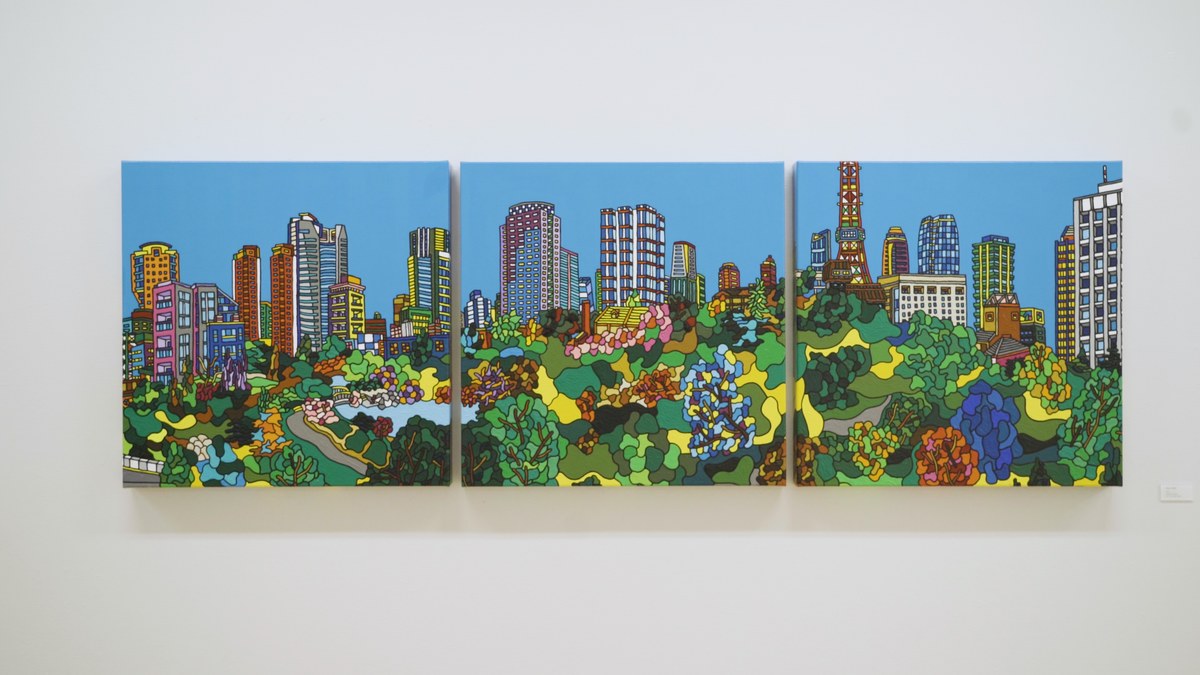


(Arab News/Alexis Wuillaume)

The artworks vary in subject: Cityscapes in vivacious, glowing colors; close-ups of still life objects on funky-looking tables, Itadani’s signature solitary objects, or “things he likes,” and minimalistic, yet elegant illustrations of flora and greenery to round things off.

His cityscapes all have one thing in common — a vibrant, bright blue sky. “I lived in London,” he said. “London has a very grey, very dark sky. So, in my paintings, I think the sky should be a nice, clear blue.”

Itadani loves contrasting colors and is known to create a scintillating rainbow effect in his work. “I have two moods when I paint. The first is, if you see my paintings, every color should be different. In the second mood, if I paint the same color, that’s okay, but I try not to paint the same colors next to each other. I love opposing colors.”
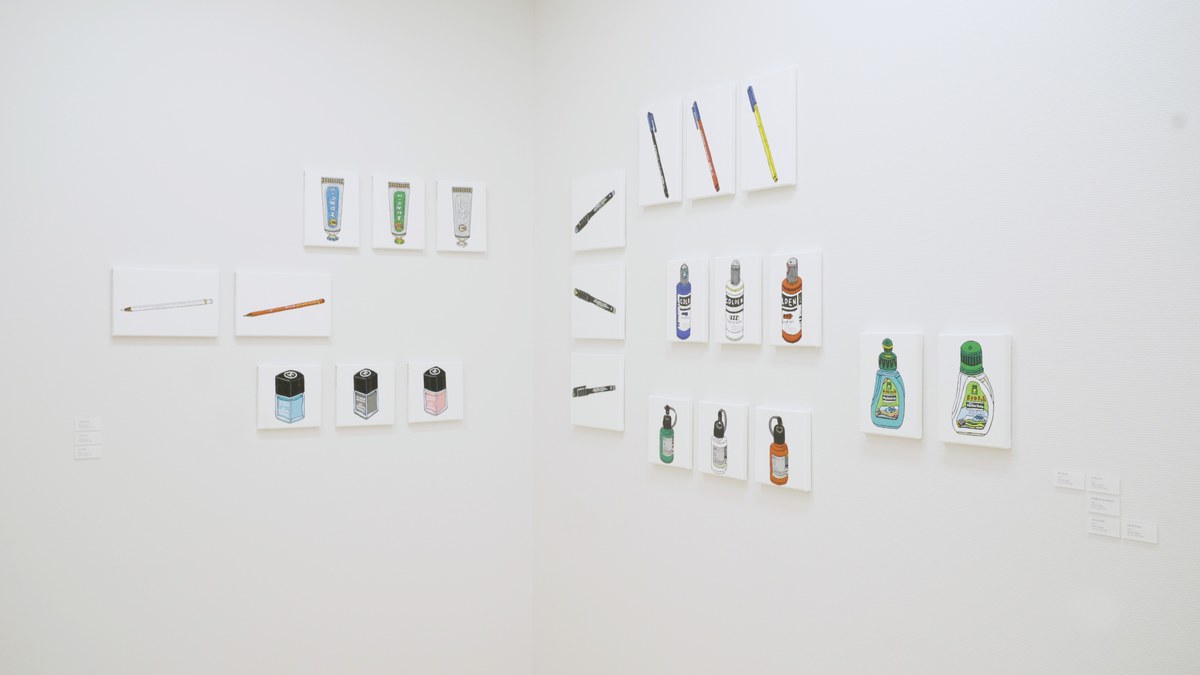


(Arab News/Alexis Wuillaume)

However, Itadani’s most well-known painting in the Middle East contains no color at all. Created for the Intersect by Lexus restaurant in Dubai, “LEXUS City” is a black-and-white depiction of a futuristic city commissioned by the brand. The artwork contains more than a few familiar buildings in the region, most notably the Kingdom Tower and Al-Faisaliyah Center skyscraper in Riyadh.

Itadani has never been to the Middle East, but has expressed a keen desire to visit, especially after completing the painting. “I wish I could go. I’ve never been to Dubai, I’ve never been to (Saudi) Arabia. When I was commissioned to create the work, I searched on the internet and found those buildings to be so unique, so different from others. I was so fascinated by the look of them.”

Itadani also says he would love to be able to visit the Middle East’s deserts, to see the vast expanses of sand and the great hulking desert dunes. “I think they would be beautiful, to see the way the light comes off them, and the way they shift and move. I think I would like that.”
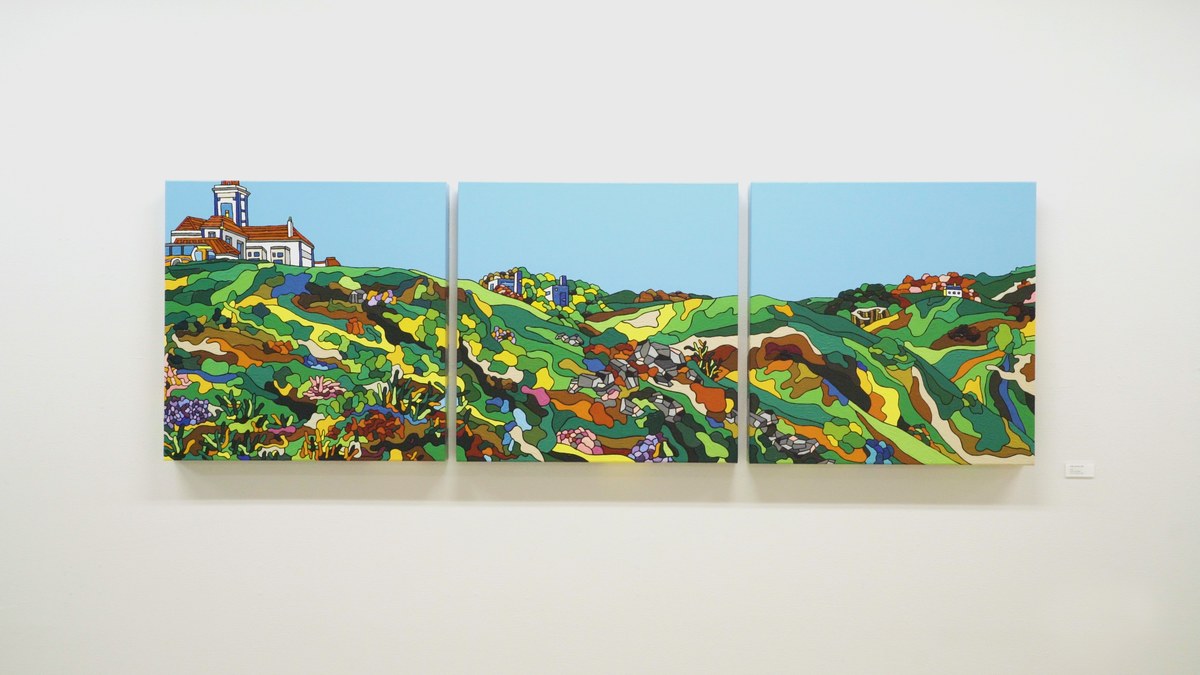


(Arab News/Alexis Wuillaume)


Art Cairo spotlights pioneering artist Inji Efflatoun

Updated 23 January 2026
Follow

Art Cairo spotlights pioneering artist Inji Efflatoun

CAIRO: Art Cairo 2026 returned to Egypt’s bustling capital from Jan. 23-26, with visitors treated to gallery offerings from across the Middle East as well as a solo museum exhibition dedicated to pioneering Egyptian artist Inji Efflatoun.

While gallery booths hailed from across the Arab world, guests also had the chance to explore the oeuvre of the politically charged artist, who died in 1989.

Many of the pieces in the 14-work exhibition were drawn from the collection of the Egyptian Museum of Modern Art and cover four main periods of the artist’s work, including her Harvest, Motherhood, Prison and Knoll series.

While gallery booths hailed from across the Arab world, guests also had the chance to explore the oeuvre of the politically charged artist, who died in 1989. (Supplied)

Efflatoun was a pivotal figure in modern Egyptian art and is as well known for her work as her Marxist and feminist activism.

“This is the third year there is this collaboration between Art Cairo and the Ministry of Culture,” Noor Al-Askar, director of Art Cairo, told Arab News.

“This year we said Inji because (she) has a lot of work.”

Born in 1924 to an affluent, Ottoman-descended family in Cairo, Efflatoun rebelled against her background and took part heavily in communist organizations, with her artwork reflecting her abhorrence of social inequalities and her anti-colonial sentiments.

Many of the pieces in the 14-work exhibition were drawn from the collection of the Egyptian Museum of Modern Art and cover four main periods of the artist’s work, including her Harvest, Motherhood, Prison and Knoll series. (Supplied)

One untitled work on show is a barbed statement on social inequalities and motherhood, featuring a shrouded mother crouched low on the ground, working as she hugs and seemingly protects two infants between her legs.

The artist was a member of the influential Art et Liberte movement, a group of staunchly anti-imperialist artists and thinkers.

In 1959, Efflatoun was imprisoned under Gamal Abdel Nasser, the second president of Egypt. The artist served her sentence for four years across a number of women’s prisons in the deserts near Cairo — it was a period that heavily impacted her art, leading to her post-release “White Light” period, marked dynamic compositions and vibrant tones.

Grouped together, four of the exhibited works take inspiration from her time in prison, with powerful images of women stacked above each other in cell bunkbeds, with feminine bare legs at sharp odds with their surroundings.

Art Cairo 2026 returned to Egypt’s bustling capital from Jan. 23-26. (Supplied)

The bars of the prison cells obstruct the onlooker’s view, with harsh vertical bars juxtaposed against the monochrome stripes of the prison garb in some of her works on show.

“Modern art, Egyptian modern art, most people, they really don’t know it very well,” Al-Askar said, adding that there has been a recent uptick in interest across the Middle East, in the wake of a book on the artist by UAE art patron Sultan Sooud Al-Qassemi.

“So, without any reason, all the lights are now on Inji,” Al-Askar added.

Although it was not all-encompassing, Art Cairo’s spotlight on Efflatoun served as a powerful starting point for guests wishing to explore her artistic journey.