DUBAI: Middle Eastern stock markets fell on Sunday, as political tensions ramped up after US President Donald Trump announced new sanctions on Iran.
Trump on Saturday said additional sanctions would be imposed on Monday but that he wanted to make a deal to bolster Iran’s flagging economy, an apparent move to defuse tensions following the shooting down of an unmanned US drone last week by Iran.
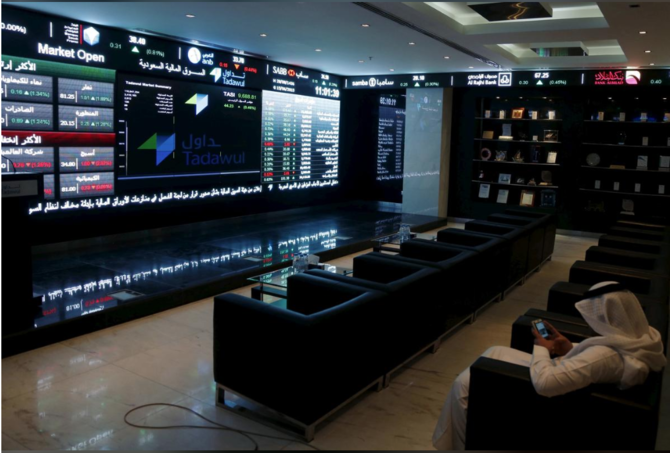
The Tadawul All Share Index fell 1.5 percent extending losses from the previous two sessions, as banking shares slid.
Al-Rajhi Bank lost 1.3 percent, Samba Financial Group dropped 3.6 percent, and National Commercial Bank fell 1.9 percent.
The Abu Dhabi index shed 1.1 percent, hurt by a 1.7 percent drop in First Abu Dhabi Bank (FAB), the UAE’s biggest lender.
On Wednesday, FAB said that it would close its sole branch in Qatar, citing Doha’s regulatory actions against the bank.
Earlier in June, Qatar placed further restrictions on the bank as it continued an investigation into alleged currency manipulation, opened after the UAE and other Arab states began a boycott against Qatar in mid-2017.
FAB said Qatari actions have no impact on its business outside Qatar and the Doha branch contributed less than 0.03 percent of its full-year 2018 net profit.
In Dubai, the index lost 0.7 percent as developer Emaar Properties fell 1.6 percent and budget carrier Air Arabia lost 1 percent.
The UAE’s aviation authority said on Saturday UAE-registered operators need to avoid areas that could jeopardize operations. Earlier, the US Federal Aviation Authority banned US operators from flying over some Iran-controlled airspace.
Qatar’s index lost 1.3 percent, reversing gains from the previous session when it reached its highest since February, as Qatar National Bank (QNB) fell 1.9 percent and Industries Qatar fell 1.4 percent. QNB split its stocks this month, while Industries Qatar is due to follow suit on June 25.
A 10-to-one stock split for companies on the exchange is being phased in from June 9, aiming to boost liquidity by encouraging smaller investors to buy shares.
Egypt’s blue-chip index lost 0.2 percent, its fourth consecutive session of losses since closing higher on Monday.


![]()

Middle East stock markets fall as regional tensions worsen
Middle East stock markets fall as regional tensions worsen
- The Abu Dhabi index shed 1.1 percent, while Dubai lost 0.7 percent
- Egypt’s blue-chip index lost 0.2 percent


Latest updates





© 2026 SAUDI RESEARCH & PUBLISHING COMPANY, All Rights Reserved And subject to Terms of Use Agreement.