Saudi Arabia launches residency scheme for expatriates to boost investment, non-oil revenue

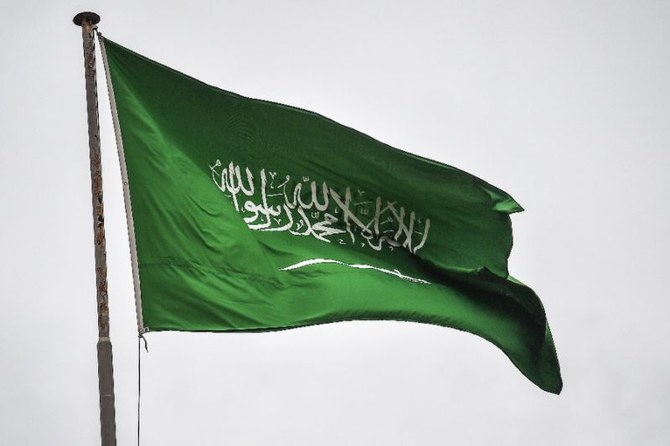
This undated file photo shows Saudi Arabia’s national flag over a building in Riyadh. The Kingdom on Sunday started accepting online applications for a special residency scheme that seeks to boost investment and generate non-oil revenues in accordance with its Vision 2030 plan. (AFP)
Updated 24 June 2019
Follow

Saudi Arabia launches residency scheme for expatriates to boost investment, non-oil revenue

  • The program is designed to attract wealthy and high-skilled individuals
  • Experts believe Pakistanis living in the Kingdom can benefit from the scheme

ISLAMABAD: Saudi Arabia on Sunday started accepting online applications for a special residency scheme that seeks to boost investment and generate non-oil revenues.
Officially known as a “Privileged Iqama” and commonly referred to as the Saudi “green card,” the new residency scheme was first mentioned by Crown Prince Mohammed bin Salman nearly three years ago. However, the Saudi cabinet approved it last month and its website became operational on Sunday.
The program offers a permanent residency for SAR800,000 ($213,000) and a one-year but renewable residency costing SAR100,000 ($26,665.24), according to the online portal for registrations.
In order to be eligible for the new green card scheme, expatriates must meet several criteria including having a valid passport, clean criminal record, financial solvency, and authentic credit and health reports.
According to a Reuters report, over 10 million expats currently work and live in Saudi Arabia “under a system that requires them to be sponsored by a Saudi employer and be issued an exit and re-entry visa whenever they want to leave the country.”
The new scheme will allow them, however, to do business without a Saudi sponsor, buy property and sponsor visas for relatives, the website said.
Analysts believe the program will largely benefit wealthy individuals who have lived in Saudi Arabia for years without permanent residency or multinational companies seeking to do long-term business in the Kingdom.
The move is aimed at boosting non-oil revenue as the Kingdom seeks to diversify its economy as part of its Vision 2030 plan.
Experts say the new program can also benefit several Pakistanis who live in the Kingdom. Talking to Arab News last month, Pakistan’s former ambassador to Saudi Arabia, Rizwan-ul-Haq, described the scheme as a welcome development.
“The biggest benefit [of the new scheme] is that Pakistanis who have been living there are aware of their language, and they can invest in small and medium size businesses and employ other Pakistanis without relying on local partners,” he said.
“If mid- to large-scale businesses are assured of legal rights and a conducive environment,” he continued, “they would definitely move to Saudi Arabia. The educational and hospitality sectors can boom.”


Islamabad says surge in aircraft orders after India standoff could end IMF reliance

Updated 22 min 17 sec ago
Follow

Islamabad says surge in aircraft orders after India standoff could end IMF reliance

  • Pakistani jets came into the limelight after Islamabad claimed to have shot down six Indian aircraft during a standoff in May last year
  • Many countries have since stepped up engagement with Pakistan, while others have proposed learning from PAF’s multi-domain capabilities

ISLAMABAD: Defense Minister Khawaja Asif on Tuesday said Pakistan has witnessed a surge in aircraft orders after a four-day military standoff with India last year and, if materialized, they could end the country’s reliance on the International Monetary Fund (IMF).

The statement came hours after a high-level Bangladeshi defense delegation met Pakistan’s Air Chief Marshal Zaheer Ahmed Baber Sidhu to discuss a potential sale of JF-17 Thunder aircraft, a multi-role fighter jointly developed by China and Pakistan that has become the backbone of the Pakistan Air Force (PAF) over the past decade.

Fighter jets used by Pakistan came into the limelight after Islamabad claimed to have shot down six Indian aircraft, including French-made Rafale jets, during the military conflict with India in May last year. India acknowledged losses in the aerial combat but did not specify a number.

Many countries have since stepped up defense engagement with Pakistan, while delegations from multiple other nations have proposed learning from Pakistan Air Force’s multi-domain air warfare capabilities that successfully advanced Chinese military technology performs against Western hardware.

“Right now, the number of orders we are receiving after reaching this point is significant because our aircraft have been tested,” Defense Minister Asif told a Pakistan’s Geo News channel.

“We are receiving those orders, and it is possible that after six months we may not even need the IMF.”

Pakistan markets the Chinese co-developed JF-17 as a lower-cost multi-role fighter and has positioned itself as a supplier able to offer aircraft, training and maintenance outside Western supply chains.

“I am saying this to you with full confidence,” Asif continued. “If, after six months, all these orders materialize, we will not need the IMF.”

Pakistan has repeatedly turned to the IMF for financial assistance to stabilize its economy. These loans come with strict conditions including fiscal reforms, subsidy cuts and measures to increase revenue that Pakistan must implement to secure disbursements.

In Sept. 2024, the IMF approved a $7 billion bailout for Pakistan under its Extended Fund Facility (EFF) program and a separate $1.4 billion loan under its climate resilience fund in May 2025, aimed at strengthening the country’s economic and climate resilience.

Pakistan has long been striving to expand defense exports by leveraging its decades of counter-insurgency experience and a domestic industry that produces aircraft, armored vehicles, munitions and other equipment.

The South Asian country reached a deal worth over $4 billion to sell military equipment to the Libyan National Army, Reuters report last month, citing Pakistani officials. The deal, one of Pakistan’s largest-ever weapons sales, included the sale of 16 JF-17 fighter jets and 12 Super Mushak trainer aircraft for basic pilot training.