TOKYO: Oil prices rose on Monday after US Secretary of State Mike Pompeo said Washington will take all actions necessary to guarantee safe navigation in the Middle East, as tensions mounted following attacks on tankers last week.
Brent futures had climbed 26 cents, or 0.4 percent, to $62.27 a barrel by 0314 GMT. They gained 1.1 percent on Friday.
US West Texas Intermediate (WTI) crude futures were up 17 cents, or 0.3 percent, at $52.68 a barrel. They rose 0.4 percent in the previous session.
Prices had jumped as much as 4.5 percent on Thursday after the attacks on two oil tankers near Iran and the Strait of Hormuz.
It was the second time in a month tankers have been attacked in the world’s most important zone for oil supplies as tensions increase between the United States and Iran. Washington blamed Iran for Thursday’s attacks, prompting a denial and criticism from Tehran.
“We don’t want war. We’ve done what we can to deter this,” Pompeo said in an interview with Fox News Sunday, adding: “The Iranians should understand very clearly that we will continue to take actions that deter Iran from engaging in this kind of behavior.”
Tensions between Iran and the United States have risen since US President Donald Trump pulled out of a deal last year between Iran and global powers that aimed to curb Tehran’s nuclear ambitions in exchange for sanctions relief.
Iran has repeatedly warned it would block the Strait of Hormuz if it cannot sell its oil because of US sanctions.
“Growing tensions in the Middle East remain a cause for concern as traders fear supply disruptions over an escalation toward militaristic conflicts,” said Benjamin Lu, an analyst at Phillip Futures in Singapore.
Also supporting prices were comments over the weekend by the Saudi energy minister, Khalid Al-Falih, that OPEC would probably meet in the first week of July and he hoped it would reach an agreement on extending oil output curbs.
“We are hoping that we will reach consensus to extend our agreement when we meet in two weeks time in Vienna,” Falih told reporters while attending a G20 energy and environment ministerial meeting in Karuizawa, northwest of Tokyo.
The Organization of the Petroleum Exporting Countries plus Russia and other producers, an alliance known as OPEC+, have a deal to cut output by 1.2 million barrels per day (bpd) from Jan. 1. The pact ends this month and the group meets in coming weeks to decide the next move.
US energy companies also cut the number of oil rigs operating for a second week in a row, with production growth expected to slow as crude prices fell to near their lowest levels of the year.


Oil prices rise after tanker attacks stoke Middle East tensions
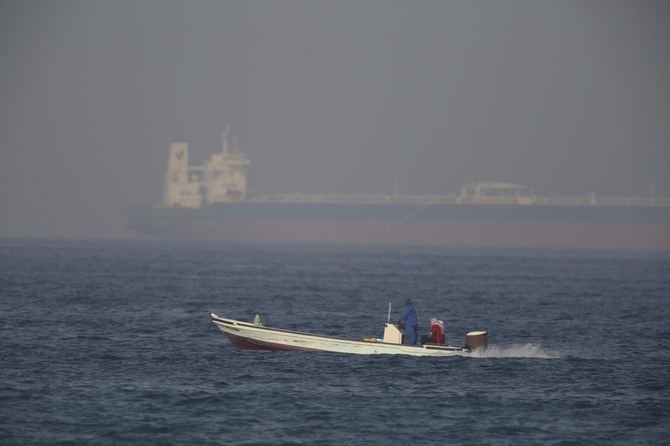
Oil prices rise after tanker attacks stoke Middle East tensions

- Second time in a month tankers have been attacked in the world’s most important zone for oil supplies
- Washington blames Iran for Thursday’s attacks


Saudi Arabia opens 3rd round of Exploration Empowerment Program
RIYADH: Saudi Arabia’s Ministry of Industry and Mineral Resources, in collaboration with the Ministry of Investment, has opened applications for the third round of the Exploration Empowerment Program, part of ongoing efforts to accelerate mineral exploration in the Kingdom, reduce early-stage investment risks, and attract high-quality investment from local and international mining companies.
The third round of the Exploration Empowerment Program offers a comprehensive support package targeting exploration companies and mineral prospecting license holders.
The initiative aims to lower investment risks for projects and support a faster transition from prospecting to development.
"The program provides coverage of up to 70 percent of the total salaries of Saudi technical staff, such as geologists, during the first two years, increasing to 100 percent thereafter, in line with program requirements.
This support aims to develop talent, build national capabilities in mineral exploration, promote job localization, and facilitate the transfer of geological knowledge.
The application for the third round opened on Jan. 14, allowing participants to benefit from the Kingdom’s attractive investment environment, its stable legal framework, and streamlined regulatory structures, as well as integrated infrastructure that supports the transition from mineral resources to operational mines.
The ministry has set the timeline for the third round, with the application period running from Jan. 14 to March 31.
This will be followed by the evaluation, approval, and signing of agreements from April 1 to May 31, with the eligible projects set to be announced between June 1 and July 31 of the same year.
The program stages include submitting exploration data during the reimbursement and payment phase from Sept. 1 to Nov. 30, followed by technical and financial verification of work programs and approval of the disbursement of support funds in January 2027.
The exploration data will then be published on the National Geological Database in April 2027.
The ministry emphasized that the EEP focuses on supporting the exploration of strategically important minerals with national priority. It also contributes to enhancing geological knowledge by providing up-to-date data that meets international standards, helping investors make informed decisions and supporting the growth of national companies and local supply chains.
The ministry urged companies to apply early to benefit from the program’s third round, which coincided with the fifth edition of the International Mining Conference, which was held from Jan. 13 to 15.


