DUSSELDORF: A Tunisian man and his German wife went on trial Friday, charged with planning a foiled biological bomb attack in Germany with the deadly poison ricin.
Sief Allah H., 30, and his wife Yasmin, 43, were arrested a year ago by an anti-terrorist squad that found 84 milligrams of the toxin in their Cologne apartment.
The arrests likely prevented what would have been Germany’s first biological attack, said Holger Muench, head of the BKA Federal Criminal Police Office, at the time.
Federal prosecutors said the couple had “for a long time identified with the aims and values of the foreign terrorist organization Islamic State.”
They decided in 2017 to detonate an explosive in a large crowd, “to kill and wound the largest possible number of people,” said prosecutors ahead of the trial in Duesseldorf.
Chief prosecutor Verena Bauer told the court the couple had planned to build a bomb with ricin and steel balls, and that they had purchased “nearly all the required parts” for the explosive.
Lawyers for the defendants said the accused did not plan to make statements in court.
Sief Allah H.’s defense meanwhile filed a motion against judge Jan van Lessen, claiming bias.
The pair had allegedly researched various forms of explosives before deciding on the deadly poison.
They ordered 3,300 castor beans over the Internet and successfully made a small amount of ricin, a poison 6,000 times more potent than cyanide that can kill if swallowed, inhaled or injected, according to prosecutors.
Investigators also found 250 metal balls, two bottles of nail polish remover as well as wires soldered on lightbulbs.
Only the raid and arrests prevented “the production of a larger quantity of ricin and the building of an explosive,” said prosecutors.
The couple were caught after a tip-off from the US Central Intelligence Agency, which had noticed the large online purchase of castor seeds, according to German media reports.
News weekly Der Spiegel has reported that the couple were believed to have already been radicalized when they met online in 2014.
Sief Allah H., a former street vendor and laborer in Tunisia, in 2015 married Yasmin H., an unemployed doctor’s assistant and mother of seven children from four different fathers, the report said.
The husband had been in contact with extremists and tried twice in 2017 to travel to Syria via Turkey.
His wife helped him with flight and hotel bookings, but both trips failed.
Sief Allah H. also volunteered to help Daesh in their propaganda work, and did so in early 2018 by publishing material of the extremist group online, said prosecutors.
Later, the couple decided to prepare an attack in Germany itself, and also bought a hamster to test the potency of the ricin.
“Very concrete preparations had been made for an act with a ... biological bomb, which is a first for Germany,” said Muench.
If convicted of the charges of serious violence endangering the country, the defendants could each face up to 15 years in jail.
Two suspects were also arrested in August last year in Tunisia in connection with the case.
Germany, Europe’s biggest economy, remains on high alert after several deadly attacks claimed by Daesh.
The worst attack, a 2016 truck rampage through a Berlin Christmas market by Tunisian asylum seeker Anis Amri, claimed 12 lives.
The trial is expected to last until the end of August.


![]()
![]()

Tunisian-German couple in court over ‘ricin attack plot’

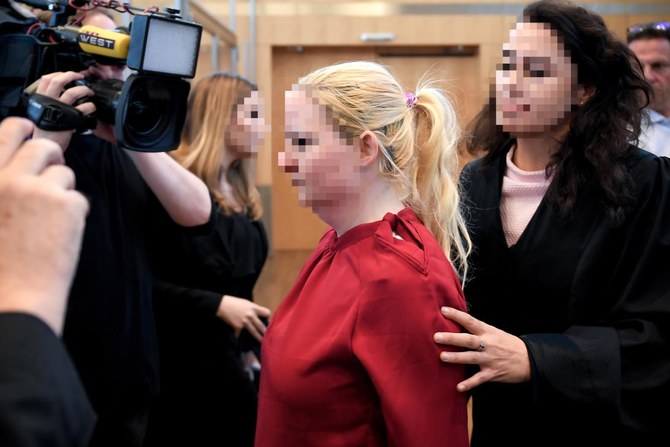
Tunisian-German couple in court over ‘ricin attack plot’
- Sief Allah H., 30, and his wife Yasmin, 43, were arrested a year ago by an anti-terrorist squad that found 84 milligrams of ricin in their Cologne apartment
- The pair had allegedly researched various forms of explosives before deciding on the deadly poison

Latest updates


© 2026 SAUDI RESEARCH & PUBLISHING COMPANY, All Rights Reserved And subject to Terms of Use Agreement.