Baghdad’s Green Zone reopens to the public after 16 years

1 / 4
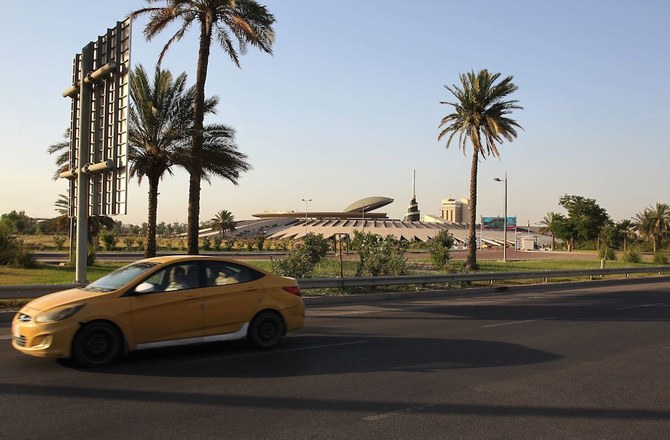
The Green Zone, home to the Iraqi parliament and US embassy, will be opened to traffic around the clock from Tuesday, the government said. (AFP)
2 / 4
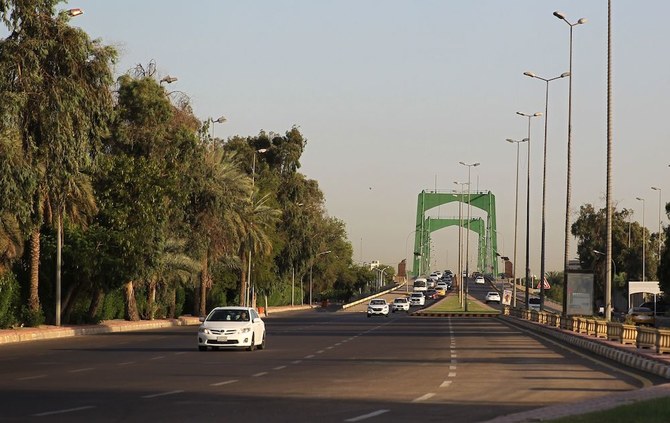
The Green Zone has been heavily fortified since the US-led invasion that overthrew dictator Saddam Hussein in 2003. (AFP)
3 / 4
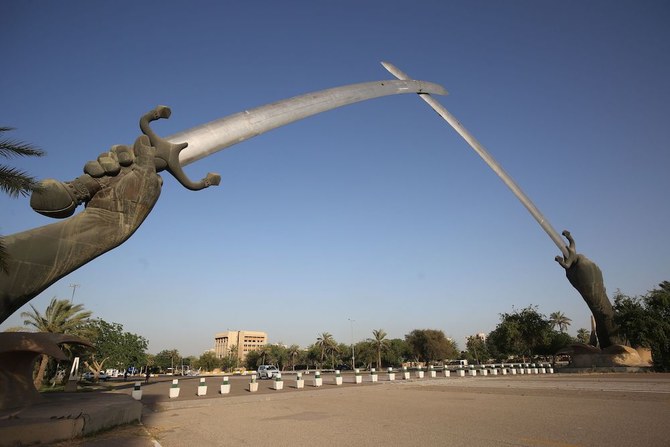
The Victory Arch known as the Swords of Qadisiyah in Baghdad’s high-security Green Zone. (AFP)
4 / 4
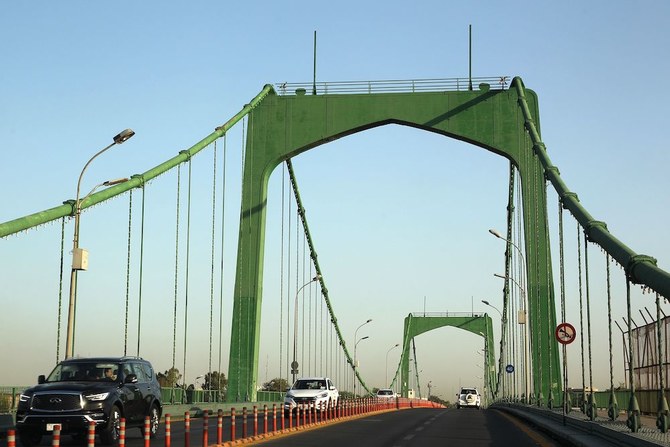
Iraqis drive in Baghdad’s high-security Green Zone after all the main roads criss-crossing the enclave were opened. (AFP)
Updated 04 June 2019
Follow

Baghdad’s Green Zone reopens to the public after 16 years

  • The prime minister said the Green Zone will be fully open to the public on Eid Al-Fitr
  • The area was home to Saddam Hussein’s palaces before the war

BAGHDAD: Baghdad’s Green Zone area, the heavily fortified strip on the west bank of the Tigris River, reopened to the public Tuesday after 16 years — a move meant to portray increased confidence in the country’s overall security situation after years of war.
Maj. Gen. Jassim Yahya Abd Ali told The Associated Press that the area, which houses the US Embassy and Iraqi government offices, is now open “twenty-four hours a day without any exceptions or conditions.”
The 10-square kilometer (4-square mile) with its palm trees and monuments has been off limits to the public since the 2003 US invasion of Iraq to topple dictator Saddam Hussein.
“I feel that Baghdad is bigger than before,” said Assir Assem, a 25-year-old who drove his car inside the Green Zone for the first time in his life on Tuesday. He said his generation didn’t know anything about the Green Zone and felt that people there lived in another country.
“Now there is no difference, and this is beautiful,” he said.
The area was home to Saddam Hussein’s palaces before the war. It then became known as “Little America” following the 2003 US invasion that toppled him, after it was seized by US military forces. In later years, the walled off area surrounded by cement blast walks became a hated symbol of the country’s inequality, fueling the perception among Iraqis that their government is out of touch.
Only Iraqis with special security badges could enter the area.
Various attempts and promises by the Iraqi government to open the Green Zone to traffic over the past years have failed to materialize, because of persistent security concerns.
Earlier this year, the government began easing restrictions in the area. Prime Minister Adel Abdul Mahdi said the Green Zone will be fully open to the public on Eid Al-Fitr, the holiday that marks the end of Ramadan.
Ali said authorities removed d 12,000 concrete walls from the area.
“Thank God the opening of the Green Zone happened during the Eid. ... It is a very good initiative and will ease transportation in Baghdad,” said Abdullah Mouhamed, a taxi driver.


US says it destroyed 16 mine-laying vessels as Iran threatens to block Gulf oil exports

Updated 4 sec ago
Follow

US says it destroyed 16 mine-laying vessels as Iran threatens to block Gulf oil exports

DUBAI, United Arab Emirates: The US said it took out more than a dozen mine-laying Iranian vessels Tuesday, and the Islamic Republic vowed to block the region’s oil exports, saying it would not allow “even a single liter” to be shipped to its enemies.
As concerns grew about the war’s effect on a strategic waterway, the American military said it destroyed 16 minelayers, though President Donald Trump said in social media posts that there were no reports of Iran planting explosives in the Strait of Hormuz, through which 20 percent of the world’s oil is shipped.
The American military released the figure, along with unclassified footage of some of the vessels, after Trump threatened to hit Iran at “a level never seen before” if the country failed to immediately remove any mines it might have deployed in the channel.
Both sides sharpened their rhetoric as the war entered its 11th day. US Defense Secretary Pete Hegseth promised the most intense strikes yet while the Pentagon detailed the broader toll of injuries sustained by US troops.
The conflict’s effects rippled across the Middle East and beyond. Iranian leaders ruled out talks, threatened Trump and launched new attacks against Israel and Gulf Arab countries.
In Iran, residents of Tehran said they experienced some of the war’s heaviest strikes. A woman said she saw a residential building get hit. She and others reached by The Associated Press spoke on condition of anonymity to prevent reprisals. Tens of thousands of Iranians have sought shelter in the countryside.
Lebanon reports more deaths
Multiple Israeli strikes across southern Lebanon killed seven people, the Lebanese Health Ministry said early Wednesday.
Other deaths included a Red Cross member who died early Wednesday after an Israeli strike targeted his team Monday while they were rescuing people following an earlier attack, the health ministry said. On Tuesday, Israeli airstrikes killed four people, including a paramedic who worked for the Hezbollah-affiliated Islamic Health Authority who was treating the wounded.
Also Tuesday, an Israeli strike killed a Lebanese soldier, the Lebanese army said, bringing the number of troops killed there to five since the conflict began.
Israel said it was working to intercept missiles from Iran and Hezbollah, which began firing on Israel after the start of the war.
Saudi Arabia’s Defense Ministry said early Wednesday that it intercepted multiple missiles launched toward several sites, including Prince Sultan Air Base, a major US- and Saudi-operated air facility. The ministry said it also destroyed drones near two major cities and more headed toward the kingdom’s vast Shaybah oil field in the Empty Quarter desert.
In Iraq, drones targeted military bases inside Baghdad International Airport late Tuesday, two security officials told AP on condition of anonymity because they were not authorized to speak to the press. Some drones fell near Iraqi security positions, while others landed near logistical support sites used by US-led coalition forces, one official said.
The United Arab Emirates said early Wednesday that its air defenses were firing at incoming Iranian fire. The wealthy Gulf nation — home to the business and travel hub of Dubai — said Iranian attacks have killed six people and wounded 122 others.
Bahrain sounded sirens early Wednesday, warning of an incoming Iranian attack. The warnings came a day after an Iranian attack hit a residential building in the capital, Manama, and killed a 29-year-old woman and wounding eight people.
Pentagon says 140 US troops wounded since war began
Gen. Dan Caine, chairman of the Joint Chiefs of Staff, said US forces hit more than 5,000 targets.
The Pentagon separately said Tuesday that about 140 US service members have been wounded in the war, and the “vast majority” of the injuries were minor, with 108 service members already back on duty. Eight US service members suffered severe injuries, and seven have been killed.
In Iran, at least 1,230 people have been killed, while the death toll is more than 480 in Lebanon and 12 in Israel, according to officials.
Iran’s leaders have remained defiant after days of heavy strikes targeting the country’s leadership, military, ballistic missiles and its disputed nuclear program. Iran’s parliament speaker, Mohammad Bagher Qalibaf, said on X that Iran was “definitely not looking for a ceasefire.”
“We believe that the aggressor should be punched in the mouth so that he learns a lesson so that he will never think of attacking our beloved Iran again,” he said.
A top Iranian security official, Ali Larijani, posted a warning to Trump, writing on X that “Even those bigger than you couldn’t eliminate Iran. Be careful not to get eliminated yourself.” Iran has been accused of plotting attempts to kill Trump in the past.
The Trump administration, meanwhile, faced growing scrutiny at home about the war.
“I’m not sure what the end game is, or what their plans are,” Democratic Sen. Jacky Rosen of Nevada said after a classified briefing that the Trump administration held Tuesday for some lawmakers.
Saudi Arabia’s oil giant says tankers being rerouted to avoid Strait of Hormuz
Iran has repeatedly targeted energy infrastructure with attacks that appear aimed at generating enough global economic pain to pressure the US and Israel to end their strikes. It has also fired on Israel and US military bases in the region.
The US stock market held steadier Tuesday as Wall Street waited for the next clue on when the war with Iran may end.
Oil prices, meanwhile, remained well below their peaks hit on Monday. Such spikes have been rocking financial markets worldwide because of worries that the war could block the global flow of oil and natural gas for a long time.
Iran’s paramilitary Revolutionary Guard said it “will not allow the export of even a single liter of oil from the region to the hostile side and its partners until further notice.”
Amin Nasser, the president and CEO of Saudi Arabia’s oil giant Aramco, said tankers were being rerouted to avoid the strait, and that the company’s east-west pipeline would reach its full capacity this week of 7 million barrels a day being brought to the Red Sea port of the Yanbu.
“The situation at the Strait of Hormuz is blocking sizable volumes of oil from the whole region,” he said. “If this takes a long time, that will have serious impact on the global economy.”
Foreign nationals get out of region
The UN refugee agency said Tuesday that more than 667,000 people in Lebanon had registered as displaced — an increase of over 100,000 since a day earlier — and more than 85,000 people from Lebanon, mostly Syrians, had entered neighboring Syria.
The British government said the number of commercial flights from the UAE to the UK is returning to normal levels, with 32 flights operated Monday from Dubai to Britain and another 36 scheduled Tuesday. British Airways, however, said it suspended flights to and from Jordan, Bahrain, Qatar, Dubai and Tel Aviv until later this month.
Many foreign nationals have been getting out of the Arabian Gulf region since the war began, including over 45,000 UK citizens, the British Foreign Office said. Some 40,000 people returned to the United States, according to the State Department.