

Startup of the Week: Sakura Topia, a taste of Japan in Jeddah

Updated 04 June 2019
Follow

Startup of the Week: Sakura Topia, a taste of Japan in Jeddah

  • Sakura Topia sells cute and dinky bento that would not look out of place in Japan

JEDDAH: Rowaida Fuad Oudah has been a keen cook since she was at school and always had a soft spot for colorful and intricate dishes. What started as a hobby became a full-time job and she launched a food business in 2016. But she had yet to encounter or explore Asian cuisines.

She was inspired and intrigued by the food she saw on Korean television shows, especially on their wildly popular dramas, and became curious to know what it tasted like because it looked “tempting and delicious.”

“So I said to myself, why not try cooking it as there aren’t many Asian restaurants in Jeddah,” she told Arab News.

Her kitchen experiments proved to be a hit as she realized there were people in the Kingdom who wanted food from Asia but struggled to access it easily.

“I wanted to create a distinct menu to compete with restaurants and, most importantly, ensure I added my own touch and try to suit the palate of Saudi society while maintaining the taste of the original dish.”

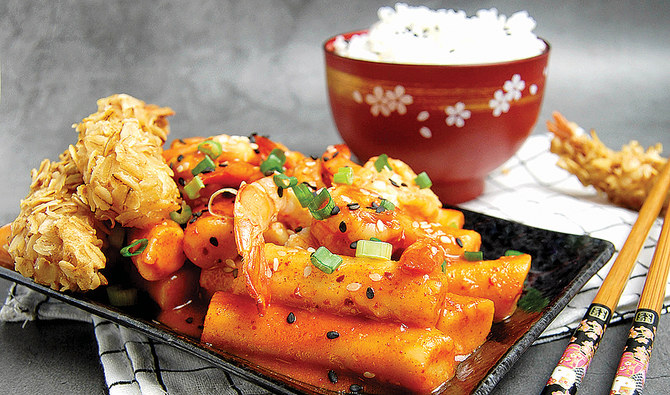
She runs Sakura Topia, which sells cute and dinky bento that would not look out of place in Japan.

Her Instagram account features teddy bears, geishas, warriors, Hello Kitty and bunny rabbits fashioned from rice, seaweed and multicolored garnishes. There is also sushi, jiggly pancakes, mochi, taiyaki (fish-shaped cakes with a sweet filling) and onigiri (rice balls). From South Korea there is topokki (hot and spicy rice cakes) and kimbap.

“In the beginning I had difficulty importing some of the ingredients as I didn’t have the experience, and here I couldn’t find the high-quality ingredients for my food. Now, I have balanced my work using local and imported goods from Japan and Korea. I wish to have my own Japanese-style TV cooking show, specializing in Korean and Japanese food and bento design, to share my experience with Saudi and Arab society while wearing Japanese clothes and speaking the language as well.”

She also wants to organize more workshops on cooking, Japanese calligraphy, how to wear a yukata (a type of kimono) and origami.

Oudah enjoys spending time in the kitchen, experimenting with new recipes until she comes up with her own twist and take on a dish. 

“Being able to reach where I am now, and being trusted by a lot of people, is a blessing and a source of encouragement.”


Makkah’s urban shift enhances the city’s quality of life

Updated 08 February 2026
Follow

Makkah’s urban shift enhances the city’s quality of life

  • By harmonizing its religious heritage with modern urban development, Makkah is proving that a city can honor its past while vigorously embracing the future

MAKKAH: Islam’s holiest city is currently witnessing a qualitative urban shift, one that seamlessly blends its profound spiritual sanctity with a modern, vibrant lifestyle. By integrating cultural, educational, and entertainment initiatives, Makkah is redefining the visitor experience and significantly enhancing the quality of life for its residents, directly supporting the goals of Saudi Vision 2030.

The city’s transformation was recently highlighted by the success of the Makkah winter season. The event attracted approximately 400,000 visitors — over 60% of whom were locals — demonstrating a strong domestic demand for high-quality public spaces.

The season revitalized community interaction, driving a 35% increase in visits to recreational sites and creating more than 1,200 temporary jobs for the local workforce.

Central to this urban renaissance is the Hira Cultural District. Since opening its doors in January 2023 near the historic Mount Hira, the district has become a definitive landmark that bridges Islamic history with contemporary identity.

Makkah’s Hira Cultural District has become a definitive landmark that bridges Islamic history with contemporary identity. (SPA photo)

Far from being a static monument, the district has cultivated a thriving creative economy. Its craftsmanship program, which features over 100 artisans, has generated up to SAR 3 million in sales and attracted 130,000 visitors to live workshops. These interactive spaces allow visitors to engage directly with the region’s heritage, moving beyond passive observation to active participation.

A living legacy 

The shift extends to Makkah’s broader ecosystem of museums and cultural sites, which are now positioned as key pillars of cultural tourism. Facilities like the Revelation Exhibition use cutting-edge technology and multilingual content to narrate the story of the Holy Quran’s revelation, offering an immersive experience that complements the spiritual journey of pilgrims.

These efforts align with the “Makkah: A Living Legacy” campaign, which seeks to document the city’s historical narrative and preserve its collective memory. Recent months have seen a surge in educational workshops for university students and tour guides, ensuring that the human element of Makkah’s history is conveyed with accuracy and depth.

City’s transformation recently highlighted by the success of the Makkah winter season. (SPA photo)
 

Economic and social impact 

The results of this integrated approach are tangible. Specialized museums and restored historic sites now attract up to 1.6 million annual visitors. Crucially, this cultural enrichment is encouraging pilgrims to linger longer, increasing the average duration of stay by 18%.

By harmonizing its religious heritage with modern urban development, Makkah is proving that a city can honor its past while vigorously embracing the future, offering a holistic experience that nourishes both the soul and the community.