BAGHDAD: Baghdad’s Green Zone has been a barometer for tension and conflict in Iraq for nearly two decades.
The 10-sq km heavily guarded strip on the banks of the Tigris River was known as “Little America” following the 2003 US invasion that toppled Saddam Hussein. It then became a hated symbol of the country’s inequality, fueling the perception among Iraqis that their government is out of touch.
The sealed-off area, with its palm trees and monuments, is home to the gigantic US Embassy in Iraq, one of the largest diplomatic missions in the world. It has also been home to successive Iraqi governments and is off limits to most Iraqis.
Before the invasion
Security was always tight around the area, as Saddam Hussein’s presidential palace complex was located inside. So were the homes of some of Iraq’s top government officials.
Every year in July, Iraq’s army held a massive parade marking the 1968 coup that brought Saddam’s Arab Socialist Baath Party to power and ruled the country until the US invasion in 2003.
All in the past?
There has been talk for years that restrictions would be lifted in the Green Zone, first by then-Prime Minister Haider Abadi in 2015.
In March, Prime Minister Adel Abdul Mahdi removed thousands of grey cement blast walls, easing the snarling traffic around Baghdad, and public access to the “Victory Arch” was restored.
The UN envoy to Iraq, Jeanine Hennis-Plasschaert, told a UN Security Council meeting earlier this month that “very soon the Green Zone will no longer exist.”
Only a few days earlier, a rocket was fired into the Green Zone, landing less than a mile from the sprawling US Embassy.
Eager to show the war-scarred nation is returning to normal, Abdul Mahdi is now promising to open it to the public on the first day of Eid Al-Fitr, the upcoming holiday marking the end of the holy month of Ramadan.
“Once the area is fully opened, all Iraq will be green,” said Lt. Gen. Mohamed Hamid Kadhim.

In the eye of the storm, Baghdad’s Green Zone remains sealed
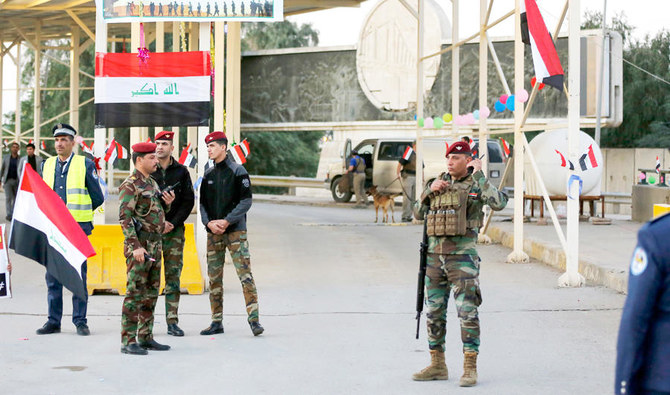
- The sealed-off area, with its palm trees and monuments, is home to the gigantic US Embassy in Iraq, one of the largest diplomatic missions in the world
Israeli settlers burn tents, vehicles in West Bank village
- Videos show masked men rampaging into the Palestinian village of Susiya near Hebron and burning vehicles and property
- Similar attacks have become common as settlers seek to control large swathes of land in the West Bank
SUSIYA, West Bank: Israeli settlers set fire to vehicles and tents in the Palestinian village of Susiya on Tuesday night, residents said, in the latest incident of settler violence against Palestinians in the Israeli-occupied West Bank.
Videos verified by Reuters showed a masked group of men, who residents said were Israeli settlers, approaching the village near the city of Hebron, and later burning vehicles and Palestinian property.
“They attack us almost every day, repeatedly, because we live near the main road...Last night they burned everywhere,” Halima Abu Eid, a Susiya resident told Reuters on Wednesday.
The Israeli military said they had dispatched soldiers to deal with reports of “deliberate burnings of Palestinian property” and had opened an investigation into the incident.
Violence by Israeli settlers against Palestinians in the West Bank has increased sharply since the beginning of the war in Gaza in October 2023, with over 800 Palestinians displaced due to settler attacks in 2026 according to United Nations data.
Attacks where masked settlers arrive at night to destroy Palestinian property or attack residents have become common, as Israeli settlers seek to control large swathes of land in the West Bank.
An Israeli official previously blamed settler violence on a “fringe minority,” although Reuters reporting has shown well-organized plans to take Palestinian land in public settler social media channels.
The United Nations has documented at least 86 instances of settler violence from February 3 to 16, leading to the displacement of 146 Palestinians and the injury of 64.
Israeli indictments of settler violence are rare. At the end of 2025, Israeli monitoring group Yesh Din said of the hundreds of cases of settler violence it had documented since October 7, 2023, only 2 percent resulted in indictments. Israel’s far-right governing coalition has enabled the rapid spread of settlements, with some ministers openly stating they want to “bury” a Palestinian state.
Most world powers deem Israel’s settlements, on land it captured in a 1967 war, illegal, and numerous UN Security Council resolutions have called on Israel to halt all settlement activity.
Israel disputes the view that its settlements are unlawful and it cites biblical and historical ties to the land.


