






MAKKAH: Arab and Muslim heads of state on Friday denounced Iranian actions in the Gulf as destabilizing to regional security and urged that the International community takes “strict measures” against the Iranian regime.
In a gathering in Makkah early Friday, the Arab League heads of nations issued a final communique demanding that the Iranian regime must stop funding terror and and to abide by commitments it has made.
The leaders condemned the sabotage of four commercial ships in the Emirates, which has escalated tensions in the region and precipitated a summit in the Muslim holy city.
They asked the international community to stop Iran from obtaining nuclear capabilities.
The final communique also:
• denounced Iranian intervention in the Syrian crisis and its impact on Syria’s unity;
• condemned the launching of Iranian-made ballistic missiles from Yemen toward Saudi Arabia;
• condemned Iran’s interference in the affairs of Bahrain, and its support of terrorist groups there; and
• condemned Iran’s occupation of three islands belonging to the United Arab Emirates (UAE).
The Gulf and Arab League emergency summits kicked off on Thursday in Makkah for the start of a trio of high-level summits after Saudi Arabian King Salman convened the gatherings earlier this month. The Organization of Islamic Cooperation (OIC) summit will be held later Friday, entitled the Makkah Summit: Hand in Hand Towards the Future (Together towards the Future).
Also on the agenda is Palestine, which Saudi Arabian foreign minister Ibrahim Al-Assaf spoke about on Wednesday at a preparatory conference saying: “I would like to emphasize that the Palestinian issue is a paramount issue for Saudi Arabia, in particular the Palestinian people's full legitimate rights and the establishment of an independent state with East Jerusalem as its capital.”
He added: “Our Islamic world is facing the most serious challenges of interfering in its internal affairs.”
OIC Secretary-General Yousef Al-Othaimeen said Houthi attacks against Saudi Arabia will be discussed at the Islamic Summit.
He told Saudi TV that all countries share common interests regardless of religion or race. He condemned interference in other countries’ internal affairs.
Pakistani Foreign Minister Shah Mehmood Qureshi told Arab News that his country is willing to help resolve “longstanding issues” between Muslim countries.
“Pakistan believes that this region is in flux,” he said. “Our message is that we have to join hands. We have to understand each other’s concerns, and have a collective objective of peace and stability so that our region can develop like other parts of the world.”
---
03:40 GMT: Arab Summit final statement: Confirms the unity and solidarity of the GCC, highlighting their unified stance
03:30 GMT: Arab Summit final statement: Iran has to stop supporting and financing Houthi and terrorist militias.
03:20 GMT: Arab Summit final statement: Condemns the sabotage of 4 commercial ships in the Emirates.
03:10 GMT: Arab Summit final statement: Condemns the Houthi militia attacks on Saudi oil tankers. The Houthi militia attacks are a dangerous threat against the region’s security.
03:00 GMT: Sudanese head of transitional council: We condemn the attacks on Saudi Arabia and the emirates and we stand by our brothers against these attacks
02:50 GMT: Palestinian President Mahmoud Abbas: We do not accept any threat against Arab countries. We condemn the attacks on oil tankers in Saudi Arabia and the Gulf.
02:40 GMT: The Emir of Kuwait: Holding the Arab summit now shows the dangers we are facing today. We are afraid that the escalation in our region will deepen our previous wounds.
02:24 GMT: Iraq’s President Barham Salih: Any attack on the Gulf security is an attack on the security of Arab and Islamic countries.
02:20 GMT: Jordan’s King Abdullah II: The security of Gulf countries is the main pillar for the stability of the region. We stand by our Arab brothers to defend their interests and security.
02:15 GMT: Iraq’s President Barham Salih says regional crisis may lead to war if not addressed properly. Iran is neighbor and its security should be preserved, hopes peace efforts will prevail in the region.
02:12 GMT: Egyptian President Abdel Fattah El-Sisi:We should strengthen our ability to face these terrorist threats and sources of threat in the region should be addressed.
02:09 GMT: Egyptian President Abdel Fattah El-Sisi: The attacks on oil tankers in Saudi Arabia and the Gulf are clear terrorist acts.
01:53 GMT: King Salman at Makkah Summit says our hand is extended to cooperate with the countries of the region, including the Iranian people, to promote development.
01:47 GMT: King Salman says the Iranian regime continues to break international laws.
01:43 GMT: King Salman says Iran is perpetrating terrorist acts directly or through proxies to undermine Arab security.
21:30 GMT: King Salman starts the summit with an address to the gathered dignitaries, citing the threat of Iran as the main reason for convening the summit.
#UPDATE: King Salman's statement to open the #GCCArabSummit in #Makkah says "hand of #SaudiArabia will continue to be stretched out for peace" and calls on international community to shoulder responsibility for countering #Iran's subversive activitieshttps://t.co/Jar6uZchXr pic.twitter.com/ng5Zs2lWgs
— Arab News (@arabnews) May 30, 2019
#UPDATE: #SaudiArabia's King Salman begins #GCCArabSummit, citing the threats from #Iran to regional security and its continued malign activity over four decades as the reason for the meetinghttps://t.co/Jar6uZchXr pic.twitter.com/DRsWFuYDzz
— Arab News (@arabnews) May 30, 2019
21:10 GMT: The UAE delegation - led by Abu Dhabi Crown Prince Mohammed bin Zayed - have arrived at Safa Palace in Makkah, and have been received by King Salman and Crown Prince Mohammed bin Salman.
#UPDATE: #UAE delegation - led by Abu Dhabi Crown Prince Mohammed bin Zayed - arrives at Safa Palace in #Makkah, received by King Salman and Crown Prince Mohammed bin Salman #GCCArabSummit #MakkahSummitshttps://t.co/lH4GYEJeej pic.twitter.com/vsBMGYSYN6
— Arab News (@arabnews) May 30, 2019
21:00 GMT: The Emir of Kuwait, King of Bahrain and Sayyid Shihab, advisor to Oman's Sultan Qaboos all arrive at Safa Palace in Makkah, where Saudi Arabia's Crown Prince Mohammed bin Salman joins them for the upcoming discussions.
#UPDATE: Emir of Kuwait arrives at Safa Palace in #Makkah to be received by King Salman and Crown Prince Mohammed bin Salman #GCCArabSummit #MakkahSummitshttps://t.co/lH4GYEJeej pic.twitter.com/aN0zklgyFc
— Arab News (@arabnews) May 30, 2019
#UPDATE: #SaudiArabia's Crown Prince Mohammed bin Salman with advisor to #Oman's Sultan Qaboos, the Emir of Kuwait and #Bahrain's King Hamad at the #GCCArabSummit #MakkahSummitshttps://t.co/lH4GYEJeej pic.twitter.com/8qQldbdWEt
— Arab News (@arabnews) May 30, 2019
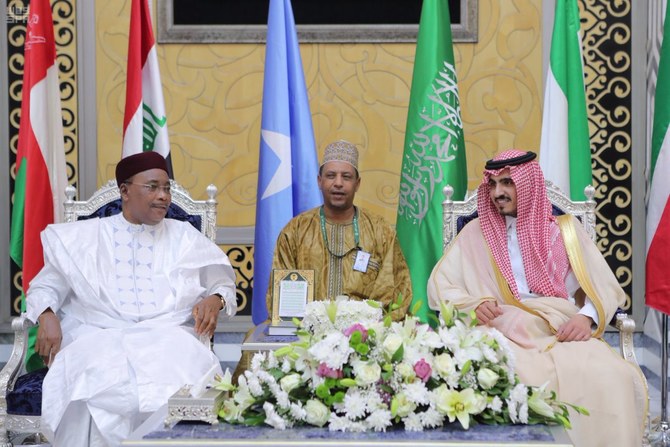
20:45 GMT: Saudi Arabia's King Salman has started receiving Arab and Muslim leaders at Safa Royal Palace in Makkah ahead of a series of summits.

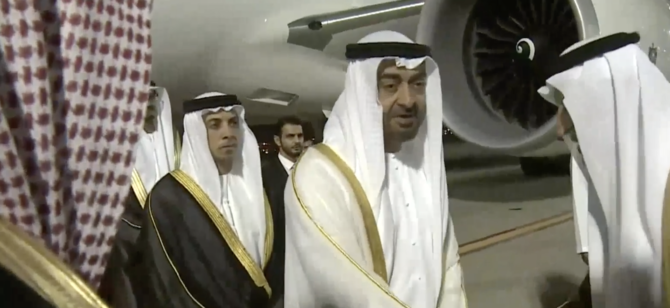
20:00 GMT: Abu Dhabi Crown Prince Mohammed bin Zayed lands in Saudi Arabia for the GCC Arab Summit in Makkah, closely followed by the presidents of Niger, Mali and Burkina Faso.
#HappeningNow: Abu Dhabi Crown Prince Mohammed bin Zayed arrives in Jeddah to attend the three Makkah summits in Saudi Arabia #GCCArabSummit #makkahsummit #meccasummithttps://t.co/OtUaDhtCpr pic.twitter.com/sHL9yYUd0y
— Arab News (@arabnews) May 30, 2019
17:45 GMT: Some shots from the media center in the Four Point by Sheraton hotel where dignitaries and representatives from the various different countries are attending the Makkah summits, with messages from King Salman displayed in different languages.

17:15 GMT: The PM of Qatar has landed in Jeddah for the summits in Makkah.
#HappeningNow: Qatar's Prime Minister Abdullah bin Nasser bin Khalifa arrives in Jeddah to attend the three Makkah summits in Saudi Arabia #makkahsummit #meccasummithttps://t.co/OtUaDhtCpr pic.twitter.com/QmzJHI3Hwt
— Arab News (@arabnews) May 30, 2019
16:25 GMT: Bahrain's King Hamad is now in Saudi Arabia for the summits. His kingdom will next month be hosting a workshop of Middle Eastern and other countries to discuss the international approach to a Middle East peace plan and the Palestinian issue.
#HappeningNow: Bahrain's King Hamad arrives in Jeddah to attend the three Makkah summits in Saudi Arabia #makkahsummit #meccasummithttps://t.co/OtUaDhtCpr pic.twitter.com/VVOXqH3Xbk
— Arab News (@arabnews) May 30, 2019
15:45 GMT: We've also had the arrival of the Chadian president and the president of Afghanistan on Thursday who will also be attending one of the Makkah summits. The eyes of the Islamic world will certainly be on Saudi Arabia this weekend.
15:30 GMT: Another arrival, another Arab world leader - this time it is Tunisian President Beji Caid Essebsi who touches down in the Kingdom.
#HappeningNow: Tunisian President Beji Caid Essebsi arrives in Jeddah to take part in the three Makkah summits in Saudi Arabia #makkahsummit #meccasummithttps://t.co/OtUaDhtCpr pic.twitter.com/0JeZyp4XC2
— Arab News (@arabnews) May 30, 2019
--------
FOLLOW MAKKAH SUMMITS COVERAGE WITH THE ARAB NEWS SPOTLIGHT
--------
14:30 GMT: Iraqi President Barham Salih arrives in Saudi Arabia to attend the three Makkah summits.
#HappeningNow: Iraqi President Barham Salih arrives in Jeddah to attend the three Makkah summits in Saudi Arabia #makkahsummit #meccasummithttps://t.co/OtUaDhtCpr pic.twitter.com/JfAbRB3XCV
— Arab News (@arabnews) May 30, 2019
14:05 GMT: The King of Jordan Abdullah II is met by the Governor of Makkah Prince Khalid bin Faisal as he also arrives for this week's talks in Makkah.
#BREAKING: Jordan's King Abdullah II arrives in Jeddah to take part in the three Makkah summits in Saudi Arabiahttps://t.co/OtUaDhtCpr pic.twitter.com/wbp04uxLL3
— Arab News (@arabnews) May 30, 2019
12:10 GMT: Egypt's President Abdel Fattah El-Sisi is received in Saudi Arabia as he touches down for the summits.

11:30 GMT: The Emir of Kuwait arrives in Saudi Arabia for the series of summits


