

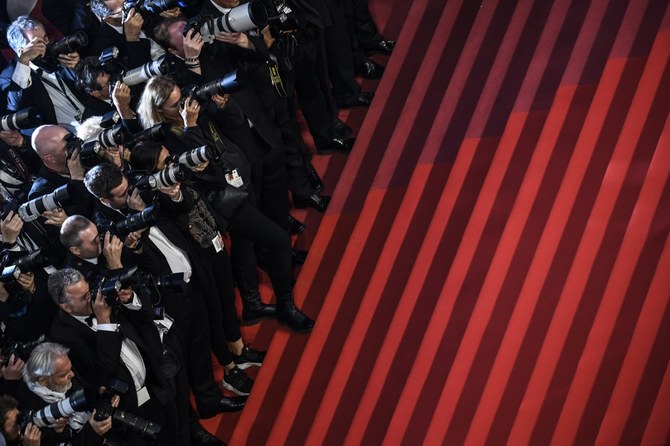
Cannes Diary: The world’s glitziest film festival through the eyes of an industry insider

The Cannes festival wraps up on May 25. (AFP/File)
Updated 25 May 2019
Follow

Cannes Diary: The world’s glitziest film festival through the eyes of an industry insider

  • The director says Cannes is more than just a movie festival
  • Attendees wear color-coded badges, which specify their title and occupation

Film director Hadi Ghandour takes us behind the scenes at the Cannes Film Festival with his revealing diary entries.

Day 1

I am on a train from Paris to Cannes. A middle-aged woman maneuvers her way around my legs and sits beside me. She is on her phone, making sure to loudly telegraph to the entire train that she is attending the festival. “I hope Xavier Dolan doesn’t disappoint me like last time! And can you believe that Alain Delon is being honored? What a travesty!” We are all supposed to be impressed. My festival experience begins before I get there and I am forced to endure her pontification for the next five hours.

The train arrives on an overcast afternoon. The first thing I do is pick up my badge. Without it you are considered a third-class citizen. I inch past the security blocks that barricade the Croisette like a fortress and make my way to the Grand Palais.

What makes this place so distinctive and often daunting is the sheer amount of stuff going on. It is not only a film festival, but a massive market, an annual industry meet-up, a sprawling seminar, a paparazzi hunting ground, an awards ceremony, and an everlasting party.

Cafes, restaurants and hotel lobbies turn into networking hubs and industry meeting grounds. TV screens that usually broadcast football matches or music videos air live feeds of press conferences and red carpets. Beachfront apartments are transformed into movie company offices, with their logos hanging from the balconies and the harbor morphs into international pavilions for global cinema.

I often find that the most interesting films play at the Director’s Fortnight. It is late in the evening. My friend has snatched up a couple of priority invitations to Robert Eggers’ latest picture “The Lighthouse.”

Envious eyes watch us zip through the interminable line that wraps around the JW Marriott.

I sink into my chair but, within moments, a sense of dread washes over me when I hear the shrill voice from earlier today. It’s the woman from the train. The festival may be larger than life, but it is still a very small place.

“The Lighthouse” is hypnotic, terrifying and has remarkable performances from Robert Pattinson and Willem Dafoe. It is guaranteed to give me nightmares later.
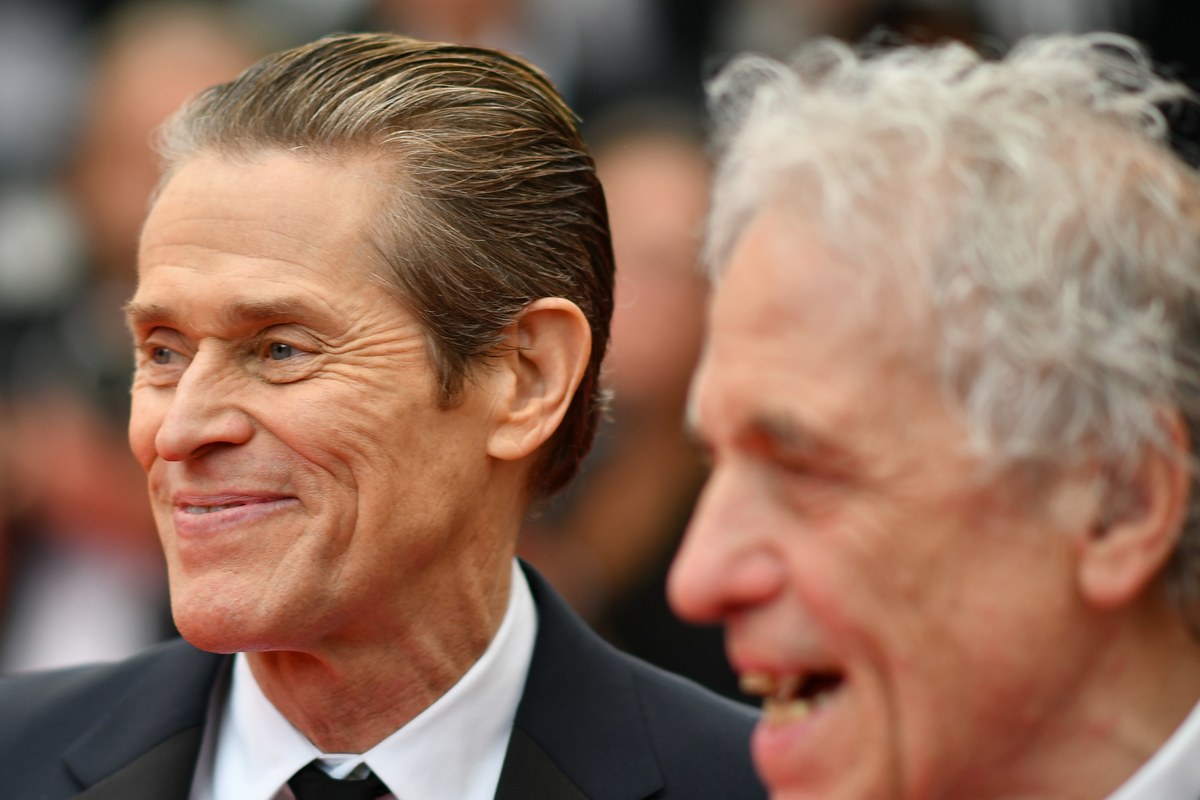


Willem Dafoe stars in The Lighthouse. (AFP)

Day 2

I am having a breakfast meeting by the shore. A seagull swoops in and boldly pilfers a piece of bread from the basket. Even the seagulls here are fierce and determined.

 A 50-something gentleman interrupts our conversation and humbly introduces himself as a filmmaker from Saskatchewan who has been in the business for years.

He slides over a heap of DVDs - films he has written, directed, produced, edited, shot, acted in and composed. He points at one of them, which is enveloped in a half-ripped cover. “This one here is my masterpiece,” he tells me.

Everyone has something to pitch. The whole town is like a never-ending speed date. Shifty eyes dart around mid-conversation. First, they land on your color-coded badge to decipher your title and worth, then swiftly onto the next person.

Ideas float around with the heft of low-hanging clouds over people’s heads. You can almost see them. The movies in competition may be front and center, but the energy is already directed at the future.

I swing by the Marche Du Film, the festival’s film market. Located in the Palais basement, it is a maze of industry booths where deals are negotiated and struck. It is not only the least glamorous part of the festival, but the least glamorous place you could ever visit.

The market begins to suffocate me so I decide to watch a movie, “Lilian” by Andreas Horvath. Waiting in line at this festival is a rite. You must always add an hour and a half to a movie’s running time to gauge your overall time investment.

The sun is setting and the sea is iridescent. A nighttime chill begins to emerge. One of my favorite things to do at the festival is to watch a film on the beach. There is something wonderfully primal and peaceful about it. A bunch of strangers gathered on a sandy shore beneath the moonlight, watching and listening to a story unfold.  A documentary is playing, “Haut Les Filles” by Francois Armanet. Everyone has sunk into their chairs and are wrapped up in blankets to protect them from the gusts of wind. They look so peaceful and vulnerable, a poignant end to the vicissitudes of their day.
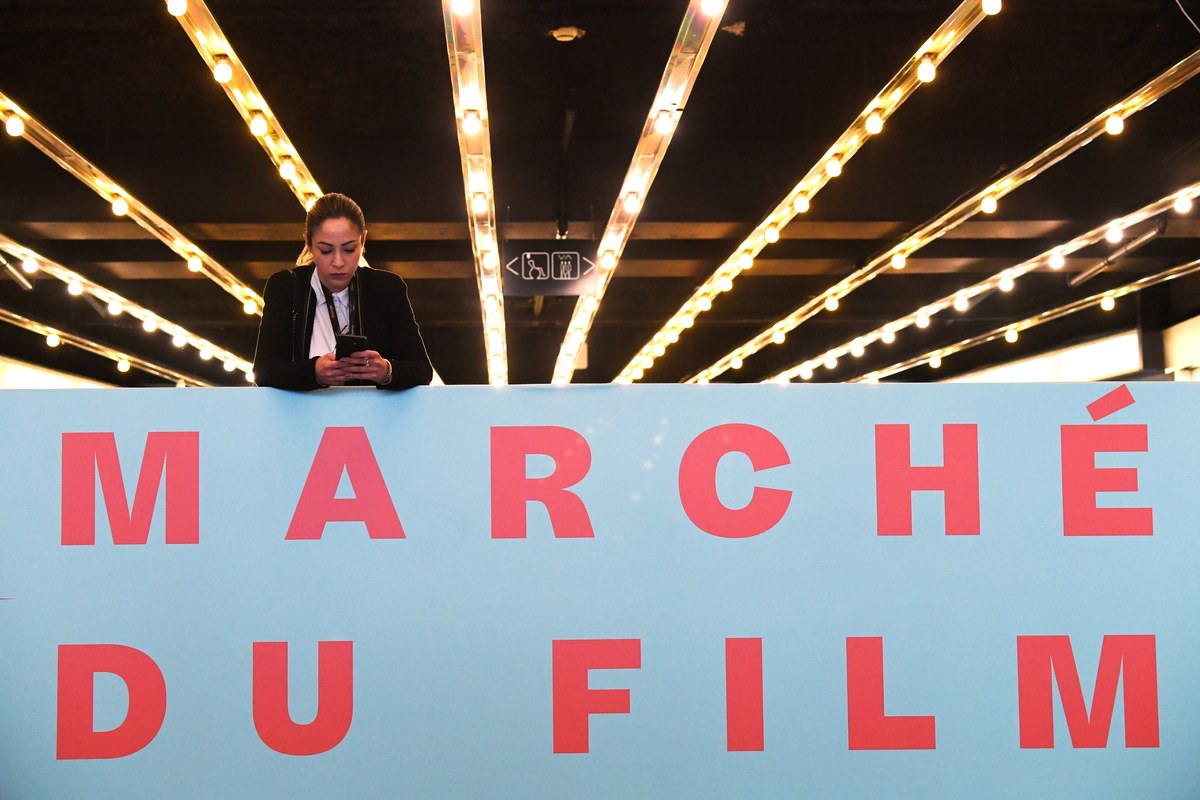


A woman checks her phone in the Marche Du Film. (AFP)

Day 3

It is 7:30 a.m. and I make my way to a film screening — “Frankie” by Ira Sachs. On my way there I spot a group of people, one of them is in a wrinkled tuxedo that has lost its respectability. Last night hasn't yet ended for them. 

The film dips me in and out of a light and pleasant sleep, but I somehow suspect this could be its intended effect.

I walk out of the Grand Theatre Lumiere. The glare assaults my eyes and brings me back to the real world, which suddenly looks more mundane.

I begin to exit the Grand Palais when I am approached by a festival attendant. She randomly offers me a seat at the press conference for “Young Ahmed,” the latest movie by the Dardennes brothers. Perhaps she liked my countenance, but most likely she needed to fill a few empty seats. 

Things are in overdrive today. It’s the Tarantino film premier and everyone seems to be seeking access to the screening. I overhear a woman pleading for that golden ticket. “My son is diabetic!” she says. What in the world does that have to do with getting a movie ticket?

After lunch, I glance at my watch and realize I’m about to miss my train. I run to the station and just barely make it. 

Three days in Cannes feel like a week. It is a cycle that ebbs and flows between the mad rush of the movie business and the peace and refuge of movie watching. It can be overwhelming and exhausting. But it’s all about the movies, so who can really complain?
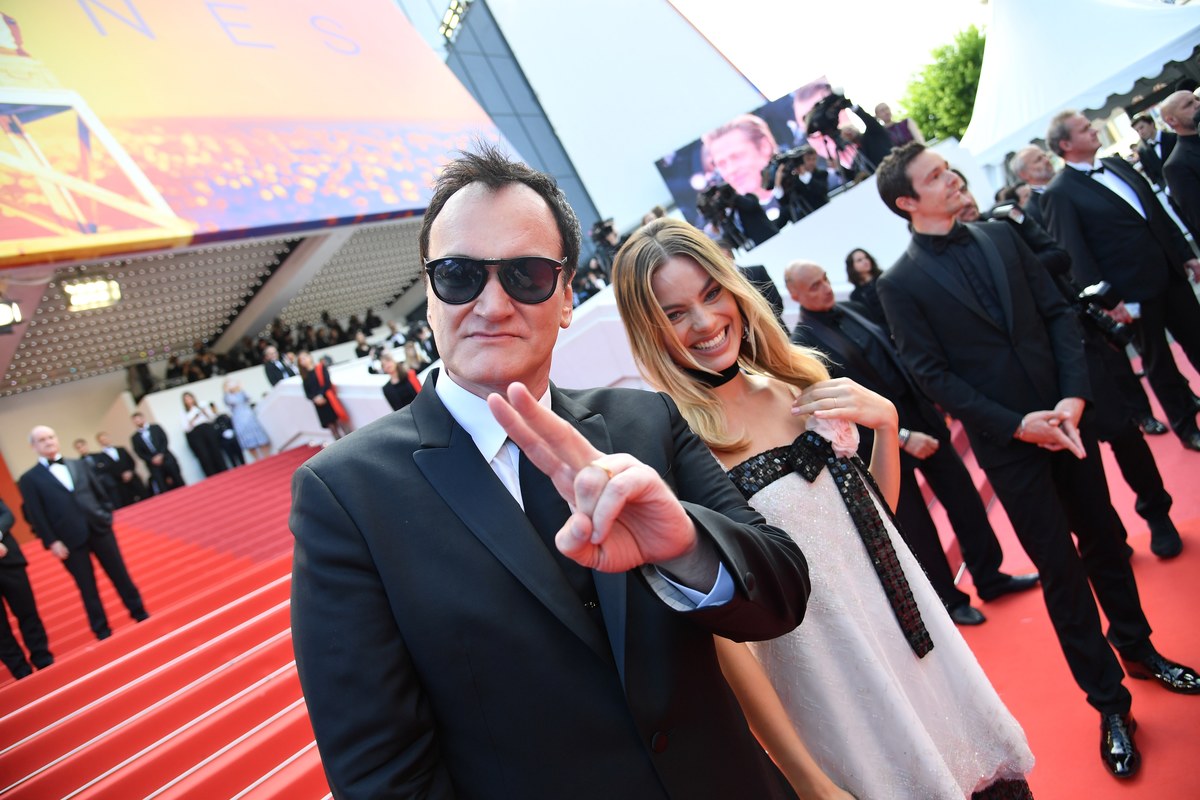


Quentin Tarantino premiered ‘Once Upon a Time... in Hollywood’ in Cannes. (AFP)


Hear them out: The best Arab alternative albums of 2025 

Updated 25 December 2025
Follow

Hear them out: The best Arab alternative albums of 2025 

  • Bojan Preradovic’s pick of records released by indie artists from the Arab world this year 

Saint Levant 

‘Love Letters’ 

With his sophomore LP, the Palestinian artist matures from viral breakout to more vulnerable, multilingual pop and R&B, shaping a compact set of love songs with a firmly Palestinian center. He braids sleek synths, North African grooves, and earworm melodies into pieces that drift between late-night infatuation and clear-eyed reflections on home, distance, and belonging. “DALOONA,” a collaboration with Shamstep pioneers 47Soul, and “KALAMANTINA,” featuring Egyptian rap star Marwan Moussa, both lean into joyful release, while “EXILE” sits with the emotional cost of separation and absence. “Love Letters” threads romance, memory, and identity into understated, exceedingly replayable art. 


Zeyne 

‘Awda’ 

Rising Palestinian-Jordanian star Zeyne uses her debut LP to alchemize the last few years of upheaval and her meteoric ascent into a 13-track map of who she is and where she comes from. Folding contemporary R&B and pop into playful rhythms, dabke pulses, and Arabic melodic turns, she sings of home, pressure, and stubborn hope on tracks that feel both diaristic and cinematic. The record shifts between tenderness, unease, and quiet celebration, while guest appearances from Saint Levant and Bayou mix perfectly with the record’s unique flavors rather than overpowering them. This is an exhilarating, soul-searching foray into Arabic alt-pop that treats vulnerability and pride as two sides of the same coin. 


Yasmine Hamdan 

‘I remember I forget’  

A quietly piercing LP from the indie icon about what we choose to carry and what we try to erase. Recorded with her trusted musical confidant Marc Collin, the album folds muted electronics, trip-hop beats, oud, and Arabic strings into songs in which personal memory, folk echoes, and her country’s never-ending tumult blur into one. Album closer “Reminiscence” lets the record fade like a long-held breath, reminding us that Hamdan is still one of the few artists capable of molding private anxieties into a shared, luminous language.  


Kazdoura

 ‘Ghoyoum’ 

The Toronto-based duo’s debut weaves a story of migration and fracture into a quietly dazzling Arabic fusion record. Vocalist Leen Hamo and multi-instrumentalist John Abou Chacra root everything in Levantine maqams, then let the songs drift toward jazz, psychedelia, and dream pop without ever losing sight of the tarab they grew up on. From the yearning of opener “Marhaba Ahlen” and the fiery feminist chant of “Ya Banat” to the reworked folk of “Hmool El Safar” and the woozy sway of “Khayal” and “Titi Titi,” they sculpt homesickness, resilience, and slow healing into something genuinely transformative. 


Tamara Qaddoumi  

‘The Murmur’ 

On her first full-length album, Tamara Qaddoumi stretches the trip-hop and shadowy pop universe she explored on 2021’s EP “Soft Glitch” into a deeper, intensely moving world. Written with longtime collaborator Antonio Hajj, and produced by indie mainstay Fadi Tabbal, “The Murmer” leans on low-end throb, smoldering synths, and incisive guitar lines that feel both intimate and vast. Her voice hovers between confession and spell, circling questions of identity, grief, and attachment that evoke her own hybrid Kuwaiti, Palestinian, Lebanese, and Scottish heritage. The result is a delightfully cobwebby, absorbing LP that lingers long after it ends. 


Sanam 

‘Sametou Sawtan’ 

Recorded between Beirut, Byblos, and Paris, “Sametou Sawtan” – Arabic for “I heard a voice” – is a poignant, unsettled collision of noise rock, free jazz, and Arabic folk that fizzes with tension. Produced by Radwan Ghazi Moumneh, the eight tracks by the art-rock sextet are anchored by Sandy Chamoun’s remarkable vocals, which move from murmured prayer to visceral intensity, drawing on classical Arabic poetry and prose and her own lyrics to inhabit figures who are bewildered, grieving, or stubbornly alive. From the opening surge of “Harik” to the slow burn of “Hamam,” Sanam distill personal and collective unease into work that’s urgent, physical, and impossible to ignore. This is an act on the precipice of wider, global renown.  


Nabeel 


‘Ghayoom’  

On “Ghayoom,” the Iraqi-American songwriter — real name Yasir Razak — firmly plants the flag of an audacious musical explorer venturing across roads less traveled. He sings in Arabic over a wall of distorted guitars and slowcore drums, enveloped by captivating, shoegaze-colored soundscapes. The artwork, built from worn family photographs, hints at what the music is chasing. These eight tracks pair devotional tenderness with the grit of DIY rock. Opener “Resala” aches with unsent words; “Khatil” hits with uneasy momentum; while the elegant flicker of pop-tinged moments scattered throughout the album maintain a raw and bruised edge.  


Malakat 

Al Anhar Wal Oyoon 

On its first showcase, Jordan-based label Malakat gathers seven Arab woman artists and enables them to pull in seven different directions that end up flowing as a single current. “Al Anhar Wal Oyoon” (‘The Rivers and the Springs’), moves from Intibint’s hauntingly inspired vocalization to Liliane Chlela’s serrated electronics, and from Sukkar and DAL!A’s skewed pop to Sandy Chamoun’s voice-led piece, and Bint Mbareh’s closing track, developed in dialogue with visionary producer Nicolas Jaar. Mixed across Amman, the UK, and New York, and mastered by the highly-sought-after Heba Kadry, this is a deeply textured statement of intent from a label quietly redrawing the map of experimental Arab music.